
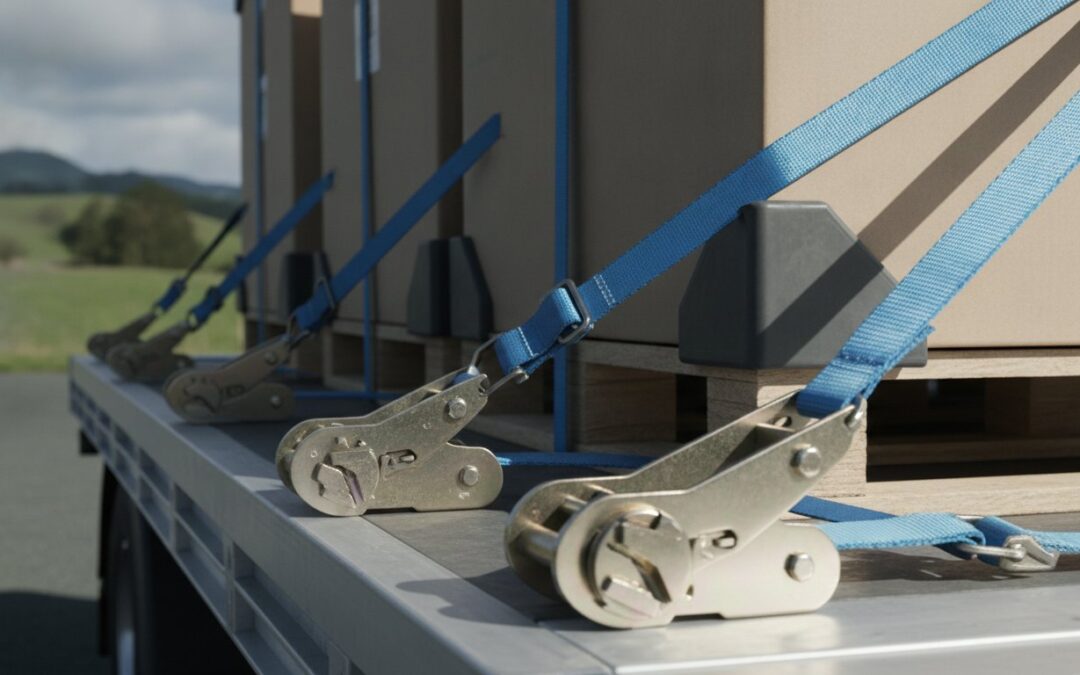
In the New Zealand transport sector, a single failed tie-down isn’t just a safety risk; it’s a direct threat to your operational bottom line. You know that maintaining compliance with the NZTA Truck Loading Code is a constant challenge, especially when outdated tools lead to inefficient loading times or cargo damage. Securing your freight requires more than just standard straps. Identifying the best load restraint equipment NZ provides is essential for any professional committed to safety and efficiency in 2026.
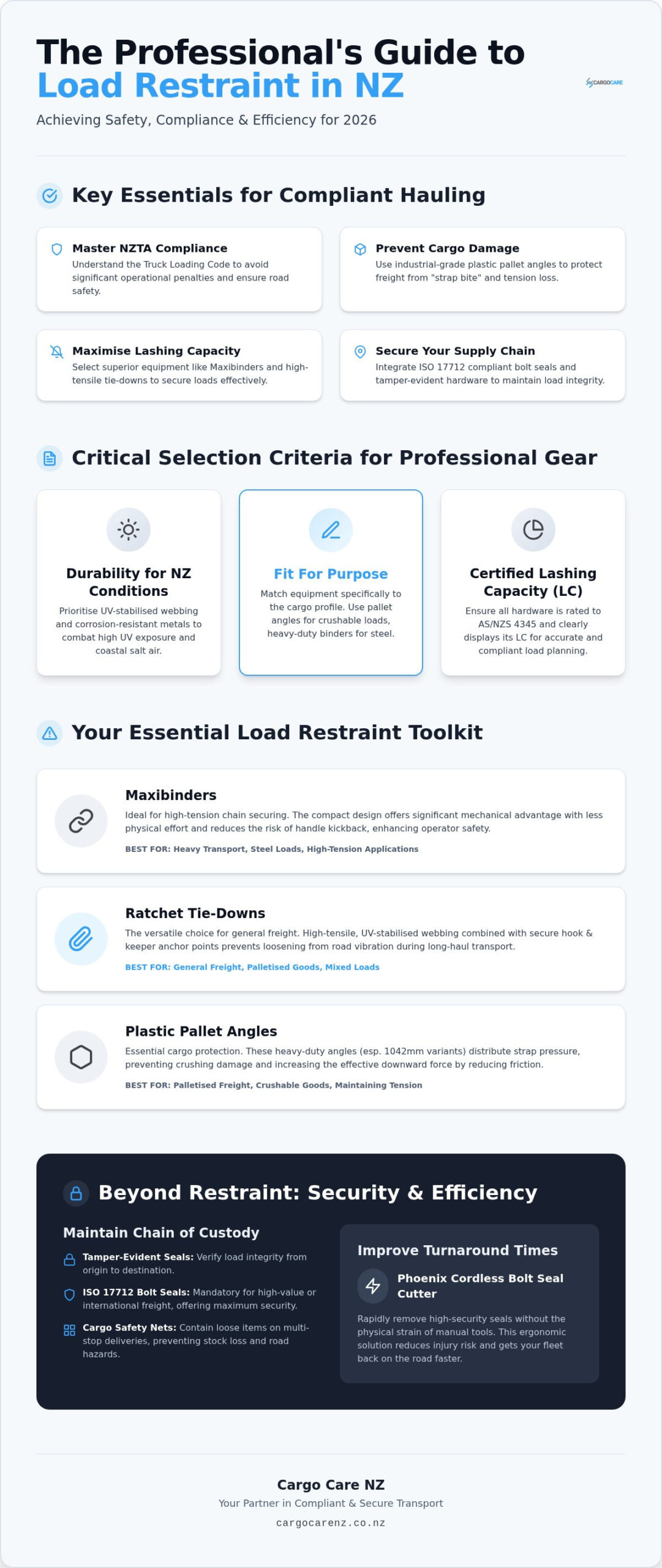
This guide details the hardware and cargo protection tools needed to survive the rugged local environment. You’ll learn how the synergy between heavy-duty hardware and precision edge protection prevents costly fines and transit losses. We’ll cover essential equipment including specialised plastic pallet angles, Maxibinders, and high-tensile ratchet tie-downs. By the end of this article, you’ll have a clear strategy for maintaining operational continuity across every haul.
Key Takeaways
- Understand the latest NZTA Truck Loading Code requirements to maintain full compliance and avoid costly operational penalties.
- Identify the best load restraint equipment NZ has available, such as Maxibinders and ratchet tie-downs, to achieve superior lashing capacity.
- Eliminate cargo damage during long-haul transport by utilising durable plastic pallet angles that provide industrial-grade edge protection for palletised freight.
- Maintain supply chain integrity by integrating ISO 17712 compliant bolt seals and tamper-evident security hardware into your logistics process.
Navigating NZ Load Restraint Standards for 2026
Compliance with the NZTA Truck Loading Code is a non-negotiable requirement for professional transport operators. This code establishes the legal framework for securing freight, ensuring that every load remains stationary under extreme braking or cornering forces. Utilising the best load restraint equipment NZ provides is the primary method for mitigating legal liability and preventing heavy fines. Hardware must meet AS/NZS 4345 standards; this verifies that the equipment has undergone rigorous testing for strength and reliability.
Calculating the correct amount of restraint requires a precise understanding of lashing capacity (LC). You must account for the total weight of the cargo and the friction coefficient of the deck surface. Insufficient LC leads to load shift, which compromises vehicle stability and endangers other road users. Professional logistics managers prioritise gear that clearly displays its rated capacity to ensure accurate load planning on every trip.
Critical Selection Criteria for Professional Transport Gear
Durability is a key factor when selecting hardware for the New Zealand environment. High UV exposure and coastal salt air can degrade substandard straps and metal components quickly. Professional operators should prioritise UV-stabilised webbing and corrosion-resistant metal hardware to maintain operational safety. Selecting ‘fit for purpose’ gear means matching the specific attributes of the equipment to the cargo profile, such as using plastic pallet angles for crushable loads or heavy-duty binders for steel. Lashing Capacity is the maximum force a restraint can withstand in a straight pull. Investing in the best load restraint equipment NZ offers ensures that your fleet remains compliant and your cargo arrives undamaged.
Essential Hardware: From Maxibinders to Plastic Pallet Angles
High-tension applications require hardware that balances mechanical advantage with operational speed. The Maxibinder provides a significant advantage for chain securing, offering a compact design that reduces the risk of handle kickback during release. For general freight, using load restraint straps NZ with a hook and keeper configuration ensures a secure anchor point that won’t vibrate loose on uneven road surfaces. Identifying the best load restraint equipment NZ has available involves looking for hardware that maintains its rated tension despite the constant vibration inherent in long-distance hauling.
Why Cargo Protection is as Vital as Tie-Down Strength
Securing a load is only half the task; protecting the integrity of the freight is equally critical. Heavy-duty plastic pallet angles NZ, particularly the 1042mm variants, are essential for distributing strap pressure across the top edge of a pallet. This prevents “strap bite” which can crush packaging and lead to a dangerous loss of tension mid-transit. Pallet angles increase the effective downward force of a strap by reducing friction at the cargo corners. Utilising the best load restraint equipment NZ offers ensures that every component, from the strap to the protector, works in unison to secure the freight without causing damage.
When deciding between a Maxibinder vs ratchet binder NZ, consider the specific ergonomic requirements of the driver. Maxibinders are often the preferred choice for heavy transport because they provide high tension with less physical effort. For professionals seeking reliable solutions, the Silverback range available through Cargo Care NZ offers the durability required for New Zealand conditions.
Streamlining Compliance and Security in the Supply Chain
Securing cargo is the first step, but maintaining the chain of custody is equally vital for commercial operations. Integrating tamper evident security seals NZ allows operators to verify load integrity from the point of origin to the final destination. For international shipping or high-value freight, the use of ISO 17712 compliant bolt seals NZ is often a mandatory requirement. These tools represent the best load restraint equipment NZ provides for comprehensive asset protection.
Loose loads and multi-stop deliveries present unique containment challenges where traditional straps may be insufficient. A cargo safety net NZ provides a reliable solution for containing multiple items of varying sizes. This equipment ensures that small components do not shift or fall from the vehicle, maintaining road safety and preventing stock loss. Using a net in conjunction with rated tie-downs provides the highest level of containment for complex transport tasks.
Improving Turnaround Times with Modern Logistics Tools
Operational efficiency depends on the speed of securement and the ease of unloading. The Phoenix cordless bolt seal cutter 18V significantly improves turnaround times by allowing for the rapid removal of high-security seals without the physical strain of manual tools. This ergonomic solution reduces workplace injury risks associated with traditional long-handled bolt cutters. Compliance also extends to accurate identification; ensuring your fleet carries correct dangerous goods labels is essential for the legal movement of hazardous materials. Investing in the best load restraint equipment NZ offers means equipping your team with tools that prioritise both safety and speed.
Securing Operational Excellence in 2026
Maintaining a compliant and efficient fleet requires a disciplined approach to hardware selection. You’ve seen how adhering to the NZTA Truck Loading Code and utilising rated equipment like Maxibinders and 1042mm plastic pallet angles protects both your cargo and your legal standing. Integrating these tools with modern security seals ensures a robust chain of custody from origin to destination. Investing in the best load restraint equipment NZ provides is the most effective way to eliminate transit damage and streamline your turnaround times.
As the official NZ distributor of Silverback products, Cargo Care NZ supplies the specialised hardware required for transport compliance. Our range is built for durability in the rugged local environment and includes national delivery for all cargo handling gear. View the full range of professional load restraint equipment at Cargo Care NZ to ensure your operations remain secure throughout 2026. Your commitment to safety starts with the right gear.
Frequently Asked Questions
What is the most reliable load binder for heavy chain restraints in NZ?
The Maxibinder is widely considered the most reliable tool for high-tension chain securing in the New Zealand transport industry. Its geared design provides a superior mechanical advantage, allowing operators to achieve the required tension with significantly less physical effort than traditional binders. The compact mechanism also reduces the risk of handle kickback during release, which improves driver safety during unloading operations.
How do I calculate the number of tie-down straps needed for my load?
You must calculate the required number of restraints by following the NZTA Truck Loading Code, which focuses on lashing capacity (LC). The combined LC of your tie-downs must be sufficient to counteract the cargo weight and friction levels of the deck. Choosing the best load restraint equipment NZ offers ensures that every strap has a clear, verified rating for these critical safety calculations.
Why should I use plastic pallet angles instead of cardboard protectors?
Heavy-duty plastic pallet angles are far superior to cardboard because they offer industrial durability and complete weather resistance. Cardboard protectors often fail when exposed to rain, leading to a dangerous loss of strap tension and potential cargo damage. High-impact 1042mm plastic angles distribute strap pressure evenly across the cargo edge, preventing “strap bite” while maintaining consistent tension throughout the entire journey.
Are Silverback load restraint products compliant with NZ transport standards?
Silverback products distributed by Cargo Care NZ are specialised hardware engineered to meet or exceed relevant AS/NZS standards and NZTA requirements. Every component is tested for strength and durability, making them some of the best load restraint equipment NZ provides for professional use. This compliance ensures your fleet meets legal safety obligations while protecting cargo from transit damage during long-haul operations across the country.
Can I use cargo safety nets instead of straps for all load types?
Cargo safety nets are designed for load containment rather than as a primary restraint for heavy or palletised freight. They are ideal for securing loose items or multi-stop deliveries where cargo is frequently shifted, but they don’t replace rated tie-downs for heavy machinery or bulk goods. For maximum security, professionals often use a cargo safety net in conjunction with rated ratchet straps.
Article by
Steve O'Malley