
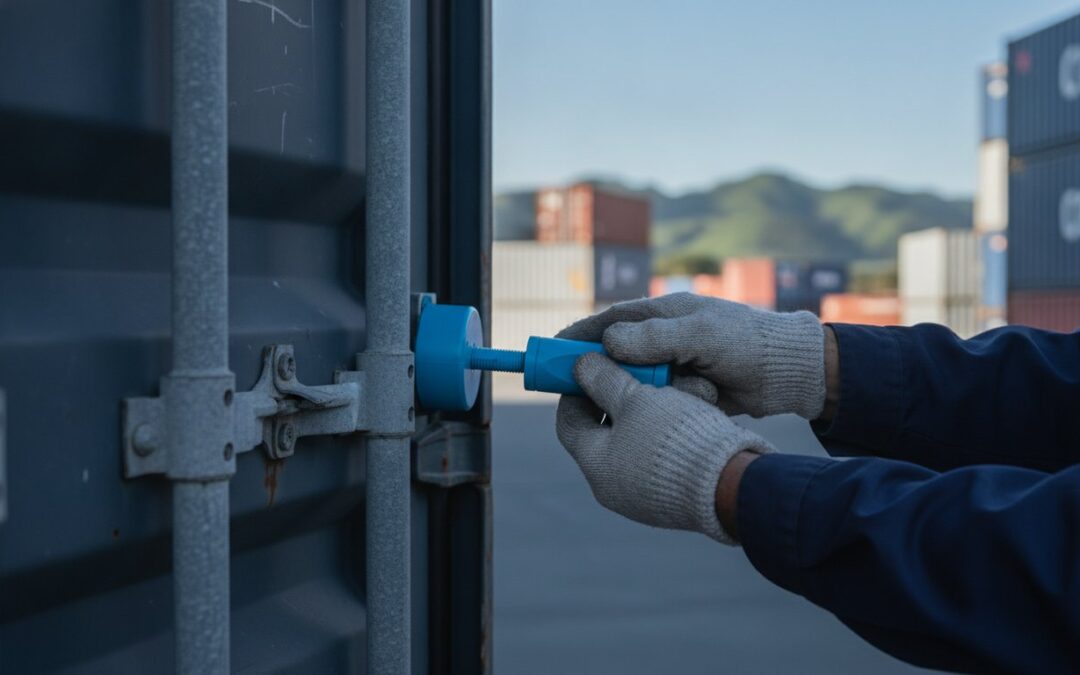
A security seal is far more than a simple mechanical lock; it is a vital piece of evidence that protects your business from liability and stock loss. In the high-stakes environment of New Zealand logistics, a compromised shipment isn’t just a financial setback, it’s a threat to your professional reputation and regulatory standing. You likely deal with the constant pressure of cargo theft and the technical confusion surrounding ISO 17712 compliance. Selecting the correct tamper evident security seals NZ is essential to ensuring your freight remains secure from the loading dock to the final destination.
We understand that maintaining operational continuity requires both rugged hardware and clear protocols. This guide provides a comprehensive overview of freight integrity, helping you master the essentials of transport security and compliance. You’ll learn how to navigate the specific requirements of the NZ Customs Secure Exports Scheme (SES) and the Ministry for Primary Industries (MPI) for animal product exports. We also cover practical strategies for streamlined security, including the use of specialised tools to remove high-security bolt seals at busy distribution centres without unnecessary labour delays.
Key Takeaways
- Understand why security seals are forensic tools rather than physical barriers and how they provide critical evidence of unauthorised access.
- Identify how to select appropriate tamper evident security seals NZ based on cargo value, risk profiles, and exposure to harsh coastal environments.
- Master the “Pull-Tug-Check” method and seal log protocols to ensure full compliance with New Zealand transport safety regulations.
- Learn to streamline security protocols and reduce stock loss by aligning seal strength with specific long-haul vibration and environmental risks.
- Optimise destination turnaround times with specialised removal hardware designed for high-security bolt seals.
Understanding Tamper Evident Security Seals in the NZ Supply Chain
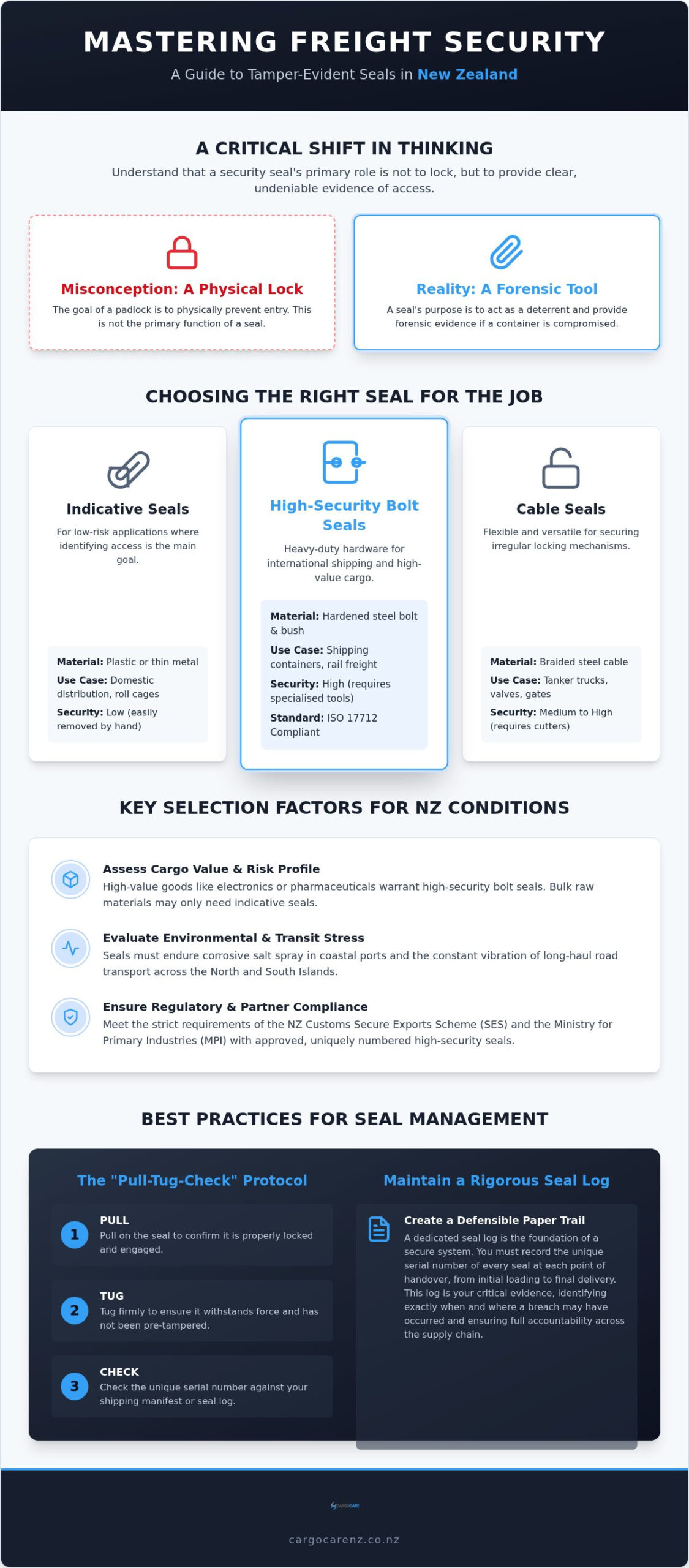
Security seals are best understood as forensic instruments rather than physical locks. While a padlock aims to prevent entry, a seal’s primary function is to provide undeniable evidence of tampering or unauthorised access. In the New Zealand logistics sector, using reliable tamper evident security seals NZ acts as a visual deterrent and a critical record-keeping mechanism. They ensure that any breach of a container or trailer is immediately visible to the receiving party. This allows for the rejection of compromised goods before they enter the local market or reach a distribution centre.
Maintaining a secure chain of custody is vital for national freight operations. For New Zealand’s primary produce sector, particularly dairy and meat exports governed by the Animal Products Notice, the integrity of the packaging is a strict requirement. High-value retail and pharmaceutical sectors also rely on these tools to protect against stock loss and liability. Using unique serial numbers on every seal allows logistics managers to track freight at every handover point. It ensures accountability across the entire supply chain, from the farm gate to the shipping port.
Indicative vs. High-Security Seals
Indicative seals are typically manufactured from plastic or thin metal. These are suitable for low-risk applications where the goal is simply to identify if a door has been opened. They’re easy to apply and remove, making them efficient for domestic distribution. In contrast, high-security bolt seals are heavy-duty hardware designed to withstand significant force and environmental stress. These are mandatory for international shipping and high-risk cargo movements where the threat of theft is elevated. ISO 17712 is the gold standard for high-security bolt seals in 2026, ensuring they meet rigorous international strength and tamper-resistance tests. For a detailed breakdown of how these seal categories compare across different transport risk scenarios, our tamper proof seals for shipping professional comparison guide provides a clear technical framework for making the right hardware choice.
Selecting the Right Tamper Evident Security Seals NZ Requirements
Choosing the correct security hardware requires a thorough assessment of your cargo’s risk profile and total value. High-value electronics or pharmaceuticals demand a different level of protection than bulk raw materials. When you evaluate tamper evident security seals NZ, start by identifying the specific threats your freight faces during transit. A seal that is sufficient for a local courier run will likely fail the requirements of an international shipping lane.
Environmental conditions in New Zealand present unique challenges for security hardware. Seals must withstand corrosive salt spray in coastal ports and the constant vibration of long-haul road transport across the North and South Islands. Low-quality seals often fail under these mechanical stresses, leading to accidental breakage that looks like tampering. It’s essential to select materials that maintain their integrity despite temperature fluctuations or physical jarring. Durable construction ensures that the forensic evidence remains intact until the cargo reaches its destination. Of course, seals are only one part of a complete freight security strategy; ensuring your load is also properly restrained with the right tensioning equipment, whether you’re weighing up a Maxibinder vs ratchet binder NZ operators commonly use, is equally critical to NZTA compliance.
Compliance is another non-negotiable factor for modern logistics. Partners in the New Zealand Customs Secure Exports Scheme (SES) must use approved high-security seals for sea freight to maintain their status. These seals must feature unique numbering or barcoding to prevent unauthorised replication. Maintaining a precise seal register is a core requirement for SES partners. This ensures every unit is accounted for from the moment of application to the final inspection at the unloading centre. When it comes time to replenish your stock, knowing where to buy security seals online NZ logistics professionals trust for ISO 17712 compliance and SES approval is just as important as the selection process itself.
Bolt Seals for Shipping Containers
Tamper evident bolt seals are the industry standard for intermodal container transport. These heavy-duty components consist of a metal bolt and a locking bush. For maximum security integrity, you must ensure the bolt and bush are a matched pair with identical serial numbers. This prevents “swapping” parts of the seal to hide evidence of entry. Their rugged design makes them nearly impossible to remove without specialised industrial cutting tools.
Plastic and Cable Seals for General Freight
Domestic delivery vehicles and curtainsiders often require more flexible solutions. Adjustable-length plastic seals are ideal for securing rear doors on small trucks where a bolt seal isn’t practical. For irregular locking mechanisms, such as tankers or valves, cable seals provide the necessary versatility. These seals offer a clear visual indicator of interference while accommodating various latch sizes. To find the right fit for your specific fleet requirements, you can browse the full range of security hardware at CargoCare NZ.
Best Practices for Seal Management and Compliance
Implementing robust management protocols for tamper evident security seals NZ ensures that your forensic data remains accurate and legally defensible. A dedicated “Seal Log” protocol is the foundation of this system. You must record the unique serial number of every seal at each point of handover, from the initial loading to final delivery. This creates a clear paper trail that identifies exactly when and where a breach occurred. Without this documentation, proving liability for stock loss becomes nearly impossible during a dispute.
Physical application requires more than just snapping a bolt into place. You should train all operational staff on the “Pull-Tug-Check” method. After applying the seal, the operator must pull and tug on both ends to ensure the locking mechanism is fully seated. This simple step prevents “false locks” where a seal appears closed but can be opened by hand. Integrating these checks into your standard transport safety equipment NZ inspections ensures that security remains a core part of your daily operational routine.
If a driver or warehouse manager discovers a broken or tampered seal, they must follow a strict reporting procedure. Don’t remove the compromised seal immediately. Instead, take high-resolution photographic evidence of the seal while it’s still attached to the locking mechanism. Document the serial number and any visible signs of forced entry. The cargo should be isolated until a supervisor or customs official can verify the contents. This disciplined approach protects your business from secondary liability and helps maintain your standing within the Secure Exports Scheme.
Efficient Seal Removal and Warehouse Safety
High-volume distribution centres often struggle with the bottlenecks caused by manual seal removal. Relying on traditional manual bolt cutters is inefficient and presents significant health and safety risks. Operators face repetitive strain injuries and physical fatigue from the heavy leverage required to snap high-security bolts. This slow processing time can disrupt the flow of the entire unloading bay, leading to costly delays in stock turnaround.
The Phoenix cordless bolt seal cutter 18V offers a professional solution for these high-pressure environments. By using 18V cordless technology, this tool removes the need for manual leverage and significantly reduces the physical effort required for removal. It allows staff to process containers quickly while maintaining a high safety standard on the warehouse floor. Investing in specialised removal hardware ensures that your security protocols don’t come at the expense of operational speed or worker wellbeing.
Optimising Your Supply Chain Security and Compliance
Securing your freight requires a precise combination of rugged hardware and disciplined management. You’ve seen how selecting the right tamper evident security seals NZ depends on assessing cargo risk and environmental stressors like coastal corrosion or road vibration. Establishing a robust seal log and training staff in the “Pull-Tug-Check” method are essential steps to maintaining a defensible chain of custody. These protocols don’t just prevent theft; they protect your business from regulatory liability and stock loss during transit.
Efficiency at the destination is just as critical as security at the point of origin. Integrating specialised removal tools like the Phoenix cordless cutter ensures your unloading operations remain safe and fast. As the official New Zealand distributor of Silverback products, we provide ISO 17712 compliant hardware and expert support to help you meet transport security standards. Our team is focused on providing the practical tools you need to keep your logistics moving without compromise.
View our range of high-security Silverback seals and tools to strengthen your freight protection today.
Frequently Asked Questions
What is the difference between a security seal and a padlock for transport?
A padlock is designed as a physical barrier to delay or prevent unauthorised entry, whereas a security seal is a forensic tool intended to provide evidence of a breach. While padlocks can be picked or replaced without a record, a seal features a unique serial number that cannot be replicated. This ensures that any interference with the cargo is immediately visible during handover inspections and helps maintain a secure chain of custody.
Are all bolt seals in New Zealand required to be ISO 17712 compliant?
Not all seals used in New Zealand must be ISO 17712 compliant, but this standard is mandatory for international shipping containers and partners within the NZ Customs Secure Exports Scheme (SES). For domestic transport of low-value goods, indicative plastic seals are often sufficient. However, using ISO-compliant tamper evident security seals NZ provides an extra layer of assurance for high-risk freight and ensures your operations align with global supply chain security requirements.
What should a driver do if they find a tampered security seal upon arrival?
If a driver identifies a tampered seal, they must not remove it or open the vehicle doors. The immediate priority is to document the breach by taking high-resolution photographs of the seal and the locking mechanism. The driver should report the incident to their supervisor and the receiving site manager immediately. Keeping the seal intact allows for a formal investigation and ensures the documentation remains legally defensible for insurance or regulatory purposes.
Can I customise security seals with my company logo and unique serial numbers?
Customisation is a standard industry practice and is highly recommended for enhancing supply chain security. Most professional tamper evident security seals NZ can be laser-etched with company logos, specific colour-coding, and unique alphanumeric serial numbers. This level of personalisation makes it nearly impossible for a third party to replace a broken seal with a generic alternative. It also simplifies the record-keeping process in your seal log by providing clear, non-replicable identifiers. If you’re evaluating which seal type best suits your specific shipping requirements, our guide to tamper proof seals for shipping covers the full spectrum of hardware options across indicative, security, and high-security tiers.

Article by
Steve O'Malley