

A load can look secure and still fail a roadside inspection if its restraint system can’t withstand the forces of travel. If you’re searching for how to avoid load restraint fines NZ, focus on matching the restraint method and equipment ratings to the load, rather than simply adding more straps.
NZTA requirements can feel complex, especially when an insecure load can bring an instant $600 fine for an individual, with higher penalties possible if the matter goes to court. This guide explains the standards that apply under New Zealand law and how to put them into practice.
You’ll learn the required restraint performance, what to check when selecting rated chains, webbing and tensioners, and how to inspect a load before departure. A clear, repeatable loading process can help you prepare for a CVST inspection and protect drivers and other road users.
Key Takeaways
- Learn how to avoid load restraint fines NZ by applying the Load Restraint Code and preparing for roadside CVST inspections.
- Check restraint equipment for wear before loading, then assess load weight and deck friction to plan suitable lashings.
- Compare Maxibinders and ratchet tie-downs to match tensioning equipment to the load and restraint task.
- Consider a cargo safety net for loose or light freight that straps alone may not contain effectively.
Understanding New Zealand Load Securing Standards and NZTA Regulations
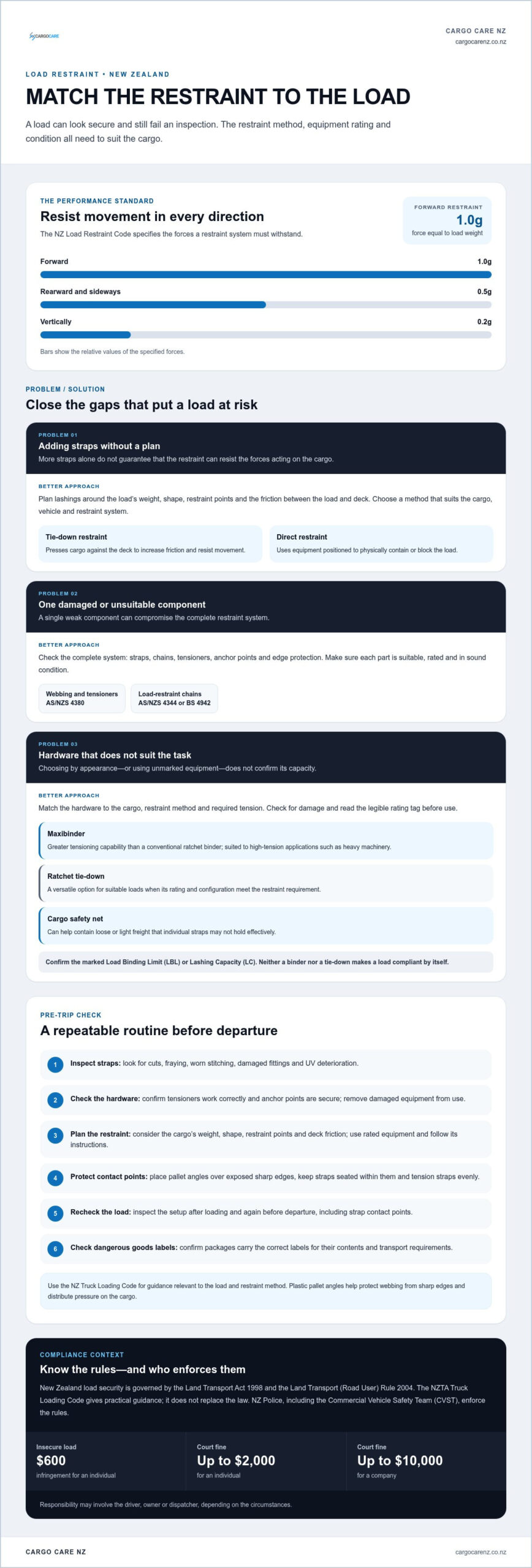
New Zealand load security is governed by the Land Transport Act 1998 and the Land Transport (Road User) Rule 2004. The NZTA’s Truck Loading Code provides practical guidance for meeting these legal requirements; it does not replace them. The NZ Police, including its Commercial Vehicle Safety Team (CVST), enforce the rules. An insecure load can result in a $600 infringement for an individual, with court fines of up to $2,000 for an individual and $10,000 for a company.
Responsibility depends on the circumstances. The vehicle operator may include the driver, owner or dispatcher, so load security needs to be managed across the transport operation. Understanding how to avoid load restraint fines NZ is therefore a practical compliance requirement, not just a driver’s concern.
The Core Principles of the NZ Load Restraint Code
The restraint system must prevent load movement under specified forces: 1.0g forward, 0.5g rearward and sideways, and 0.2g vertically. In practical terms, forward restraint must withstand force equal to the load’s weight. These load securing principles show why restraint depends on the forces acting on a load, not simply the number of straps.
Tie-down restraint presses cargo against the deck to increase friction and resist movement. Direct restraint uses equipment positioned to physically contain or block the load. Choose the method to suit the cargo, vehicle and restraint system.
Every component must be suitable, rated and in sound condition. Check straps, chains, tensioners, anchor points and edge protection as one complete system. Webbing and tensioners must meet AS/NZS 4380; load-restraint chains must comply with AS/NZS 4344 or BS 4942. A damaged or inadequately rated component can compromise the whole restraint, even when the rest of the equipment is in good condition.
Practical Steps to Organise Your Cargo and Prevent Infringements
A consistent pre-trip routine can catch damage and gaps in the restraint plan before the vehicle moves. Inspect every load restraint strap for cuts, fraying, worn stitching, damaged fittings and UV deterioration. Check that tensioners work correctly and anchor points are secure. Remove damaged equipment from use. Consult the NZ Truck Loading Code for guidance relevant to the load and restraint method.
Plan lashings for the load in front of you. Consider its weight, shape and restraint points, as well as the friction between the load and deck. For example, a heavy, smooth load on a slippery deck may need a different restraint arrangement from a compact load with a stable base. Use rated equipment, follow its instructions and make sure the complete setup can resist movement. Recheck the load after loading and before departure.
For dangerous goods, verify that packages have the correct labels for their contents and transport requirements. Missing or incorrect labels can create compliance issues separate from load restraint. CargoCare NZ supplies dangerous goods labels for clear identification.
Using Edge Protection to Maintain Strap Tension
Sharp cargo edges can cut webbing under tension, while excessive pressure can damage or crush the load. Either issue can loosen lashings during a journey. Place plastic pallet angles at strap contact points over exposed edges, and keep each strap seated within the angle to distribute pressure and protect the webbing. CargoCare NZ supplies 1042mm plastic pallet angles for edge protection. Keep straps aligned and tensioned evenly, then include their contact points in the pre-trip check.
Selecting Compliant Hardware: Maxibinders vs Ratchet Tie Downs
Choose restraint hardware to suit the cargo, restraint method and required tension. For heavy machinery or other high-tension applications, a Maxibinder offers greater tensioning capability than a conventional ratchet binder, with a controlled tensioning and release mechanism that can help reduce operator strain. A ratchet tie-down is a versatile option for suitable loads when its rating and configuration meet the restraint requirement. Neither tool makes a load compliant by itself: the complete system must suit the cargo.
Before use, check each component for damage and confirm its capacity from a legible Load Binding Limit (LBL) or Lashing Capacity (LC) tag. Match the marked rating to the load and restraint arrangement. Don’t rely on appearance or assume unmarked equipment is adequate. For loose or light freight that individual straps can’t contain effectively, a cargo safety net can help keep items within the load space.
Why Silverback Hardware Is a Professional Choice in NZ
Cargo Care NZ is the official New Zealand distributor of Silverback products, including Maxibinders and ratchet tie-downs. Choose a Maxibinder where higher tension is required, or use rated ratchet tie-downs with hook and keeper for suitable, versatile applications. The right tool supports the restraint plan, but rating, condition and correct use remain essential to compliance.
To make how to avoid load restraint fines NZ part of your routine, build equipment checks into loading procedures and keep suitable rated hardware available for different cargo types. Explore Maxibinder and ratchet binder differences, or view Cargo Care NZ’s load restraint hardware.
Make Compliance Part of Every Load
Reliable load restraint starts with applying the required performance standards, checking the cargo and equipment before departure, and matching rated hardware to the load. These practical steps make how to avoid load restraint fines NZ part of a consistent loading process and support safer transport for drivers and the public.
Cargo Care NZ is the official Silverback distributor in New Zealand, supplying specialist cargo safety equipment and rated load restraint hardware. Select equipment that suits your restraint plan, then check its condition and markings before use.
View Cargo Care NZ’s range of load restraint hardware and choose equipment to suit your operation. Careful checks and suitable hardware help keep loads secure throughout the journey.
Frequently Asked Questions
What is the maximum fine for a load restraint breach in New Zealand?
An individual can receive an instant infringement fine of $600 for failing to secure a load. If prosecuted in court, an individual can be fined up to $2,000, while a company can be fined up to $10,000. A driver may also be disqualified. The applicable outcome depends on the circumstances and how the breach is dealt with.
Does every load require a certain number of straps regardless of weight?
No. There isn’t one fixed strap count that applies to every load. The restraint plan depends on factors such as load weight, shape, deck friction, restraint method and equipment ratings. Work out the system needed to prevent movement under the required forces, then check that every lashing and anchor point is suitable. This is central to how to avoid load restraint fines NZ.
Are plastic pallet angles mandatory for all transport loads?
No. Plastic pallet angles aren’t required for every load. They’re useful where straps pass over sharp edges or could put damaging pressure on cargo. An angle helps protect webbing and distribute pressure across the load, supporting secure, stable lashings. Assess the cargo and strap contact points, then use suitable edge protection where needed. Check that restraint tension remains secure before departure.
How often should I inspect my load restraint equipment for compliance?
Inspect restraint equipment before each trip, and don’t use straps, chains or tensioners that are damaged, worn or unreadable. Check the load and restraint system again during the journey, particularly if cargo may have shifted or settled. Confirm equipment ratings are legible and suitable for the task. Regular checks help identify issues before they compromise load security.

Article by
Steve O'Malley