
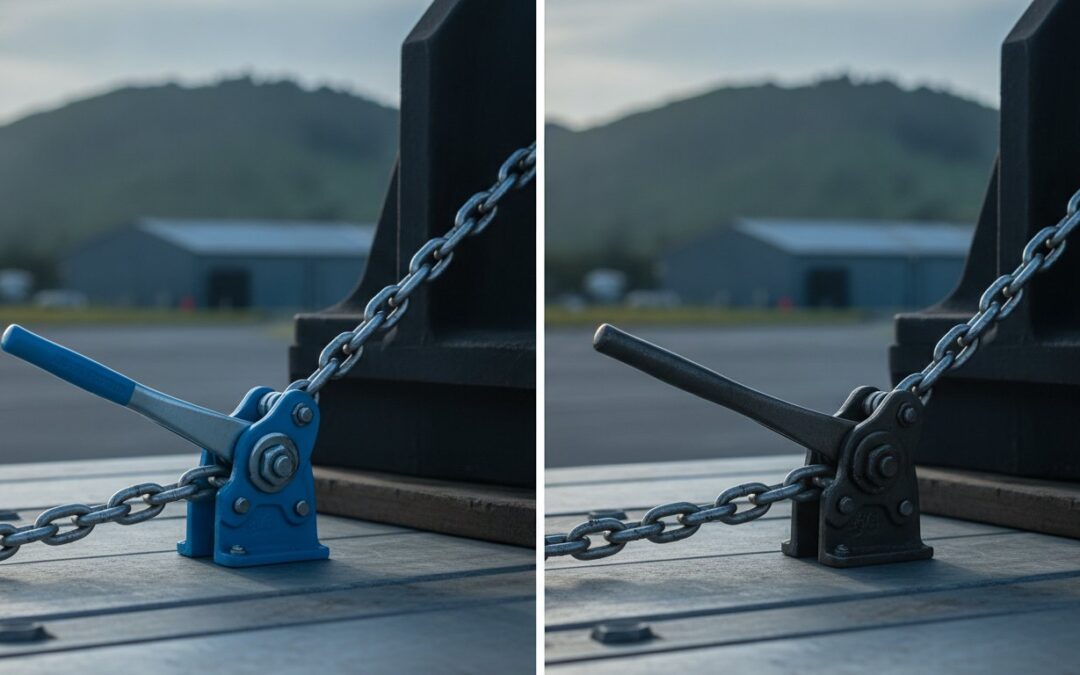
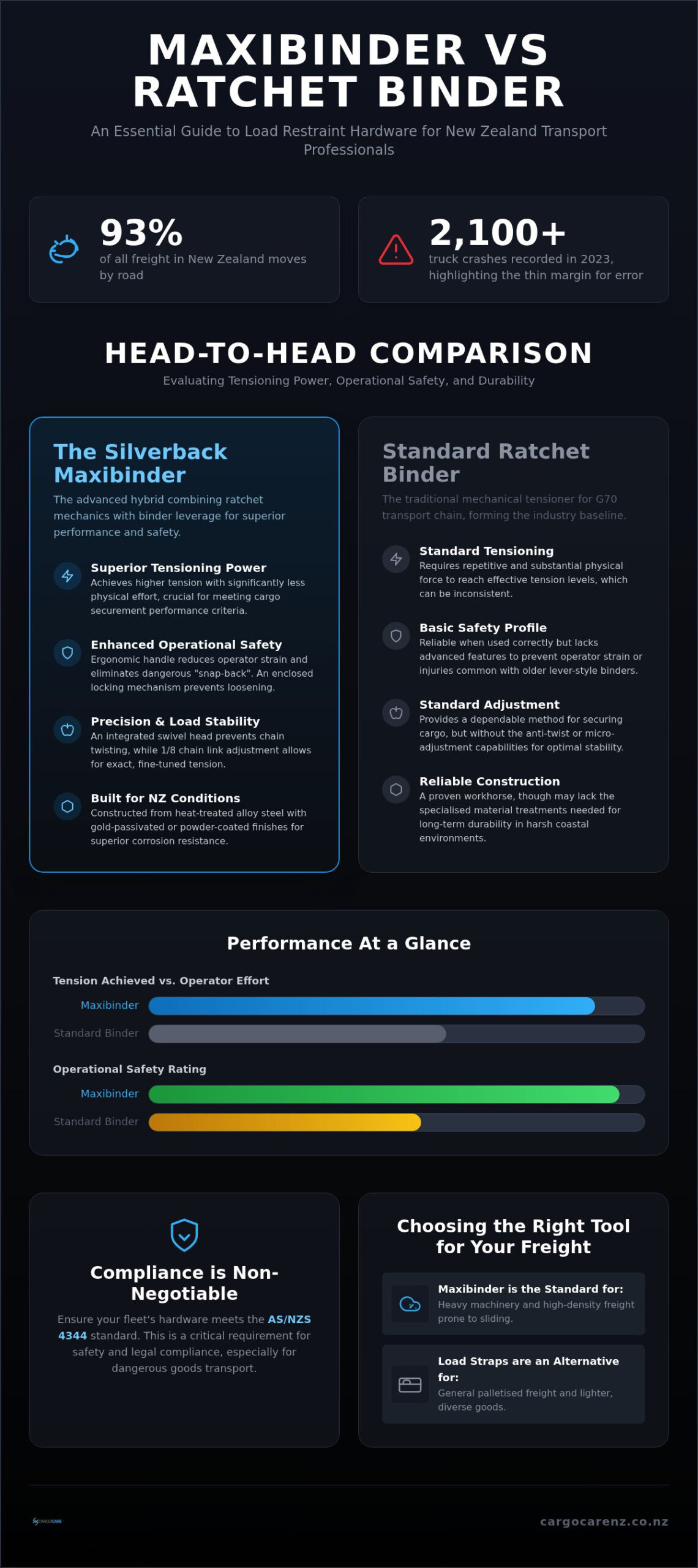
Did you know that 93% of all freight in New Zealand moves by road? With over 2,100 truck crashes recorded in 2023, the margin for error in load restraint has never been thinner. When evaluating the Maxibinder vs ratchet binder NZ transport professionals rely on, the choice often dictates whether your cargo stays secure or becomes a liability. At CargoCare NZ, we recognise that inconsistent tensioning and the physical strain of manual equipment are more than just daily annoyances; they are genuine risks to your operational safety and NZTA compliance.
This article compares the tensioning power, safety features, and compliance standards of Maxibinders and standard ratchet binders to help you secure your cargo effectively. We’ll examine how these tools perform under rugged NZ conditions and why upgrading your gear can lead to faster turn-around times and reduced load shift. By the end, you’ll have a clear understanding of which hardware meets the AS/NZS 4344 standard and provides the durability your fleet requires for 2026 and beyond.
Key Takeaways
- Understand the functional differences between standard mechanical tensioners and the Silverback Maxibinder hybrid to optimise your G70 chain setups.
- Discover how ergonomic handle designs significantly reduce operator fatigue and prevent dangerous handle “snap-back” during tensioning and release.
- Compare the superior pre-tensioning power of a Maxibinder vs ratchet binder NZ to minimise the risk of load shift during long-haul transit.
- Ensure your fleet remains compliant with AS/NZS 4344 standards by selecting hardware designed for the rigours of New Zealand road conditions.
- Learn to match your load restraint hardware to the specific requirements of your cargo, from heavy machinery to general palletised freight.
The Evolution of Load Restraint: Maxibinder vs Standard Ratchet Binders
Standard ratchet binders are mechanical tensioners designed for use with G70 high-tensile transport chain. They provide a reliable method for securing heavy cargo, though they often require substantial physical force to reach effective tension levels. The Maxibinder, an original Silverback hybrid, represents a technical advancement in load security. It combines the mechanical action of a ratchet with the leverage of a traditional binder to solve the problem of inconsistent pre-tensioning. When evaluating the Maxibinder vs ratchet binder NZ transport fleets typically employ, the Maxibinder is distinguished by its superior tensioning power and safety-focused design.
Implementing Silverback products NZ professionals trust provides a guarantee of hardware quality. These tools are engineered specifically for the heavy-duty requirements of the New Zealand logistics sector. They ensure that your gear can withstand the rigours of national long-haul transport without compromising on safety or compliance standards.
The Mechanics of the Maxibinder Swivel Head
A primary innovation of the Maxibinder is the integrated swivel head. This component prevents the chain from twisting as tension is applied, which maintains a direct line of pull and ensures the load remains stable. Precision is further enhanced by the 1/8 chain link adjustment capability. This allows drivers to fine-tune the tension to an exact specification. Such control is vital for preventing the minor movements that lead to significant load shifts during transit.
Standard Ratchet Tie Downs: When Simplicity Works
Chain-based systems are not always the most efficient solution for every cargo type. For general palletised freight, load restraint straps NZ offer a versatile alternative. These webbing-based tools provide sufficient lashing capacity for diverse goods without the weight of steel chains. While they don’t match the massive lashing capacity of a chain-based binder, they are essential for securing lighter loads. The Maxibinder vs ratchet binder NZ decision depends on whether you are hauling high-density machinery or standard warehouse stock. For operators working with webbing-based systems, understanding how to correctly use a ratchet tie down with hook and keeper latch is essential to preventing hook slip and maintaining compliant tension throughout transit.
Comparing Tensioning Power and Operational Safety
Effective load restraint relies on the ability to maintain high pre-tension throughout a journey. When comparing a Maxibinder vs ratchet binder NZ drivers often find that the Maxibinder achieves higher tension with significantly less physical effort. While a standard ratchet binder requires repetitive, high-force movements, the Maxibinder hybrid design uses a more efficient leverage system. This efficiency is critical for meeting international cargo securement performance criteria, ensuring that the chain remains taut even as the load settles during transit.
Operational safety is another area where the Maxibinder outperforms standard hardware. The ergonomic handle is specifically designed to reduce operator strain and eliminate the risk of “snap-back” injuries common with old lever-style binders. Safety is further enhanced by an enclosed locking mechanism. This feature prevents the binder from vibrating loose or losing tension during long-haul transport across uneven terrain. All Silverback hardware supplied by CargoCare NZ meets AS/NZS 4344 standards, which is a non-negotiable requirement for dangerous goods transport equipment NZ compliance.
Durability and Material Specifications
The Silverback Maxibinder is constructed from heat-treated alloy steel to ensure long-term reliability. This material choice provides the high lashing capacity needed for 8mm and 10mm chain systems. Given New Zealand’s coastal transport routes, corrosion resistance is essential. The gold-passivated or powder-coated finishes on these binders protect the internal ratchet components from salt air and road grime. You can find these durable Silverback load binders through our online store.
Safety Features for High-Risk Loads
Securing high-risk or heavy loads requires hardware that cannot fail under pressure. The Maxibinder handle features a design that prevents accidental release, even when the chain is under maximum tension. Additionally, the use of cradle grab hooks is standard. These hooks support the chain links more effectively than traditional hooks, maintaining the integrity of the chain and reducing the risk of a catastrophic failure during sudden braking or cornering. For operations where freight shifts during transit create a falling cargo hazard at the point of unloading, pairing your chain restraint system with a cargo safety net NZ solution provides an additional layer of containment protection for your personnel.
Choosing the Right Tool for Your NZ Transport Requirements
The choice between a Maxibinder vs ratchet binder NZ depends on the physical profile of your freight. For heavy metal and machinery, the Maxibinder is the industry standard. Its ability to generate high pre-tension is vital for securing high-density loads that are prone to sliding. Conversely, general palletised freight is better suited to ratchet tie downs combined with edge protection. Using the right tool ensures your fleet remains compliant with the Official NZ Truck Loading Code during every journey. For a comprehensive overview of the essential hardware your fleet needs, the top load restraint products NZ professionals rely on in 2026 covers the full range of compliant gear from Maxibinders to heavy-duty ratchet tie downs.
Procuring certified hardware is the final step in establishing a safe transport operation. As an authorised Silverback distributor New Zealand logistics companies rely on, CargoCare NZ supplies hardware that is tested for the specific rigours of local roads. This professional-grade equipment supports operational continuity by reducing the likelihood of load-related delays or compliance failures.
Integrating Pallet Protection with Chain Binders
High-tension chain systems can easily damage softer cargo. When using binders on palletised goods, it is essential to use a Plastic Pallet Angle to distribute pressure. This prevents the chain from crushing the load while allowing for the maximum tension required for safety. It is a practical solution that maintains cargo integrity without compromising the security of the restraint system.
Maintenance and Inspection Checklist
Regular maintenance is required to ensure hardware remains within safety specifications. Drivers should perform a visual inspection before every departure. Focus on the following technical points:
- Ratchet Mechanisms: Lubricate the gears to ensure smooth operation and prevent seizing from road grime.
- Swivel Heads: Check for unimpeded rotation to prevent chain twisting during tensioning.
- Wear and Deformation: Inspect the alloy steel for cracks or signs of bending in the handle and hooks.
- Grab Hooks: Verify that the cradle supports show no signs of widening or metal fatigue.
Retire any binder that fails these checks immediately. Using worn equipment increases the risk of mechanical failure and non-compliance during roadside inspections.
Securing Your Fleet for 2026 and Beyond
The decision between a Maxibinder vs ratchet binder NZ transport operators face ultimately centres on the specific demands of your cargo and the safety of your crew. While standard ratchet binders remain a staple for many, the technical superiority of the Maxibinder hybrid provides a clear advantage in pre-tensioning force and operator ergonomics. By prioritising AS/NZS 4344 compliant hardware and implementing a rigorous inspection routine, you ensure your fleet remains safe and efficient on the road.
As an Official NZ Silverback Distributor, Cargo Care NZ provides professional-grade solutions built with durable alloy steel construction. Our range is engineered to withstand the most demanding national transit routes while maintaining strict compliance with the NZ Truck Loading Code. Using the right gear doesn’t just reduce the risk of load shift; it improves turn-around times and protects your most valuable assets.
View the full range of Silverback Maxibinders and Load Restraint Gear at Cargo Care NZ to upgrade your equipment today. Investing in the right hardware is the most effective way to protect your cargo and keep your operations moving without delay.
Frequently Asked Questions
Is the Maxibinder compliant with NZTA load restraint standards?
Yes, Silverback Maxibinders comply with the AS/NZS 4344:2001 standard required for New Zealand transport operations. This standard governs the performance of transport chain and components used in cargo restraint. While the standard was technically withdrawn in late 2024, the NZTA continues to recognise it as the benchmark for compliance. Using these tools ensures your fleet adheres to the Official NZ Truck Loading Code.
What is the lashing capacity of an 8mm Maxibinder?
An 8mm Silverback Maxibinder has a lashing capacity of 3,800kg. This capacity is engineered to match Grade 70 transport chain of the same size. When evaluating a Maxibinder vs ratchet binder NZ professionals use, this high capacity makes it suitable for heavy haulage and machinery transport. Always verify that the lashing capacity of your binder matches or exceeds the capacity of the chain being used.
Can I use Maxibinders for lifting applications?
No, you must never use Maxibinders or standard ratchet binders for lifting applications. These tools are designed exclusively for load restraint and tensioning on transport vehicles. They don’t meet the safety factors or engineering requirements for overhead lifting. Using restraint hardware for lifting is a serious safety violation and can lead to catastrophic equipment failure. Always use certified lifting slings and hardware for hoist operations.
How does a Maxibinder differ from a traditional lever binder?
The primary difference is the operating mechanism and safety profile. A traditional lever binder uses a single pivot point that can “snap back” with extreme force during release, causing severe injury. The Maxibinder uses a ratchet system that allows for controlled tensioning and release. This design provides much higher pre-tension with less physical effort, making it a safer and more efficient alternative for modern logistics.
What size chain should I use with a Silverback Maxibinder?
You should use Grade 70 transport chain that matches the specific size of your Maxibinder, typically 8mm or 10mm. The 8mm model is the most common choice for general heavy freight in New Zealand. It’s vital that the chain and binder are compatible to ensure the grab hooks seat correctly. Using mismatched sizes can damage the chain links and compromise the security of the entire load restraint system.
Do Maxibinders require special maintenance in New Zealand conditions?
While they don’t require special maintenance, New Zealand’s coastal environment necessitates regular care. Salt air and road grime can lead to corrosion in the internal ratchet mechanism and swivel heads. It’s best to clean the binder regularly and apply a light lubricant to moving parts. This prevents seizing and ensures the tool remains reliable during long-haul transit across the North and South Islands.
Article by
Steve O'Malley