
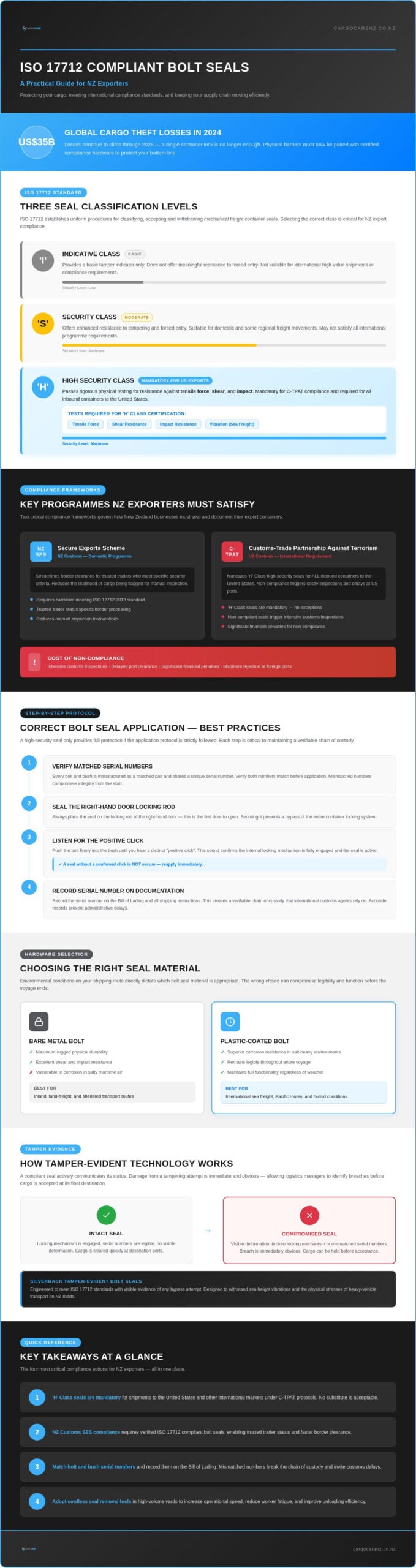
With global cargo theft losses reaching US$35 billion in 2024 and continuing to climb through 2026, a simple container lock is no longer enough to protect your bottom line. If you are moving goods through the New Zealand transport sector, you know that security is a non-negotiable part of operational continuity. Securing international freight is about more than just physical barriers; it’s about meeting the strict standards required by NZ Customs and international carriers to avoid costly delays at the border. Ensuring your cargo is protected with ISO 17712 compliant bolt seals is the first step in maintaining a robust, tamper-evident supply chain.
We understand the pressure of balancing high-security requirements with the need for warehouse efficiency. This guide explains how to achieve full compliance with the NZ Customs Secure Exports Scheme (SES) and C-TPAT requirements while protecting your cargo from contamination or theft. We will also look at the practical side of logistics, including how the right removal tools can speed up your unloading processes. You will learn the technical differences between seal classes and how to select dependable hardware that stands up to the rigours of international shipping.
Key Takeaways
- Understand why ‘H’ Class high-security seals are mandatory for shipments to the United States and other international markets under C-TPAT protocols.
- Ensure full compliance with the New Zealand Customs Secure Exports Scheme (SES) by using verified ISO 17712 compliant bolt seals NZ.
- Master the essential protocol for matching bolt and bush serial numbers to prevent documentation errors on your Bill of Lading.
- Increase operational speed in high-volume yards and reduce worker fatigue by transitioning from manual cutting to cordless removal solutions.
Table of Contents
Understanding ISO 17712 Standards for New Zealand Export Security
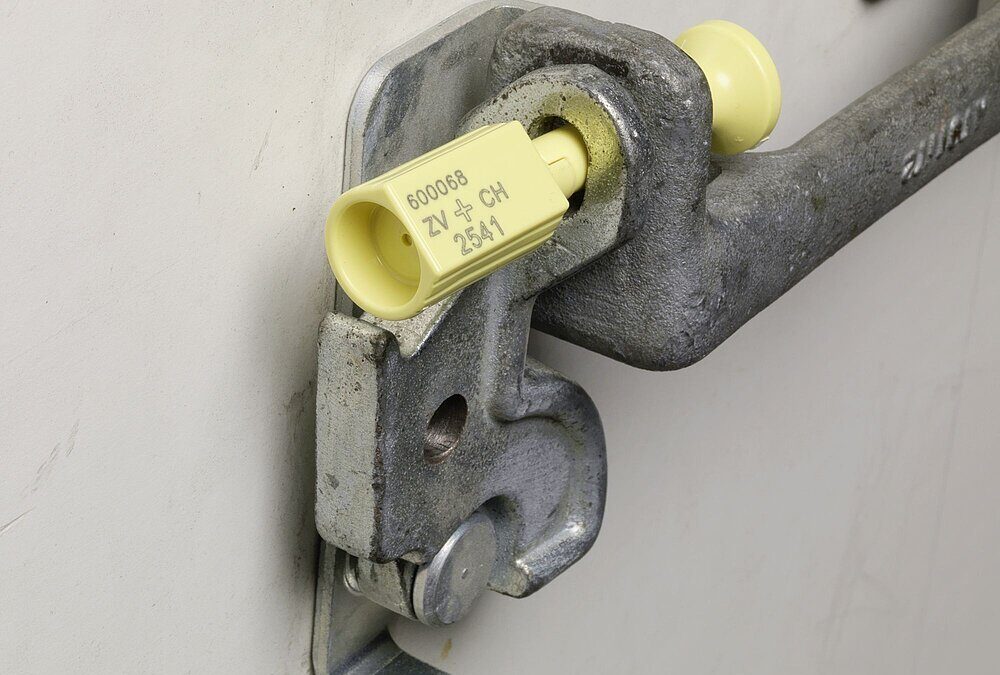
ISO 17712 establishes uniform procedures for the classification, acceptance, and withdrawal of mechanical freight container seals. This international benchmark provides a framework for supply chain security by categorising seals into three distinct levels: Indicative (I), Security (S), and High Security (H). For New Zealand businesses engaged in global trade, selecting **ISO 17712 compliant bolt seals **ensures that cargo remains protected against unauthorised access during long-haul transit. Adhering to ISO 17712 standards isn’t just a regulatory hurdle; it’s a vital component of a secure logistics strategy.
High-security bolt seals must pass rigorous physical testing to earn their classification. These tests measure resistance against tensile force, shear, and impact. In the context of New Zealand’s rugged transport conditions, physical durability is essential. A compliant seal is designed to withstand the vibrations of sea freight and the physical stresses of heavy-vehicle transport on local roads. Unisto tamper-evident secure bolt seals are engineered to meet these standards, providing visible evidence of any attempt to bypass the locking mechanism. If a seal is compromised, the damage is immediate and obvious. This allows logistics managers to identify security breaches before the cargo is accepted at its final destination.
While these high-security measures are vital for commercial shipping, the need for reliable equipment and security extends to personal expeditions as well; for those who enjoy exploring remote locations.
Why ‘H’ Class Seals are Essential for NZ Exporters
International carrier standards often mandate the use of ‘H’ class ISO 17712 compliant bolt seals NZ to mitigate the risk of shipment rejection at foreign ports. Major programmes like the Customs-Trade Partnership Against Terrorism (C-TPAT) in the United States require high-security seals for all inbound containers. Using non-compliant hardware can lead to intensive customs inspections, delayed clearance, and significant financial penalties. For New Zealand exporters, maintaining cargo integrity across vast distances requires a seal that doesn’t just meet a legal requirement but actively deters opportunistic theft. By adhering to these high-security protocols, local businesses ensure their freight moves through global ports without unnecessary friction or costly administrative delays.
Selecting and Applying Secure Bolt Seals for NZ Logistics
Applying ISO 17712 compliant bolt seals NZ correctly is as vital as the seal’s technical rating. A high-security seal only provides protection if the application protocol is strictly followed. Every bolt and bush is manufactured as a matched pair. They share a unique serial number. If these numbers don’t match, the seal’s integrity is compromised from the start. You must record this number on the Bill of Lading and all shipping instructions. This documentation creates a verifiable chain of custody that international customs agents rely on. Accurate record-keeping prevents administrative delays and ensures your cargo moves through the supply chain without suspicion.
New Zealand exporters benefit significantly from the Secure Export Scheme (SES). This programme streamlines border clearance for trusted traders who meet specific security criteria. NZ Customs requires the use of approved hardware that meets the official ISO 17712:2013 standard. By using these seals, you reduce the likelihood of your cargo being flagged for manual inspection. It’s a practical way to keep your supply chain moving. You can explore our range of Unisto tamper evident secure bolt seals to ensure your equipment meets these specific regulatory requirements.
Environmental conditions also dictate your choice of hardware. Bare metal bolts offer rugged durability, but plastic-coated options provide better corrosion resistance in salt-heavy maritime environments. Choosing the right material ensures the seal remains legible and functional throughout the entire voyage, regardless of the weather conditions encountered at sea. This same principle of selecting durable, high-quality gear applies to your personal outdoor adventures; to find reliable equipment for your next trip, click here.
Best Practices for Container Sealing
Effective sealing requires more than just pushing the bolt into the bush. You must listen for a distinct ‘positive click’. This sound confirms the internal locking mechanism is fully engaged. Always place the seal on the locking rod of the right-hand door. This is the first door to open; securing it prevents a bypass of the entire locking system. For comprehensive protection, consider integrating tamper evident security seals NZ into your wider logistics security plan. This creates multiple layers of defence against unauthorised access and provides peace of mind for both the shipper and the receiver. In any industry where safety and compliance are critical, having the right support is essential. A complete cargo security strategy also extends beyond the container door; ensuring your freight is properly restrained during road transport with compliant load restraint straps NZ operators rely on is equally important for meeting NZTA standards. For operators who want to go further and ensure every piece of lashing equipment is in peak condition, following a structured ratchet tie downs NZ maintenance and inspection routine is a critical next step in building a fully compliant load restraint system. For transport professionals who also need to secure open loads on flat decks or utes, selecting a compliant cargo net for truck NZ operations demand is another essential layer of freight protection under the NZ Truck Loading Code.
Improving Operational Flow with Secure Seal Removal Solutions
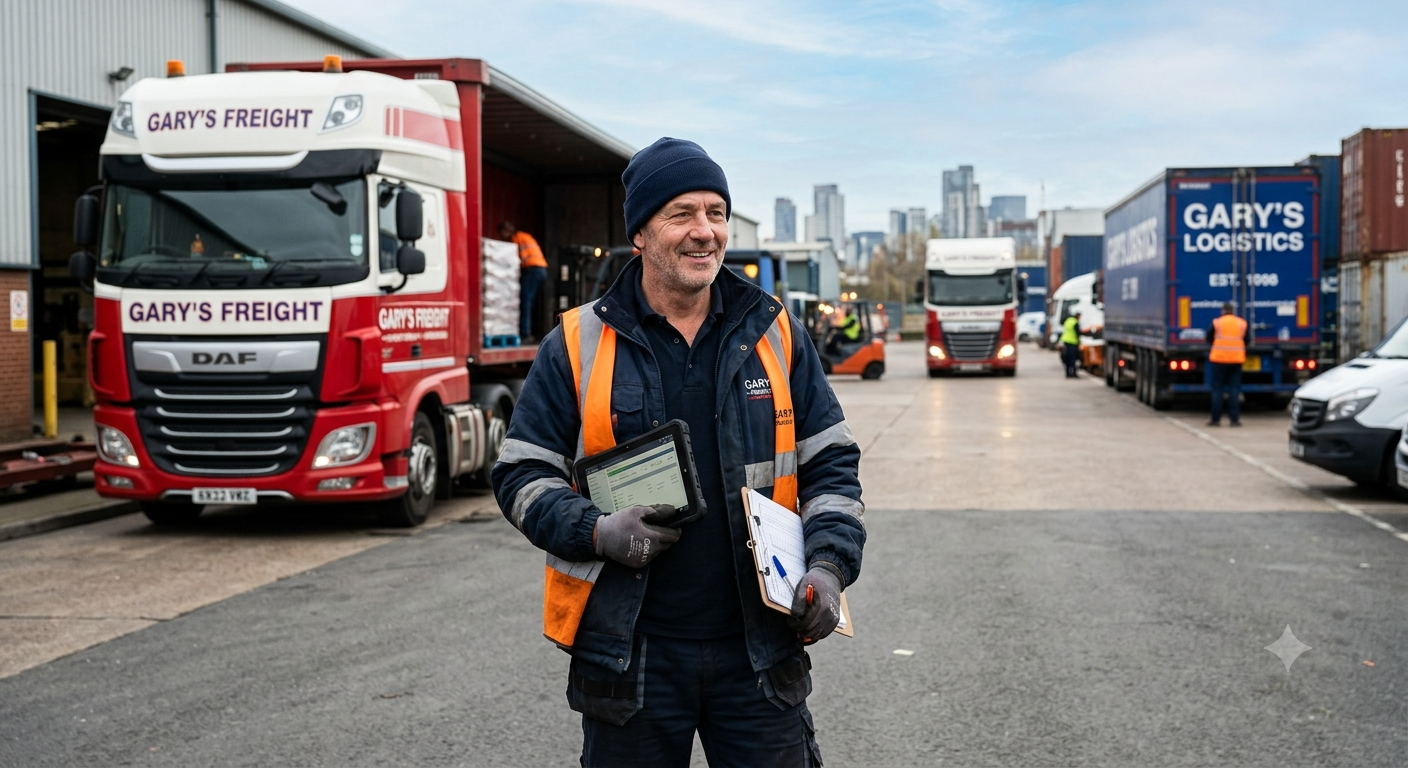
High-security bolts are designed to resist tampering through sheer physical strength. They are constructed from hardened steel to prevent opportunistic theft. While this is essential for maintaining a secure supply chain, it creates a physical bottleneck during the devanning process. Using manual cutters on **ISO 17712 compliant bolt seals **often requires extreme physical exertion. This isn’t just a matter of speed. It’s about the long-term health of your staff. Repetitive manual cutting leads to strain injuries and worker fatigue, particularly in high-volume yards where dozens of containers arrive daily.
Efficiency in the yard is a critical metric for any logistics operation. If your business is part of the NZ Customs Secure Exports Scheme, you already understand the importance of streamlined border processes. Extending that efficiency to your own warehouse is a logical progression. CargoCare NZ serves as a comprehensive partner for the transport industry. We provide both the high-security Unisto seals needed for compliance and the professional-grade hardware required to manage them safely. The Phoenix Cordless Bolt Seal Cutter 18V is a specialised tool designed specifically to solve the removal challenge. It eliminates the need for manual strength. Workers can remove ISO 17712 bolts in seconds with minimal effort.
Cordless vs. Manual Bolt Cutters
Shifting from manual tools to a cordless system provides immediate operational benefits. You can shave minutes off every container unloading cycle. These gains add up to significant time savings over a standard work week. Most importantly, it reduces the Health and Safety risks associated with the repetitive force needed to shear through hardened steel. Keeping your team safe is as important as keeping your cargo secure. For more information on maintaining a safe and compliant warehouse environment, refer to our essential guide to cargo safety equipment NZ.
Securing Your Supply Chain for 2026 and Beyond
Maintaining a secure and efficient logistics operation requires a dual focus on regulatory compliance and yard productivity. You’ve seen that the ‘H’ class standard is the global benchmark for container security. Adopting **ISO 17712 compliant bolt seals **is a fundamental step for any exporter looking to maintain status within the NZ Customs Secure Exports Scheme. Beyond the hardware itself, the integrity of your supply chain depends on rigorous application protocols and accurate documentation on every Bill of Lading.
As cargo theft risks continue to evolve globally, your choice of equipment must provide both physical protection and operational speed. Cargo Care NZ is the official national distributor for Silverback products. We ensure your team has access to dependable tamper-evident seals and specialist Phoenix 18V cordless cutters across our national distribution network. These tools eliminate the physical strain of manual removal and keep your devanning process moving without delay. By pairing high-security hardware with professional-grade removal solutions, you protect your cargo and your workforce simultaneously.
View our range of ISO 17712 Secure Bolt Seals and Phoenix Cutters to streamline your export security today. We look forward to supporting your transport requirements across New Zealand.
Frequently Asked Questions
What is the difference between an ‘H’ class and an ‘S’ class bolt seal?
The primary difference lies in the mechanical strength and the severity of the testing protocols they must pass. ‘H’ class (High Security) seals undergo more stringent tests for tensile, shear, and impact resistance compared to ‘S’ class (Security) seals. While ‘S’ class provides a standard level of protection, ‘H’ class is the specific requirement for international programmes such as the NZ Customs Secure Exports Scheme and C-TPAT for shipments entering the United States.
Is it mandatory to use ISO 17712 seals for domestic New Zealand freight?
ISO 17712 compliance isn’t strictly mandatory for domestic road or rail freight within New Zealand. However, many local logistics operators adopt **ISO 17712 compliant bolt seals **as a best practice to ensure a uniform security standard across their entire fleet. Using these high-security seals domestically provides superior tamper evidence and physical protection compared to standard indicative plastic seals, reducing the risk of opportunistic theft during local transit. For operators looking to build a complete compliance framework, pairing tamper-evident seals with properly rated load restraint straps NZ transport professionals trust ensures your freight meets both container security and road transport standards. Completing that framework also means keeping your lashing gear in verified working order; our guide on ratchet tie downs NZ inspection and maintenance provides the practical template needed to stay compliant with AS/NZS 4380:2001 on every run. Transport operators managing open loads on trucks and trailers should also review our 2026 guide to selecting a compliant cargo net for truck NZ fleets rely on to meet NZTA load containment requirements.
The same logic of prioritising transit security applies when moving household furniture and valuables. For those looking for professional standards in the residential sector, Anspach Removals & Storage offers expert packing and removal services that focus on the safe and secure delivery of household items.
Who is responsible for providing the bolt seal for an export container?
The shipper or their authorised agent bears the responsibility for providing and applying the bolt seal. This must occur immediately after loading is finalised and before the container leaves the site. It’s the exporter’s duty to ensure the seal meets the required international standards and that the unique serial number is recorded accurately on the Bill of Lading. While carriers verify the presence of a seal, the legal responsibility for the sealing process stays with the shipper.
What should I do if a bolt seal arrives broken or shows signs of tampering?
You should immediately halt the unloading process and notify the carrier and your insurance provider if a seal appears compromised. Don’t open the container or move the cargo until a formal survey or inspection is conducted by the relevant authorities. Take clear, high-resolution photographs of the damaged seal and the door locking rods. Documenting the discrepancy between the physical seal number and the shipping paperwork is vital for any subsequent insurance claims or security investigations.
Article by
Steve O'Malley