
A single non-compliant load can result in a corporate fine of up to NZ$10,000 under the Land Transport Act. This is a significant operational risk that no transport professional can afford to ignore. You understand that maintaining strict compliance with the Waka Kotahi Truck Loading Code is essential for both safety and fleet continuity, yet the technicalities of g-force calculations often cause unnecessary confusion on the loading dock.
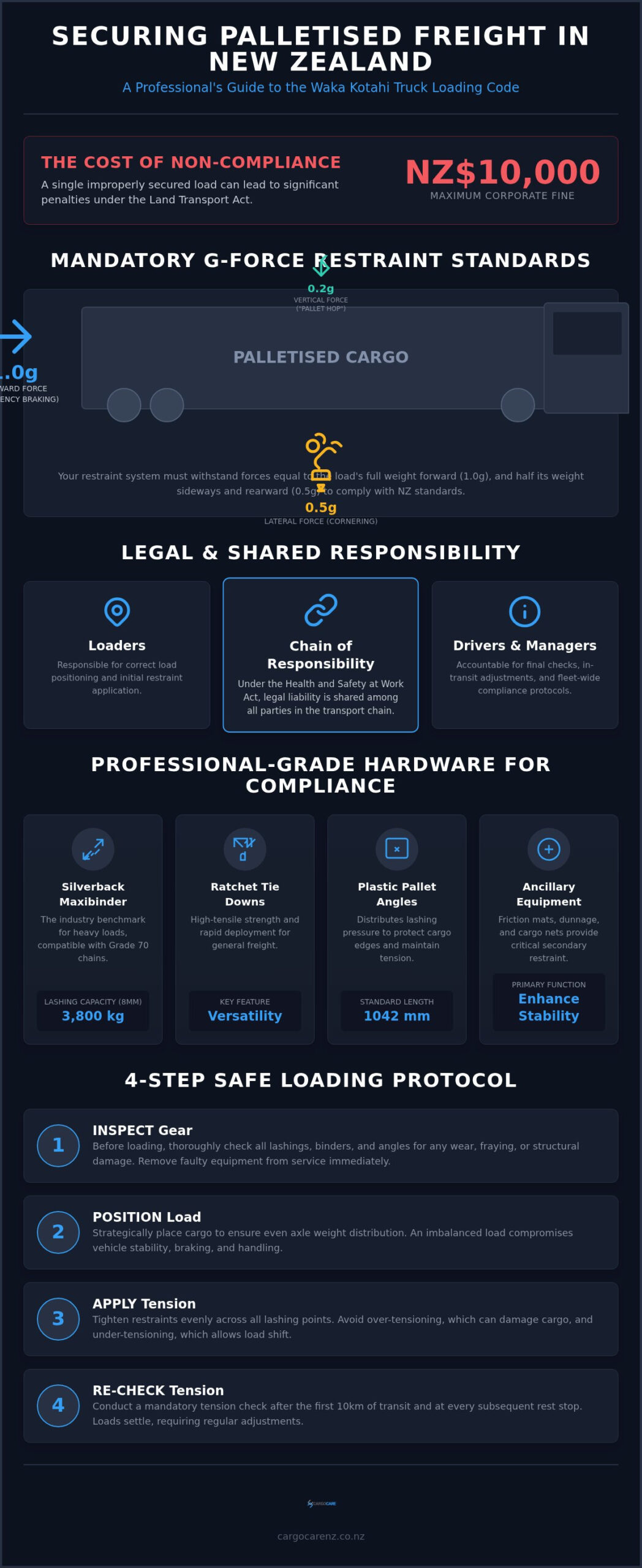
This guide provides a clear, technical path on how to secure palletized freight NZ requirements demand for 2026. You will master the physics of the 1.0g forward force standard and identify the professional-grade Silverback hardware, such as heavy-duty plastic pallet angles and Maxibinders, required to eliminate cargo damage. We will outline the exact methodologies to achieve full regulatory compliance while maintaining the efficient loading and unloading workflows your business depends on to stay profitable.
Key Takeaways
- Understand the mandatory g-force requirements of the NZ Transport Agency Waka Kotahi, specifically the 1.0g forward force capacity required for emergency braking.
- Discover technical methods for how to secure palletized freight NZ standards demand by utilising professional-grade Maxibinders and ratchet tie downs.
- Learn why incorporating heavy-duty plastic pallet angles is critical for protecting cargo edges and maintaining optimal lashing tension.
- Establish a robust inspection routine and load positioning strategy to ensure even axle weight distribution and full compliance with the Truck Loading Code.
NZ Load Restraint Standards: Understanding Compliance and Physics
Load restraint in New Zealand is governed by the Official New Zealand Truck Loading Code, which translates the physics of motion into mandatory safety standards. Knowing how to secure palletized freight NZ requires a firm grasp of the 1.0g rule. This dictates that your restraint system must withstand a forward force equal to the full weight of the load, simulating the extreme deceleration of emergency braking. Understanding the principles of load securing is vital because cargo doesn’t just move forward. You must also account for 0.5g lateral force during cornering and 0.5g rearward force when reversing or accelerating.
New Zealand’s undulating highway surfaces introduce a 0.2g vertical force. Without adequate downward pressure, “pallet hop” occurs, which destabilises the entire trailer and risks strap failure. While high-tensile lashings are primary, professional operators use friction mats and dunnage to increase the coefficient of friction. This reduces the total number of straps required and ensures the cargo remains stationary under standard transit conditions.
The Legal Framework: Waka Kotahi and the Truck Loading Code
Under the Health and Safety at Work Act, every Person Conducting a Business or Undertaking (PCBU) is responsible for ensuring load security. This Chain of Responsibility means loaders, drivers, and fleet managers are all legally liable for a vehicle’s cargo. Failure to implement proper protocols on how to secure palletized freight NZ can lead to corporate fines reaching NZ$10,000. Using rated hardware is non-negotiable. Every Maxibinder or ratchet strap must be tested and compliant with current standards to withstand these calculated forces during a roadside inspection.
Essential Hardware for Securing Palletised Cargo in NZ
Meeting the 1.0g force requirement depends entirely on selecting hardware rated for the task. For heavy machinery or dense palletised goods, the Silverback Maxibinder is the industry benchmark. An 8mm Maxibinder provides a lashing capacity of 3,800kg, ensuring compatibility with Grade 70 transport chains. When managing general freight, operators typically rely on a Ratchet Tie Down with Hook and Keeper. These systems offer high-tensile strength while remaining light enough for rapid deployment. Understanding how to secure palletized freight NZ standards require involves matching the lashing capacity of your gear to the mass of the cargo.
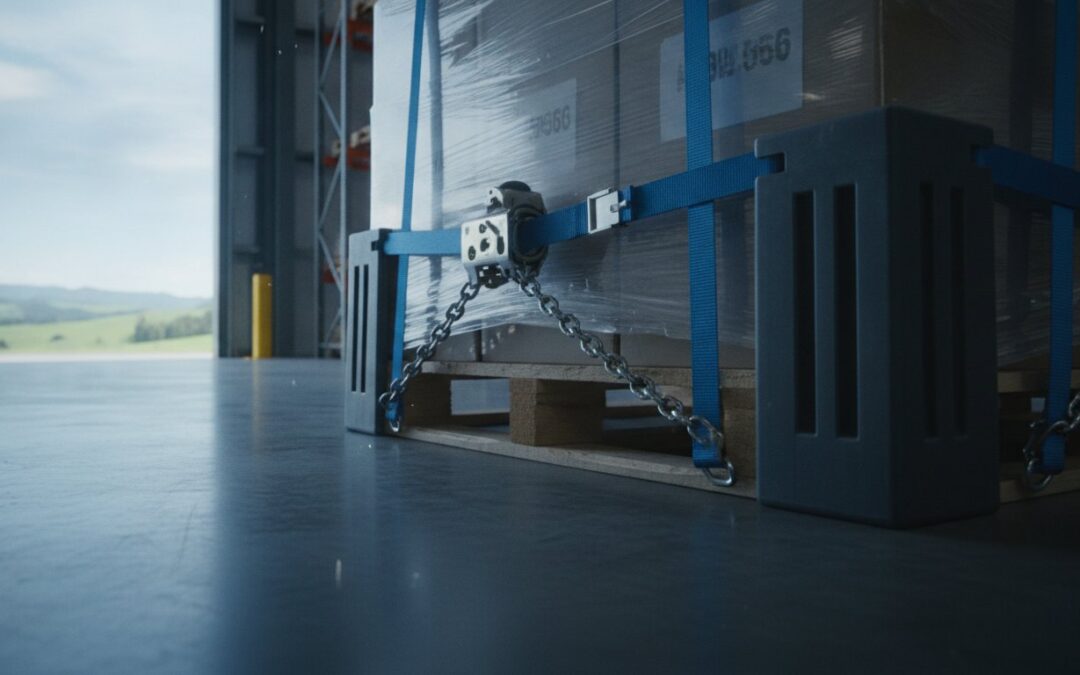
Properly tensioned load restraint straps NZ can easily crush cardboard packaging or damage fragile cargo edges. To prevent this, professional loaders use 1042mm plastic pallet angles. These heavy-duty protectors distribute lashing pressure across a wider surface area, maintaining the integrity of the pallet while allowing for maximum tension. For loads containing smaller, loose items, a Cargo Safety Net provides a final layer of containment. This prevents debris from exiting the vehicle during transit and is particularly effective for multi-drop runs where partial loads might shift.
Choosing Between Webbing and Chain Systems
Selecting the correct lashing method depends on the weight and rigidity of your cargo. You can review the specific criteria for Maxibinder vs ratchet binder NZ to determine which tool suits your fleet requirements. While webbing is versatile, chains are preferred for abrasive or extremely heavy loads. Plastic pallet angles outperform cardboard alternatives in New Zealand’s high-humidity environments. They don’t lose structural integrity when wet, ensuring your load remains secure throughout long-haul routes. You can find these professional-grade tools at CargoCare NZ to ensure your fleet meets current safety standards.
Best Practices for Safe Loading and Unloading Operations
Operational success hinges on a disciplined workflow that begins before the vehicle leaves the yard. To master how to secure palletized freight NZ professionals follow a four-step protocol. First, inspect all lashings, Maxibinders, and plastic pallet angles for wear, fraying, or structural fatigue. Damaged gear is a primary cause of roadside failure and Waka Kotahi non-compliance. Second, position the load to maintain even axle weight distribution. An imbalanced trailer compromises vehicle stability and braking efficiency, particularly on New Zealand’s winding rural roads. Third, apply tension evenly across all lashing points to avoid distorting the pallet or the vehicle chassis. Over-tensioning can be as damaging as under-tensioning. Finally, conduct a mandatory tension check after the first 10km and at every subsequent rest stop. Loads often settle within the first few kilometres of transit, requiring immediate adjustment.
Security and Safety at the Destination
Safe unloading is the final critical phase of the logistics cycle. Maintaining supply chain integrity requires the use of tamper evident security seals NZ, which provide a visual record of cargo access. For high-security international shipments, ensure your hardware meets ISO 17712 compliant bolt seals NZ standards. Efficiency during de-vanning is improved by using the Phoenix cordless bolt seal cutter 18V. This tool allows for rapid, one-handed removal of heavy-duty seals, reducing the physical strain on staff and speeding up the unloading workflow. This systematic approach ensures that knowing how to secure palletized freight NZ standards demand results in zero damage from departure to final delivery.
Optimising Fleet Safety and Compliance for 2026
Mastering load restraint physics and the Truck Loading Code is essential for operational continuity. You now understand the 1.0g forward force standard and the role high-tensile hardware plays in meeting these benchmarks. Implementing a systematic approach to how to secure palletized freight NZ regulations demand protects your cargo, staff, and bottom line from non-compliance risks.
Cargo Care NZ is the official distributor of Silverback products, supplying professional-grade tools like Maxibinders and 1042mm plastic pallet angles. We provide expert advice on national transport compliance to keep your fleet moving. Browse the full range of Silverback load restraint hardware at Cargo Care NZ to equip your team with durable, rated gear. Maintaining these standards ensures your logistics operation remains reliable and efficient across every New Zealand route. Your commitment to these best practices builds a safer transport industry for everyone.
Frequently Asked Questions
What is the most common cause of load restraint failure on NZ roads?
The primary cause of load restraint failure is insufficient lashing tension combined with a failure to perform mid-journey checks. Loads often settle during the first few kilometres of travel, which causes straps to slacken. If the driver doesn’t stop to re-tension the gear, the cargo can shift under standard cornering forces. Using high-quality ratchet tie downs with hook and keeper helps maintain consistent pressure.
Are plastic pallet angles mandatory for all palletised freight?
While not explicitly mandatory for every shipment type, plastic pallet angles are essential for meeting Waka Kotahi compliance when transporting fragile or compressible goods. These tools prevent lashing straps from cutting into packaging, which otherwise leads to a loss of tension. For long-haul routes, heavy-duty 1042mm plastic pallet angles ensure the load remains secure without damaging the customer’s products.
How many ratchet straps do I need for a standard 10-tonne load?
The number of straps depends on the lashing capacity of your gear and the friction between the pallet and the deck. To master how to secure palletized freight NZ standards, you must ensure the combined lashing capacity meets the 1.0g forward force requirement. For a 10-tonne load, you typically require enough straps to counteract 10,000kg of forward force, adjusted for the specific lashing angle used.
Can I use unrated hardware if I use extra lashings?
No, using unrated hardware is a direct violation of the Official New Zealand Truck Loading Code. Even if you use multiple unrated straps, they don’t provide a certified lashing capacity that an inspector can verify. Professional operations must use rated hardware, such as Silverback Maxibinders or compliant ratchet straps, to ensure the safety of the load and avoid significant corporate fines.
Article by
Steve O'Malley