
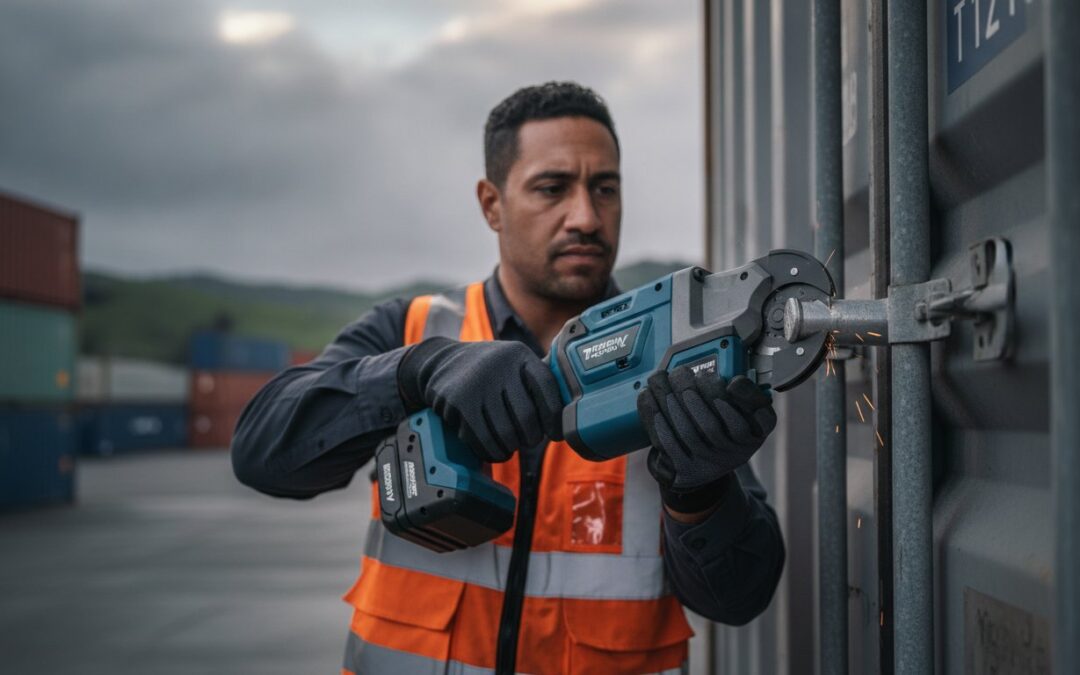
What if the primary bottleneck in your decanting bay isn’t the crane or the forklift, but a pair of manual bolt cutters? For logistics managers overseeing high volume container seal removal, the physical toll on yard staff is a constant concern. Repetitive strain injuries (RSI) aren’t just a safety issue; they’re a direct threat to your operational continuity. When staff are fatigued, the process of verifying ISO 17712:2013 compliant seals slows down, leading to inconsistent documentation and delayed container turnaround times.
You know that keeping the yard moving safely is a non-negotiable priority for a reliable operation. This article demonstrates how transitioning to 18V technology, specifically the Phoenix Cordless Bolt Seal Cutter, can eliminate these physical risks and streamline your workflow. We’ll look at how moving from manual force to cordless precision helps you achieve faster turnaround times, reduce workplace injury claims, and implement standardised security removal procedures across your entire operation.
Key Takeaways
- Identify how manual cutting methods create cumulative delays and how to quantify the time-motion impact on your decanting bay.
- Learn how the ergonomic design of 18V tools mitigates repetitive strain injuries during high volume container seal removal.
- Understand the technical specifications of the Phoenix Cordless Bolt Seal Cutter 18V that establish it as the industrial standard for heavy-duty yard work.
- Discover strategies for standardising the seal removal process to maintain strict security compliance while increasing operational speed.
- Review essential safety protocols and training requirements for staff operating cordless power tools within a high-pressure distribution centre.
The Logistics Bottleneck: Challenges of High Volume Container Seal Removal
High volume container seal removal is a repetitive, physically demanding task that often dictates the pace of an entire decanting operation. While a single cut might take only a few seconds with manual tools, the cumulative effect of processing hundreds of containers per shift creates a significant operational drag. Yard staff must maintain a strict chain of custody, ensuring every ISO 17712 high security seal is verified and logged before removal. Under the pressure of tight transport schedules, this manual process often becomes the weakest link in the supply chain.
The Physical Impact of Manual Cutting
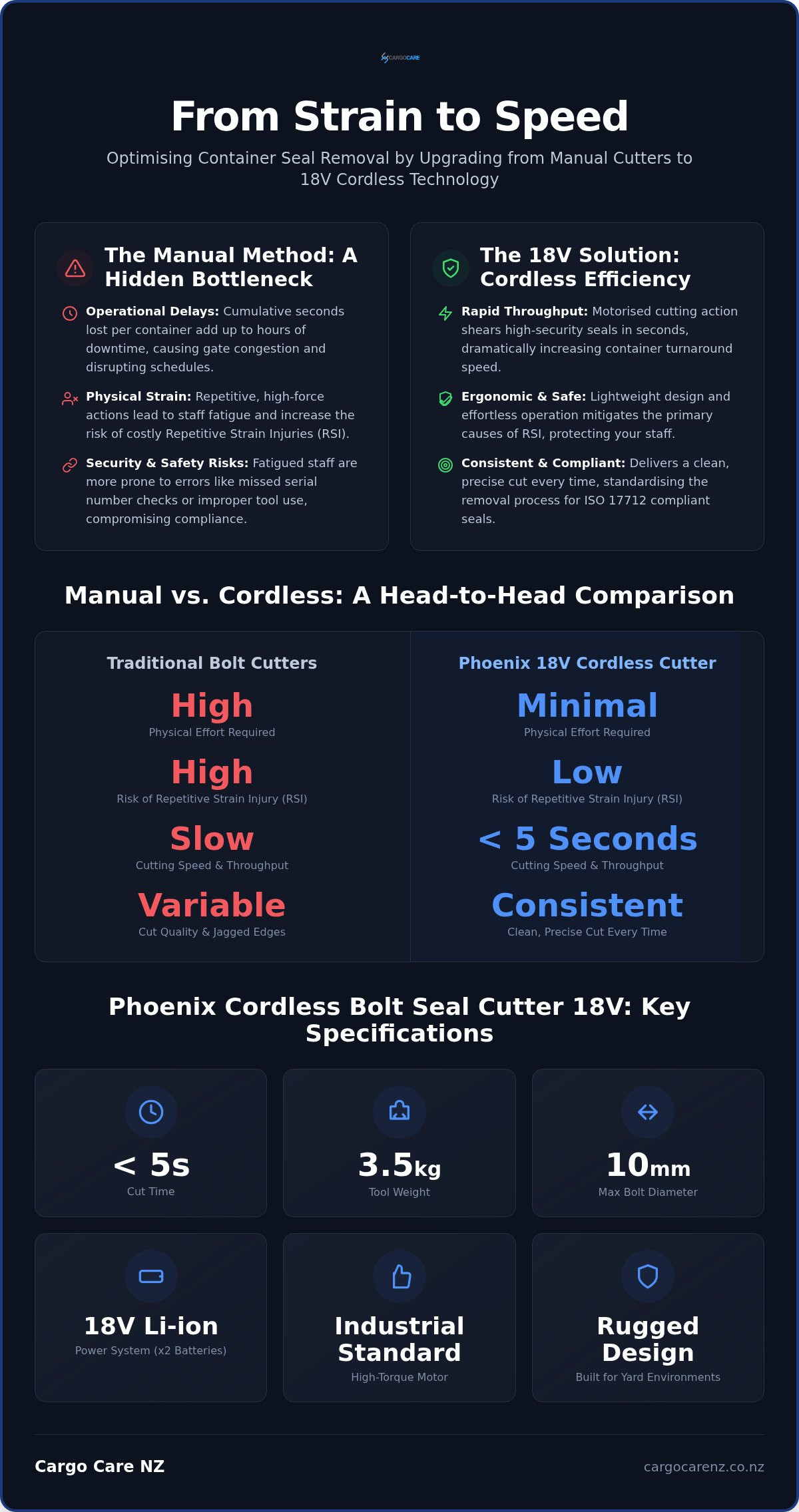
Using traditional 600mm or 900mm manual bolt cutters requires significant biomechanical force. Over a standard shift, this repetitive strain on the shoulders, wrists, and lower back leads to worker fatigue and increases the risk of Repetitive Strain Injury (RSI). When staff are physically exhausted, they’re more likely to take shortcuts. This might manifest as missed serial number verifications or improper tool handling, both of which compromise workplace safety and cargo security. It’s not just about the effort of the cut; it’s about the long-term liability of a fatigued workforce.
Operational Costs of Inefficiency
Inefficiency at the decanting bay has a measurable impact on downstream logistics. These bottlenecks ripple through the facility, affecting everything from warehouse slotting to outbound transport scheduling. Key impacts include:
- Gate congestion and increased truck idling times.
- Delayed inventory availability due to slow container turnaround.
- Higher labour costs as staff struggle with manual bottlenecks.
Even a 30-second delay per container adds up to hours of lost productivity across a busy distribution centre. These hidden costs erode profit margins and disrupt the flow of goods. Transitioning to powered solutions is a matter of operational necessity for sites managing high volume container seal removal.
Technical Reference: The Phoenix Cordless Bolt Seal Cutter 18V
Transitioning to 18V technology represents a significant shift in how logistics facilities manage high volume container seal removal. The 18V platform has become the industrial standard because it delivers the consistent torque necessary to shear through high-tensile steel without the weight of pneumatic or hydraulic systems. Weighing only 3.5kg, the Phoenix cutter provides the portability required for yard staff to move quickly between containers while maintaining the power to cut through bolt seals up to 10mm in diameter in under 5 seconds.
Precision is critical when handling a high-security ISO 17712:2013 standard bolt seal. Manual cutters often require multiple attempts or awkward body positioning to achieve a clean break, whereas the Phoenix 18V utilises a motorised bypass cutting action. This ensures a clean cut every time, preventing the jagged edges that can lead to puncture wounds or damaged door hardware. For operations prioritising speed and safety, you can view our full range of specialised transport equipment to see how these tools integrate into a modern cargo safety strategy.
Performance Specifications for High-Volume Use
The core advantage of the Phoenix 18V is its high-torque motor, specifically engineered for the hardened steel components of modern security seals. The Phoenix 18V serves as the primary solution for high-volume logistics hubs requiring rapid, reliable seal processing. Unlike hydraulic units that are often slow to cycle and require frequent fluid maintenance, this cordless system provides an immediate response. The footprint is significantly smaller than manual alternatives, allowing for easier storage in vehicle cabs or on-site tool stations.
Durability and Maintenance in the Yard
Industrial tools in container terminals face constant exposure to dust, moisture, and vibration. The Phoenix unit features a rugged housing designed for these outdoor environments, ensuring internal electronics remain protected during heavy-duty use. To ensure your Phoenix cordless bolt seal cutter 18V remains operational, follow these basic maintenance protocols:
- Keep the cutting jaws free of metal shavings and debris to prevent jamming.
- Ensure battery contacts are kept clean and dry to maintain efficient power transfer.
- Rotate the two included 18V Lithium-ion batteries to ensure a fully charged unit is always available for the next shift.
- Inspect the jaw alignment weekly to ensure consistent cutting performance on high-security bolts.
Implementing High-Efficiency Removal in Your Distribution Centre
Integrating 18V technology into a busy yard requires more than just upgrading equipment. It involves a structured approach to standardising the workflow across the decanting bay. Evaluating the ROI of this transition involves looking beyond the initial tool investment; managers should account for the reduction in workplace injury claims and the measurable gain in container turnaround speed. When high volume container seal removal is performed with consistent, motorised precision, the entire facility operates with greater predictability and reduced labour strain.
Safe Removal Protocols for Cordless Tools
Safety remains the priority in any industrial setting. Yard staff must be equipped with appropriate PPE, specifically impact-rated eye protection and heavy-duty gloves, to protect against metal fragments. Refer to our guide on manual vs cordless container seal cutters for a detailed comparison of safety profiles. A standardised removal procedure should follow these steps:
- Perform a visual inspection for signs of tampering or pre-cutting.
- Verify the seal serial number against the shipping manifest or digital log.
- Position the Phoenix cutter jaws perpendicular to the bolt for a clean shear.
- Execute the cut and immediately place the broken components in a designated disposal bin to prevent yard punctures.
Security and Documentation Compliance
Speed must never compromise the integrity of the supply chain. Even in high-pressure environments, staff must perform the “View, Verify, Tug, Twist” (VVTT) method before any cut is made. High-volume operations must never skip the tamper evident security seals check, as this is the final opportunity to identify cargo interference or deceptive pickups. Integrating these verification steps into your digital inventory system ensures that the chain of custody remains unbroken. This systematic approach transforms high volume container seal removal from a manual chore into a robust, compliant security protocol that protects the business from liability and loss.
Modernising Your Decanting Bay for Long-Term Performance
Transitioning from manual force to 18V precision is a fundamental step in protecting your workforce and your schedule. The physical strain of traditional cutting methods is a liability that high-capacity facilities can no longer afford to carry. By adopting a standardised approach to high volume container seal removal, you ensure that security documentation remains accurate while significantly reducing the time spent at the bay. This shift allows your yard staff to focus on verification and safety rather than struggling with hardened steel bolts. Ensuring you are using correctly specified shipping container bolt seals that meet ISO 17712:2013 ‘H’ class requirements is equally critical to maintaining a secure and compliant operation from dispatch to delivery.
As the official Silverback NZ distributor, CargoCare NZ provides the technical expertise and hardware required for high-security transport compliance. We specialise in supplying tools that withstand the rugged demands of the local transport sector. Beyond seal cutting equipment, a comprehensive load safety strategy also includes implementing a reliable cargo safety net NZ solution to prevent shifted freight from becoming a hazard when container doors are opened. Our team offers expert technical support for logistics hardware; this ensures your equipment stays operational in the most demanding yard environments. Implementing the right tools today creates a safer, more efficient environment for your entire team and secures your operational continuity.
Enquire about the Phoenix Cordless Bolt Seal Cutter 18V for your operations and start optimising your decanting workflow today.
Frequently Asked Questions
How many bolt seals can the Phoenix 18V cut on a single charge?
The Phoenix 18V is engineered for continuous industrial use and supports high-volume operations throughout a full shift when utilising the two included 18V Lithium-ion batteries. While the exact number of cuts depends on the specific bolt diameter and steel hardness, the dual-battery system allows for one pack to charge while the other is in use. This configuration eliminates downtime and ensures the tool is always ready for the next container.
Is a cordless bolt cutter safer than a manual one for high-volume work?
Yes; cordless technology significantly reduces the risk of repetitive strain injuries (RSI) by removing the requirement for physical force. High volume container seal removal with manual tools puts substantial pressure on the operator’s wrists, shoulders, and back. The motorised action of the Phoenix 18V performs the cut in under five seconds, allowing the worker to maintain a neutral posture and reducing the likelihood of fatigue-related accidents.
Can the Phoenix 18V cut all types of ISO 17712 compliant bolt seals?
The Phoenix 18V is designed to shear through high-security bolt seals up to 10mm in diameter, which covers the vast majority of ISO 17712:2013 compliant hardware. Its motorised bypass cutting action is specifically tuned for the hardened steel used in ‘H’ class seals. This makes it a reliable solution for logistics hubs that must process a wide variety of international shipping containers quickly and securely.
What maintenance is required for a cordless bolt seal cutter in a busy yard?
Maintaining a cordless cutter in a rugged environment involves daily cleaning of the cutting jaws to remove metal shavings and debris. Operators should also ensure that battery contacts remain dry and free of dust to maintain efficient power transfer. Regular inspection of the jaw alignment and consistent battery rotation will help preserve the tool’s performance. These simple protocols are essential for ensuring long-term reliability during high volume container seal removal tasks.
Article by
Steve O'Malley