
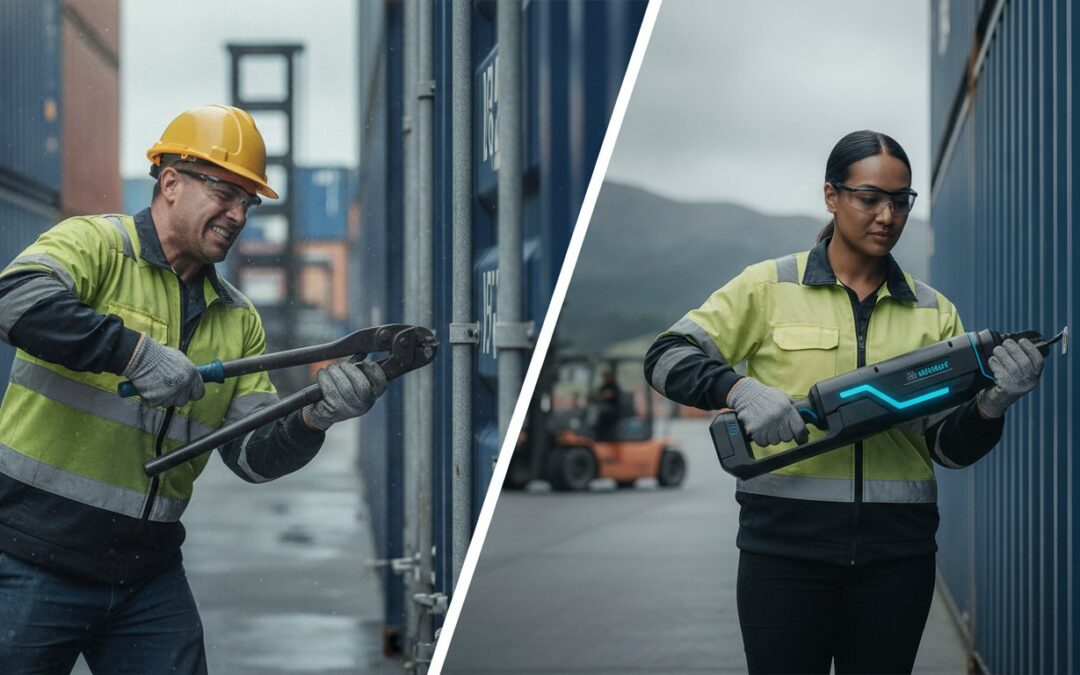
Operating manual bolt cutters can require up to 30kg of muscular force; a physical demand that contributes heavily to repetitive strain injuries among logistics personnel. In a high-volume New Zealand distribution centre, you understand that stubborn high-security seals often dictate the pace of your container turnaround. Traditional methods, such as manual cropping or using angle grinders near flammable cargo, introduce unnecessary safety hazards and slow down the unloading process. Choosing a container seal cutter cordless model addresses these operational bottlenecks by replacing brute force with precision engineering.
You likely agree that worker safety and speed are the two most critical metrics in your yard. This article demonstrates how cordless bolt seal cutters compare to manual tools in terms of safety, speed, and long-term cost-efficiency. We will preview the technical advantages of the Phoenix 18V system and explain how modern battery technology helps your operation maintain strict WHS compliance while handling 10mm high-security seals with ease. By the end of this guide, you’ll understand why the industry is moving toward battery-powered solutions to protect both the worker and the bottom line.
Key Takeaways
- Transitioning to a container seal cutter cordless system significantly reduces physical strain, mitigating the risk of long-term musculoskeletal injuries associated with manual cropping.
- Eliminate fire hazards and dangerous sparks in the warehouse by replacing high-risk angle grinders with specialised, battery-powered cutting technology.
- Discover why 19KN of force is the essential metric for efficiently processing high-security ISO 17712 seals without damaging container hardware.
- Learn how 18V Lithium-ion batteries and quick-charge capabilities ensure operational continuity and prevent bottlenecks in high-volume logistics hubs.
- Improve site-wide WHS compliance by adopting ergonomic tools that transform a two-minute manual struggle into a consistent five-second task.
Table of Contents
The Evolution of Container Unloading: Manual vs Cordless Technology
Logistics operations across New Zealand are moving away from manual labour toward mechanical precision. For decades, the standard approach to opening shipping containers involved long-handled bolt cutters or angle grinders. These methods are now viewed as operational liabilities. Manual cutting relies on the physical strength of the operator, which introduces significant variability in speed and safety. By contrast, a container seal cutter cordless tool provides a consistent, hydraulic-driven solution that prioritises worker health and safety (WHS) without sacrificing throughput.
The Limitations of Traditional Manual Cutters
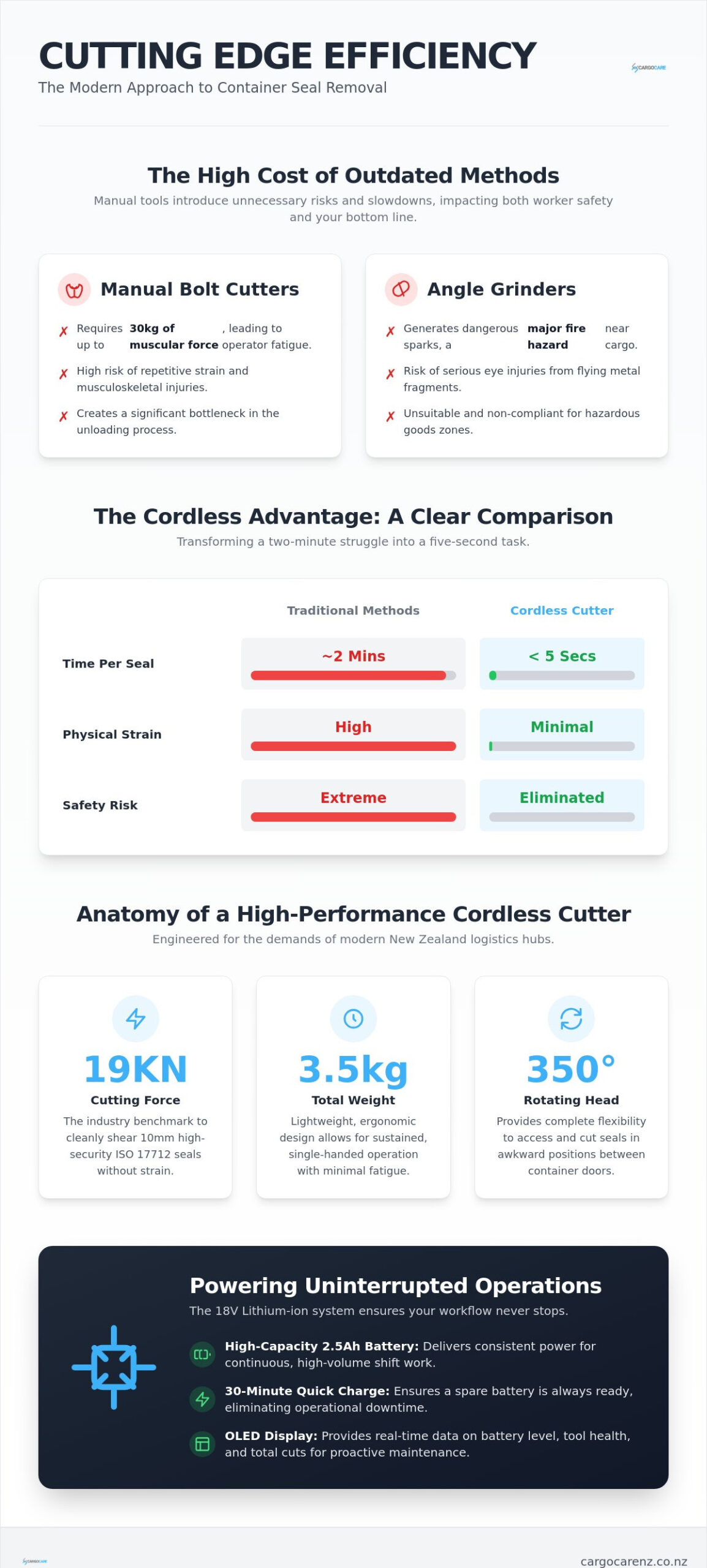
Removing ISO 17712 high security seals requires substantial force. Manual cutters often demand up to 30kg of muscular pressure to snap a 10mm steel bolt. Over a full shift, this repetitive exertion leads to musculoskeletal strain and fatigue. When an operator’s tired, the risk of a tool slipping increases. Brute force isn’t a viable strategy for modern transport hubs that value operational continuity. Relying on manual effort creates a bottleneck, especially when high-volume arrivals require dozens of containers to be de-vanned in a single window. Operations managing high volume container seal removal understand that this physical toll on yard staff is a direct threat to operational continuity and consistent documentation standards.
Angle Grinders: A Dangerous Alternative
Some yards use angle grinders to bypass the physical strain of manual cutters. This practice introduces severe risks. Grinders generate hot sparks and projectile metal fragments that can cause serious eye injuries or damage cargo. In environments where Class 3.0 flammable liquids are present, these sparks are a direct fire hazard. Using a container seal cutter cordless model eliminates these risks. These tools use cold-cutting hydraulic jaws to shear through metal, ensuring no sparks are produced during the operation. This makes them the only safe choice for hazardous goods zones where safety compliance is non-negotiable.
Operational downtime is often the hidden cost of outdated equipment. Fatigue doesn’t just cause injuries; it slows down the entire supply chain. A worker struggling with a stubborn seal adds minutes to every container turnaround. Over a week, these delays accumulate into lost revenue. Transitioning to cordless technology ensures every cut takes seconds, regardless of the operator’s physical strength or the time of day.
Key Performance Metrics: Evaluating Your Cordless Bolt Seal Cutter
Selecting a container seal cutter cordless tool requires an objective assessment of technical specifications. For logistics hubs managing international freight, compliance with C-TPAT (Customs Trade Partnership Against Terrorism) standards is mandatory. These regulations require the use of high-security seals that can only be removed with heavy-duty tools. A cutting force of 19KN is the industry benchmark for these tasks. This specific force ensures the tool shears through 10mm steel bolts cleanly without straining the motor or the operator.
Ergonomics play a vital role in tool selection. A total weight of 3.5kg, including the battery, allows for single-handed operation over extended periods. Tools featuring a 350-degree rotating head provide the necessary flexibility to reach seals in awkward positions between container doors. Durability is equally important. In rugged yard environments, a tool must feature replaceable jaws and a robust carry case to protect the internal hydraulics from dust and impact damage.
Power and Speed Requirements
In high-volume logistics centres, speed is a non-negotiable metric. A cut time of under five seconds per seal is essential to prevent yard congestion. Modern units often include OLED displays. These screens provide real-time data on tool health, battery levels, and the total number of cuts completed. This level of transparency allows maintenance teams to monitor jaw wear and schedule services before a mechanical failure occurs. For a detailed comparison of leading 18V systems available in the market, reviewing the best bolt seal cutter NZ logistics operations rely on in 2026 provides a useful technical benchmark.
Battery Management for Logistics Hubs
Reliable performance depends on battery chemistry. 18V Lithium-ion systems offer the best balance of power and weight for the New Zealand transport sector. While 1.5Ah batteries are suitable for light duties, 2.5Ah versions provide the stamina required for continuous shift work. A 30-minute quick-charge functionality is critical. It ensures that a spare battery is always ready, eliminating operational delays during peak arrival windows. For operations requiring this level of reliability, the Phoenix Cordless Bolt Seal Cutter 18V provides a proven technical solution.
Maximising Operational Efficiency and WHS Compliance
Operational efficiency in a busy New Zealand yard is often measured by container turnaround times. Manual methods, which frequently involve a two-minute struggle with high-tensile steel, create unnecessary friction in the supply chain. Transitioning to a container seal cutter cordless system transforms this bottleneck into a consistent, five-second routine. This speed isn’t just about moving cargo faster; it’s about maintaining a predictable flow that keeps transport schedules on track. For facilities focused on high volume container seal removal optimised with 18V technology, the reduction in labour hours and the prevention of operational delays provide a clear return on investment. While the initial investment in battery-powered technology is higher than manual alternatives, the reduction in labour hours and the prevention of operational delays provide a clear return on investment for high-volume hubs.
Work Health and Safety (WHS) compliance is a primary driver for equipment upgrades in the logistics sector. Adopting professional tools from the Silverback range ensures that your fleet meets modern safety standards. By removing the physical variability of manual cutting, managers can ensure that every operator, regardless of their physical strength, can perform seal removals safely and efficiently. This standardisation is essential for maintaining a professional and compliant logistics operation; for those seeking to enhance facility protection and environmental control, you can learn more about QLD Shade and their durable aluminium shutter solutions.
Protecting the Workforce from Injury
Hand and wrist injuries are the most common physical risks associated with container unloading. The repetitive force required to snap security bolts can lead to long-term strain and costly compensation claims. The Phoenix Cordless Bolt Seal Cutter 18V addresses these risks by automating the cutting process. Even with mechanical assistance, operators should always utilise appropriate personal protective equipment (PPE), including safety glasses and gloves, to manage the small metal fragments released during a cut. This combination of ergonomic hardware and safety protocol significantly reduces the likelihood of workplace accidents.
Securing the Supply Chain
High-security logistics require a cohesive approach to both sealing and removal. There is a direct synergy between using tamper evident bolt seals and professional-grade removal tools. Relying on makeshift methods or underpowered cutters compromises the integrity of your security protocols. High-performance hardware ensures that once a container reaches its destination, it can be accessed immediately without damaging the container door hardware. By integrating a container seal cutter cordless tool into your standard operating procedures, you ensure operational continuity and reinforce your commitment to cargo security.
Beyond physical security, professional logistics operations often extend their oversight to the point of origin; you can discover The Inspection Company to learn how social responsibility audits help maintain ethical standards throughout the global supply chain.
Optimising Your Fleet for Safety and Throughput
Transitioning from manual cropping to a container seal cutter cordless system is a strategic move for any New Zealand logistics provider. This shift addresses the fundamental requirements of modern yard management: protecting workers from repetitive strain and ensuring rapid container turnaround. By prioritising technical specifications like the 19KN force threshold, you align your operation with international security standards while eliminating the fire risks associated with traditional angle grinders. Professional tools create a predictable workflow that brute force simply cannot match.
As the official NZ distributor of Silverback products, Cargo Care NZ provides the specialised hardware necessary for high-stakes transport environments. The Phoenix 18V model offers the durability required for rugged use, supported by 30-minute quick charge batteries that keep your team moving without interruption. Investing in this technology reduces WHS liability and improves the bottom line through consistent operational speed. You can view the Phoenix Cordless Bolt Seal Cutter 18V at Cargo Care NZ to secure the right equipment for your facility. Equipping your team with reliable, high-performance tools is a vital step toward long-term safety and professional excellence.
Frequently Asked Questions
Is a cordless bolt seal cutter better than a manual one for high-security seals?
A cordless bolt seal cutter is superior for high-security seals because it eliminates the physical variability and injury risks associated with manual tools. While manual cutters require up to 30kg of muscular force to snap steel bolts, a battery-powered unit provides consistent hydraulic pressure. This transition protects workers from repetitive strain injuries and ensures a predictable unloading schedule regardless of the operator’s physical strength or fatigue levels.
How many cuts can I get from a single 18V battery charge?
The total number of cuts depends on the battery capacity and the hardness of the seals being processed. A standard 18V Lithium-ion battery typically supports dozens of cycles, which is sufficient for most daily warehouse operations. Using a container seal cutter cordless system with 2.5Ah batteries provides the stamina required for high-volume hubs. Most professional kits include 30-minute quick-charge functionality to ensure operational continuity during peak arrival periods.
Can cordless bolt cutters handle 10mm diameter container seals?
Yes, professional cordless cutters are specifically engineered to handle 10mm diameter high-security seals. The Phoenix 18V model generates 19KN of force, which is the industry standard for shearing through ISO 17712 compliant bolts. This mechanical advantage allows for a clean, sub-five second cut without the slipping or tool damage often seen when using underpowered manual alternatives on high-tensile steel bolts.
What maintenance is required for a cordless bolt seal cutter?
Maintenance requirements are minimal but essential for tool longevity. Operators should regularly inspect the hydraulic jaws for wear or chips and replace them as needed to maintain cutting efficiency. Keeping the tool clean and stored in its protective carry case prevents dust ingress into the hydraulic system. Most modern units feature an OLED display that tracks total cuts, helping maintenance teams schedule preventative servicing before mechanical failures occur.
Are cordless cutters safe to use around flammable or hazardous cargo?
Cordless cutters are significantly safer than angle grinders when working near flammable or hazardous cargo. Because they use a cold-cutting hydraulic action, they do not produce the hot sparks or projectile debris that pose a fire risk near Class 3.0 flammable liquids. This makes the container seal cutter cordless an essential tool for maintaining WHS compliance in hazardous goods zones where ignition sources must be strictly controlled.
Article by
Steve O'Malley