
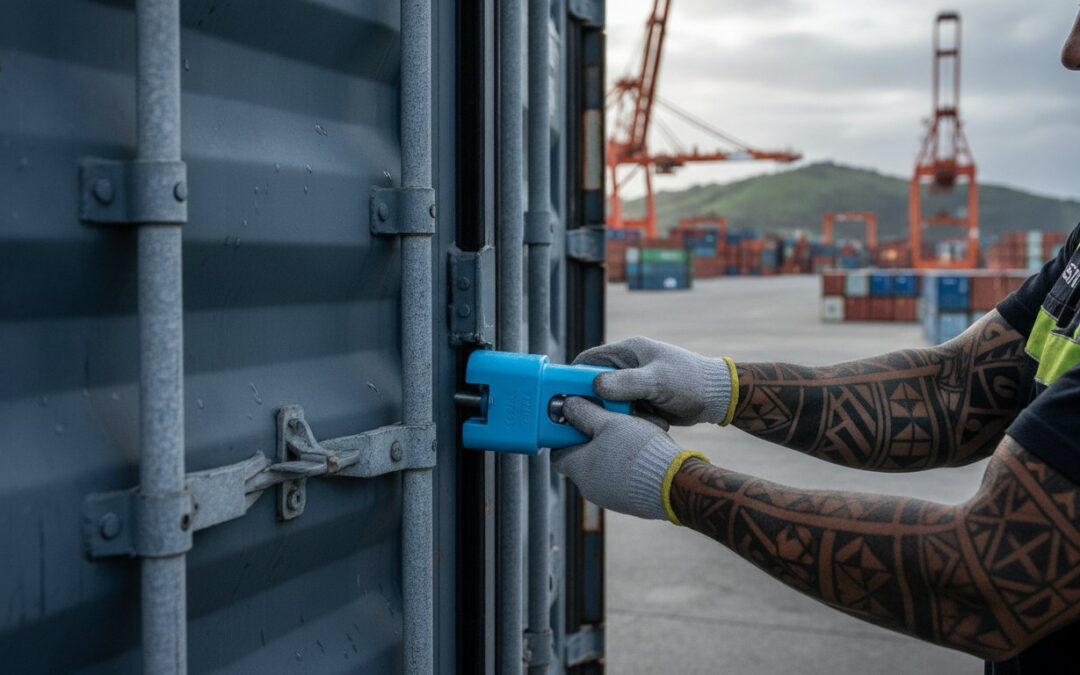
An ISO 17712:2013 “H” class seal must withstand over 1,000 kg of pull force to be certified for international transit. In a fast-moving logistics environment, selecting the wrong shipping container bolt seals isn’t just a safety risk; it’s a direct cause of heavy fines and operational bottlenecks. You’re likely aware that cargo tampering can disrupt your supply chain, yet many teams still struggle with inconsistent application protocols or slow removal processes at the depot.
This guide provides the professional protocols required to master the selection and use of high-security hardware. You’ll learn how to ensure full compliance with C-TPAT standards while achieving zero security breaches. We’ll examine technical requirements, the “View, Verify, Tug, Twist” method for application, and how to use 18V cordless cutters to slash unloading times. This framework ensures your operations remain secure and efficient from dispatch to delivery.
Key Takeaways
- Identify ISO 17712:2013 compliant hardware featuring hardened steel pins and anti-spin technology to prevent friction-based tampering.
- Apply shipping container bolt seals to the right-hand door locking bar only after ensuring handles are properly seated and the locking bar is fully engaged.
- Streamline depot operations and improve safety by using 18V cordless cutters to eliminate the muscle strain and projectile risks associated with manual removal.
- Maintain a rigorous seal log and disposal protocol to prevent scavenged seals from being used to mask cargo breaches during transit.
Selecting the Right Shipping Container Bolt Seals for Compliance
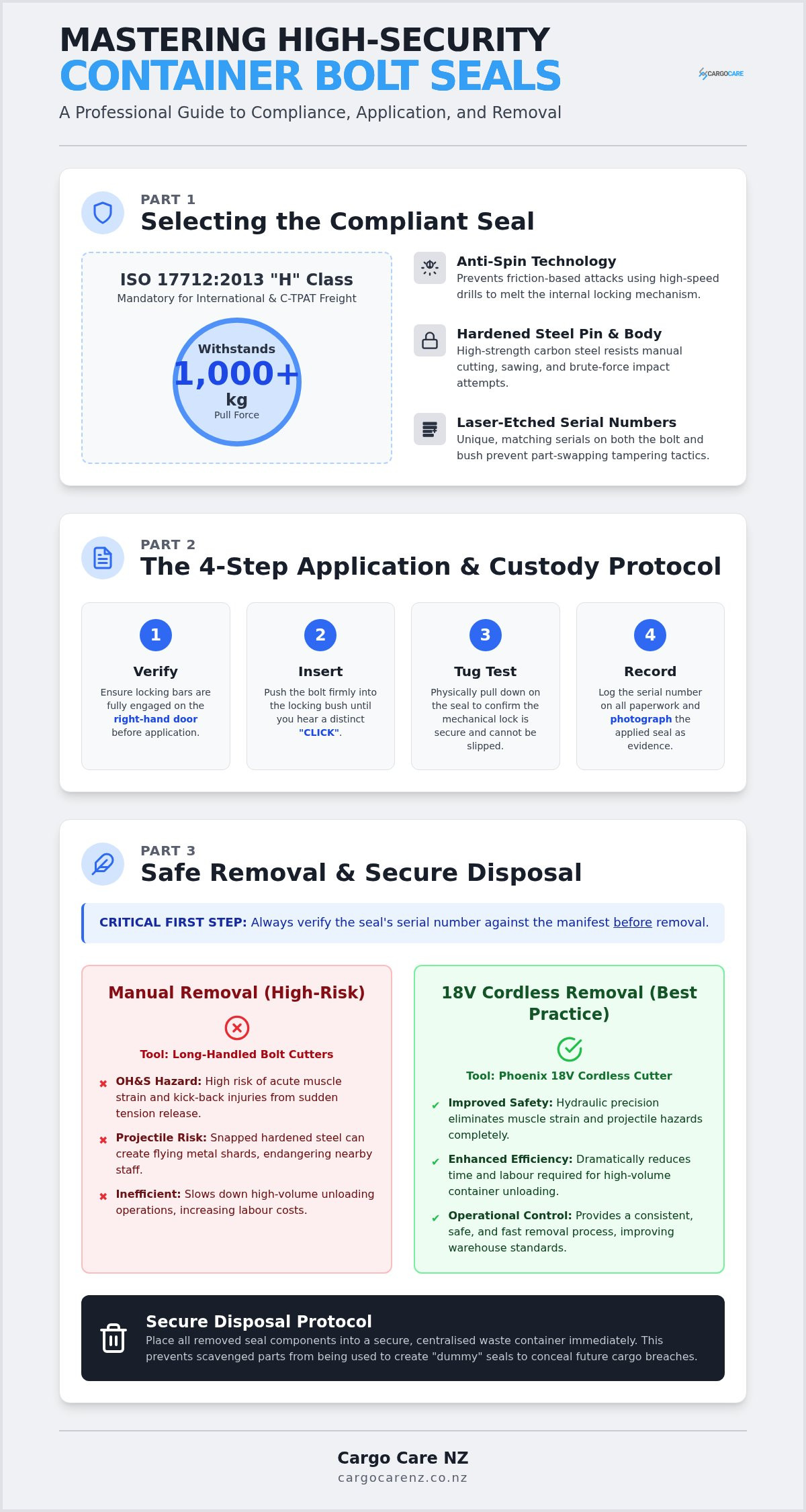
Selecting the correct shipping container bolt seals is the first line of defence against cargo theft. High-security ratings rely on specific material compositions, primarily hardened carbon steel pins that resist manual cutting attempts. These steel components are typically encased in high-impact ABS plastic coatings. This outer layer isn’t just for aesthetics; it provides essential weather resistance and serves as a surface for tamper-evident markings. Effective seals must also incorporate anti-spin technology. This feature prevents attackers from using high-speed drills to spin the bolt, which can melt the internal locking mechanism and allow the seal to be opened and reclosed without visible damage.
Verification protocols require that every seal features unique, laser-etched serial numbering. You must ensure these numbers appear on both the bolt and the bush. This redundancy prevents part-swapping tactics where a compromised component is replaced with a generic substitute. Without matching numbers on both parts, a visual inspection at the depot can easily miss a security breach.
Understanding ISO 17712:2013 High-Security Standards
The ISO 17712:2013 standard organises every security seal into three categories: Indicative, Security, and High Security. For international freight, particularly under C-TPAT regulations, High Security (H) class seals are mandatory. These units must pass independent laboratory testing covering tensile, shear, and impact resistance. Any tamper evident security seal NZ logistics firms use must withstand a pull force of over 1,000 kg to qualify. For international customs compliance, the “H” marking must be permanently and clearly visible on the seal body.
How to Correctly Apply and Record High-Security Bolt Seals
Correct application of shipping container bolt seals begins before the hardware is even touched. You must verify that the container handles are seated correctly and the locking bar is fully engaged. Any misalignment here can compromise the seal’s integrity during transit. Insert the bolt through the locking hole on the right-hand door; this is a critical protocol because the right door must be opened first to access the cargo. Push the bolt firmly into the locking bush until you hear a distinct “click”. Always perform a manual tug test by pulling downwards. This physical check confirms that a mechanical lock has been achieved and the seal cannot be slipped.
Adhering to these steps ensures your process aligns with international C-TPAT Seal Requirements. Failing to follow these specific mechanical steps often leads to “unsecured” container designations at ports, even if a high-security seal is physically present. Consistency in application is the only way to prevent operational delays and costly inspections.
Establishing a Secure Chain of Custody Protocol
Documentation is as vital as the physical lock. Record the unique serial number on the Bill of Lading and all manifest paperwork immediately after application. Instruct your drivers to photograph the applied seal at the point of origin. This creates a visual baseline for the receiving depot. Establish a standardised inspection routine for every transfer point. Staff should check for fine scratches, stress marks on the plastic coating, or any coloured residue. These are clear indicators of tampering or “glue and bypass” techniques. For high-volume operations, selecting reliable Tamper Evident Secure Bolt Seals ensures consistency across your fleet while maintaining the security of your shipping container bolt seals.
Efficient Seal Removal and Disposal Protocols
The final phase of the security cycle involves the controlled removal and destruction of shipping container bolt seals. Before making any cut, operators must verify the serial number against the manifest one final time. This step prevents the accidental acceptance of tampered goods where a seal might’ve been replaced mid-transit. Using manual long-handled bolt cutters presents distinct safety risks, including acute muscle strain and the “projectile” risk of flying metal shards. When the hardened steel pin finally snaps under manual tension, the sudden release can cause the handles to kick back or send fragments across the loading dock.
Correct disposal is equally important for maintaining supply chain integrity. Used seals shouldn’t be left on the ground or in open bins where they can be scavenged. Criminals often collect discarded components to reconstruct “dummy” seals that mask future breaches. Ensure all removed hardware is placed in a secure, centralised waste container to prevent unauthorised reuse and maintain a clean site.
Shifting to Cordless 18V Removal Technology
The Phoenix cordless bolt seal cutter 18V eliminates the physical exertion typically required for high-volume container unloading. This tool replaces manual force with hydraulic precision, effectively removing the OH&S hazards associated with traditional cutters. For depots managing High volume container seal removal, the benefits include a measurable reduction in labour hours and a significant improvement in warehouse safety standards. Switching from manual bolt cutters to cordless 18V technology reduces the time taken to remove shipping container bolt seals from several minutes of physical effort to a consistent operation that takes only seconds.
Optimising Your Cargo Security and Depot Efficiency
Implementing a robust security protocol requires more than just high-quality hardware; it demands a methodical approach from selection through to disposal. By choosing ISO 17712:2013 compliant shipping container bolt seals, you ensure regulatory alignment while protecting cargo integrity across every transit leg. Maintaining a strict chain of custody and utilising professional removal tools are the final steps in securing a resilient supply chain that withstands both physical tampering and operational bottlenecks.
As the official Silverback distributor, CargoCare NZ provides the industry standard in tamper-evident hardware. We specialise in ISO 17712 compliant hardware and 18V cordless removal technology to streamline your high-volume operations. Secure your cargo with Silverback bolt seals and Phoenix 18V cutters from CargoCare NZ to ensure your logistics processes remain safe and efficient. Professional security standards are the foundation of long-term operational continuity.
Frequently Asked Questions
What is an ISO 17712 compliant bolt seal?
An ISO 17712 compliant seal is a security device that has passed independent laboratory testing for physical strength and tamper evidence. These seals are classified into three categories: Indicative, Security, and High Security. To meet international shipping standards, a seal must be “H” class, meaning it can withstand specific tensile, shear, and impact forces to prevent unauthorised access.
Can shipping container bolt seals be reused?
No, shipping container bolt seals are strictly single-use devices. The internal locking mechanism is designed to be permanent once the hardened steel pin is seated in the bush. Any attempt to bypass or reseal a cut bolt will leave visible evidence of tampering. Reusing components is impossible without compromising the mechanical integrity and the security of the cargo during transit.
What should I do if a bolt seal serial number does not match the manifest?
You must stop the unloading process immediately and report the discrepancy to your supervisor. Photograph the mismatched seal and the manifest to create a formal record for insurance and customs purposes. Do not break the seal until you receive authorisation from the sender. A serial number mismatch is often the first sign of a security breach or cargo substitution.
Why do most international shipments require “High Security” bolt seals?
International regulations, such as C-TPAT in the United States, mandate “High Security” (H-class) seals to protect global supply chains from tampering and smuggling. These seals are engineered to withstand over 1,000 kg of pull force. Using compliant shipping container bolt seals ensures your container avoids the operational bottlenecks and heavy fines associated with non-compliant security measures at international borders.
How do I safely remove a hardened steel bolt seal without a manual cutter?
The safest alternative to manual tools is an 18V cordless hydraulic cutter. This technology removes the physical exertion required for high-volume unloading and eliminates the risk of flying metal shards. Unlike long-handled manual cutters, cordless units provide a controlled cut that prevents muscle strain and improves overall depot safety by delivering consistent power with minimal operator effort.

Article by
Steve O'Malley