
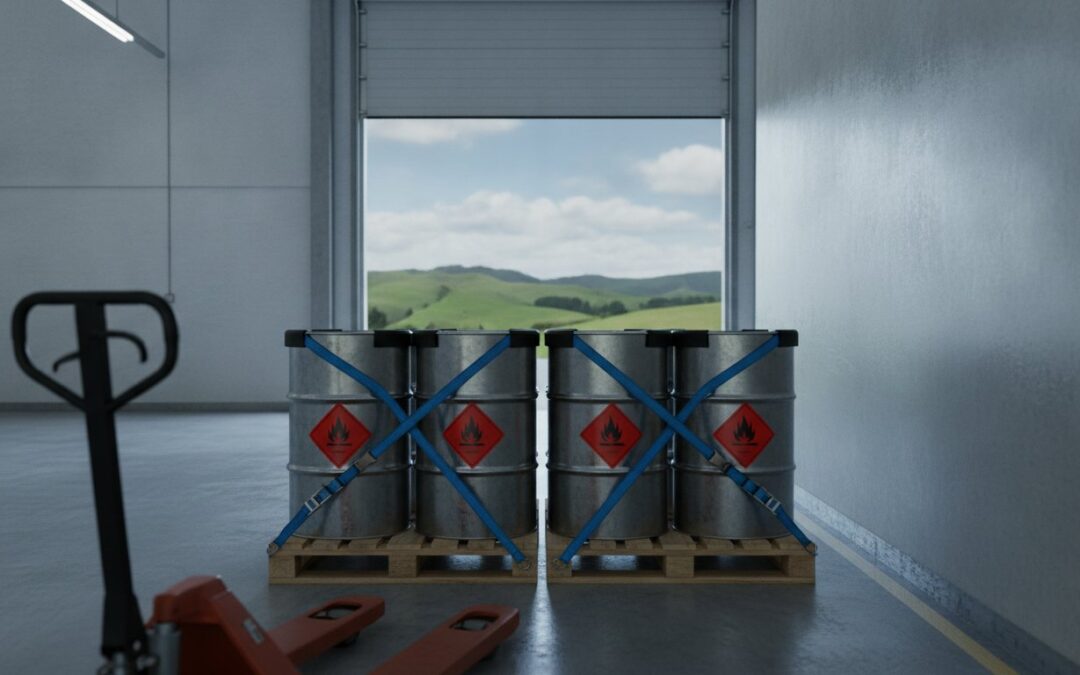
A single compliance failure in your hazardous cargo manifest or hardware can result in a fine of up to $500,000 under current New Zealand Land Transport regulations. For logistics professionals, managing these risks is a constant pressure, particularly when the difference between a safe arrival and a massive penalty often comes down to the quality of your dangerous goods transport equipment. We understand that adhering to the technical specifications of NZS 5433:2020 while maintaining operational speed is a difficult balance to strike.
You need hardware that doesn’t just meet the legal minimum but actually survives the rigours of local linehaul routes. This article provides a comprehensive 2026 roundup of the essential hardware and labelling required to ensure your fleet remains fully compliant and your freight stays secure. We will examine the specific requirements for various hazard classes, the role of Silverback-quality restraint systems, and how the right technical tools can streamline your procurement process.
Key Takeaways
- Identify the specific hardware requirements for hazardous cargo, including Class 3.0 Flammable Liquid labels and Silverback-grade restraint systems.
- Understand how to select dangerous goods transport equipment NZ that survives demanding linehaul conditions while maintaining full regulatory compliance.
- Learn the importance of using plastic pallet angles to protect straps from abrasion when securing chemical drums and bulk loads.
- Explore how tamper-evident security seals and cordless bolt seal cutters enhance supply chain security for high-risk hazardous freight.
Table of Contents
Essential Labelling and Restraint for Dangerous Goods Compliance
Compliance in New Zealand’s transport sector is built on clear communication and physical integrity. High-visibility placarding provides emergency responders with critical information during an incident. This alignment with global standards for dangerous goods ensures that hazardous materials are handled with the necessary caution. For operators, selecting the right dangerous goods transport equipment NZ is the most effective way to manage the Chain of Responsibility. Hardware choices directly impact driver safety and legal standing.
Every linehaul unit must carry a specific set of mandatory gear to pass roadside inspections and ensure safe transit:
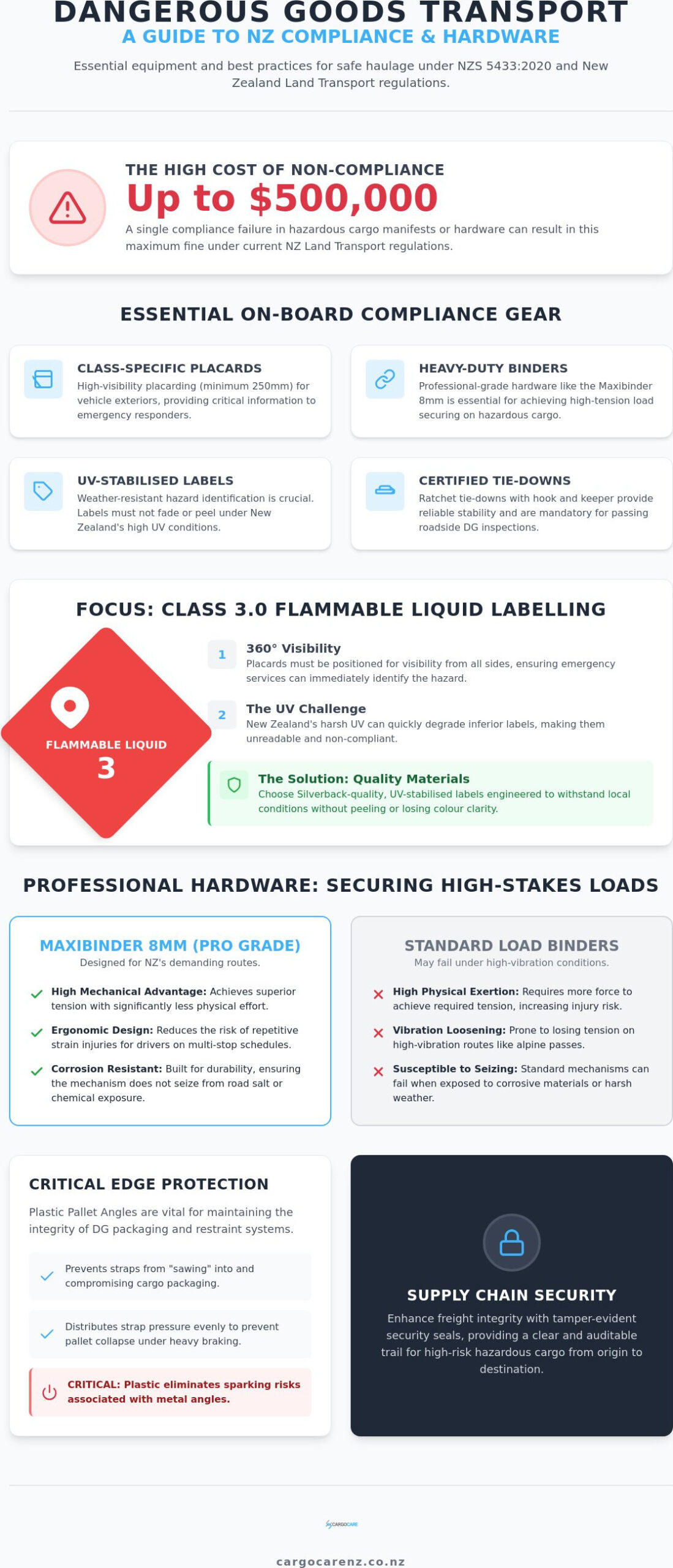
- Class-specific placards: Minimum 250mm for vehicle exteriors.
- Heavy-duty binders: Such as the Maxibinder 8mm for high-tension load securing.
- UV-stabilised labels: Weather-resistant hazard identification that won’t fade.
- Certified tie-downs: Ratchet tie-downs with hook and keeper for reliable stability.
Class 3.0 Flammable Liquid Labelling Requirements
The Class 3.0 Flammable Liquid Label – 250 mm is a technical requirement for any vehicle transporting flammable liquids in bulk or specific quantities. These placards must be positioned to ensure 360-degree visibility for emergency services. New Zealand’s high UV levels can quickly degrade inferior stickers, making them unreadable and non-compliant. We supply Silverback labels because they are engineered to withstand harsh local conditions without peeling or losing colour clarity; for industrial-grade bonding solutions used in manufacturing and packaging assembly, you can find out more.
Meeting NZTA Load Restraint Standards
Standard load restraint gear often fails DG-specific inspections because hazardous loads require superior stability. A shifting chemical drum is more than a cargo claim; it’s a potential environmental disaster. You must ensure your fleet equipment aligns with NZS 5433:2020. Professional-grade gear provides the constant tension needed for these high-stakes movements. Selecting the correct load restraint straps NZ operators rely on is equally critical to maintaining the lashing capacity required for hazardous freight. For a detailed breakdown of hardware specifications, refer to our Silverback products NZ guide to verify your fleet’s readiness.
Professional Hardware Roundup: Load Securing and Protection
Securing hazardous freight requires more than just meeting the bare minimum requirements. While New Zealand’s dangerous goods regulatory system sets the baseline, the physical reality of the Haast Pass or the Kaimai Range demands superior dangerous goods transport equipment NZ. Standard gear often lacks the tension retention needed for high-vibration routes. Over-speccing your restraint systems acts as a practical insurance policy against roadside incidents and environmental spills.
Investing in durable gear ensures your fleet handles the most demanding North Island main roads without compromise. Beyond load restraints, maintaining the vehicle’s structural and hydraulic integrity is equally important for overall safety; for those managing specialized fleets, you can explore truck repair solutions that keep heavy equipment roadworthy.
Maxibinder vs. Standard Load Binders
Securing chemical drums or hazardous bulk loads requires precise tension. When moving industrial containers, the Maxibinder (8mm or10mm) offers a significant mechanical advantage over standard alternatives, allowing drivers to achieve high tension with less physical exertion. This ergonomic design reduces the risk of repetitive strain injuries during multi-stop delivery schedules. Silverback hardware is specifically built for durability in corrosive environments, ensuring the mechanism doesn’t seize when exposed to chemical residues or road salt. Working with an authorised Silverback distributor New Zealand logistics operators trust ensures you receive genuine, certified hardware that meets the strict lashing standards required under the 2026 NZTA Truck Loading Code.
Plastic Pallet Angles for Edge Integrity
Edge protection is vital for maintaining the integrity of packaging. The Plastic Pallet Angle – 1042mm is designed to distribute strap pressure across a wider surface area. This prevents the "sawing" effect where straps cut into packaging during transit. In dangerous goods transport, plastic angles are preferred over metal to eliminate sparking risks. Maintaining this edge integrity ensures that pallets don’t collapse under the pressure of ratchet tie-downs during heavy braking. Understanding how to correctly pair edge protection with load restraint straps NZ professionals trust is essential for preventing strap abrasion and maintaining full NZ Truck Loading Code compliance. You can view our full range of heavy-duty restraint hardware to find the right fit for your fleet.
Supply Chain Security and Efficient DG Unloading
Freight integrity doesn’t end when the vehicle stops at the delivery point. Maintaining the security of hazardous substances is a critical component of national safety compliance. Unauthorised access to dangerous goods during transit or while staged at a depot can lead to catastrophic outcomes. For this reason, professional dangerous goods transport equipment NZ must include tamper-evident technology that provides a clear audit trail from the point of origin to the final destination.
Securing the supply chain requires a combination of physical barriers and robust documentation. When high-risk substances are involved, the hardware used to seal the load must be as durable as the gear used to restrain it. This integrated approach to security ensures that the cargo remains uncontaminated and accounted for throughout the entire logistics cycle.
High-Security Bolt Seals for NZ Logistics
Tamper Evident Secure Bolt Seals are a fundamental requirement for securing containers and heavy trailers. These seals are designed to resist opportunistic theft and provide immediate evidence of any breach attempt. In the context of hazardous cargo, using seals that comply with ISO 17712 standards is non-negotiable for international movements and domestic high-risk freight. These hardware choices protect the operator’s liability and ensure the cargo remains sealed until it reaches the authorised receiver. You can find technical specifications and compliance requirements in our ISO 17712 compliant bolt seals NZ guide.
Phoenix Cordless Bolt Seal Cutter: Safety and Speed
The unloading bay is a high-risk environment where speed often conflicts with safety. Traditional manual bolt cutters are cumbersome and frequently lead to "struck-by" injuries when the seal suddenly yields under pressure. The Phoenix Cordless Bolt Seal Cutter 18V eliminates these risks by providing controlled, hydraulic-assisted cutting power. This 18V tool is essential for the rapid unloading of DG-certified containers, particularly in high-volume logistics hubs. Unlike manual grinding or traditional cutting methods, the Phoenix system removes the spark hazard, which is a vital safety consideration when working near Class 3.0 flammable substances. This shift toward cordless technology improves operational efficiency while protecting warehouse personnel from repetitive strain and accidental injury.
Securing Your Fleet for 2026 Compliance
Maintaining compliance with NZS 5433:2020 requires a consistent focus on both technical documentation and the physical integrity of your fleet. High-visibility placarding and heavy-duty restraint hardware are essential to avoid the massive penalties associated with non-compliance. Selecting the right dangerous goods transport equipment NZ ensures that your cargo remains stable through every alpine pass and main road transit.
Operational safety doesn’t end at the roadside; it extends to the security of your seals and the safety of your warehouse staff during unloading. By integrating Silverback-grade binders, UV-resistant labels, and hydraulic cutting tools, you eliminate unnecessary risks from your supply chain. This proactive approach protects your drivers, your cargo, and your commercial reputation; to further enhance that professional image with high-quality branded merchandise, you can check out Logotrade for custom corporate gift solutions.
As the official Silverback NZ distributor, we provide industry-standard compliance hardware with national shipping across New Zealand. You can view our full range of Silverback Dangerous Goods Equipment to ensure your fleet meets the highest safety benchmarks. Equip your team with gear that’s built for the professional landscape.
Frequently Asked Questions
What are the minimum labelling requirements for dangerous goods in New Zealand?
Labels must comply with the NZS 5433:2020 technical standard to ensure immediate identification by emergency services. For vehicle exteriors, you’re required to use placards with a minimum size of 250mm. These must be placed to provide 360-degree visibility. Using UV-resistant Silverback labels is a practical choice for the local climate; they won’t fade or peel when exposed to harsh environmental conditions on long-haul routes.
Do I need a special licence to transport dangerous goods in NZ?
You’ll generally need a dangerous goods (D) endorsement on your driver’s licence to transport hazardous materials legally. The requirement depends on the specific class and quantity of the goods you’re moving. This endorsement ensures that drivers understand the Land Transport Rule: Dangerous Goods 2005 and can manage the risks associated with hazardous cargo.
Beyond these specific endorsements, maintaining a high standard of site safety is essential for all transport personnel; for professional development, Acquired Awareness Traffic Management offers industry-recognised courses that help teams manage the complexities of high-risk work environments.
Which load restraint equipment is mandatory for Class 3.0 flammable liquids?
Mandatory restraint includes certified ratchet tie-downs and high-tension binders that prevent any load shift during transit. For Class 3.0 liquids, using the right dangerous goods transport equipment NZ is critical for preventing environmental spills. Hardware like the Maxibinder provides the necessary tension to secure bulk containers. These tools are designed to handle the high vibration of North and South Island main roads without losing their grip.
Can I use standard pallet angles for hazardous material transport?
Standard metal angles aren’t recommended for flammable substances because they pose a potential sparking risk. You should use a Plastic Pallet Angle to protect the integrity of your packaging. These plastic angles distribute strap pressure across the pallet edge; this prevents the straps from sawing into chemical drums or containers. This choice maintains the stability of the load while adhering to strict safety protocols for hazardous material handling.
Article by
Steve O'Malley