
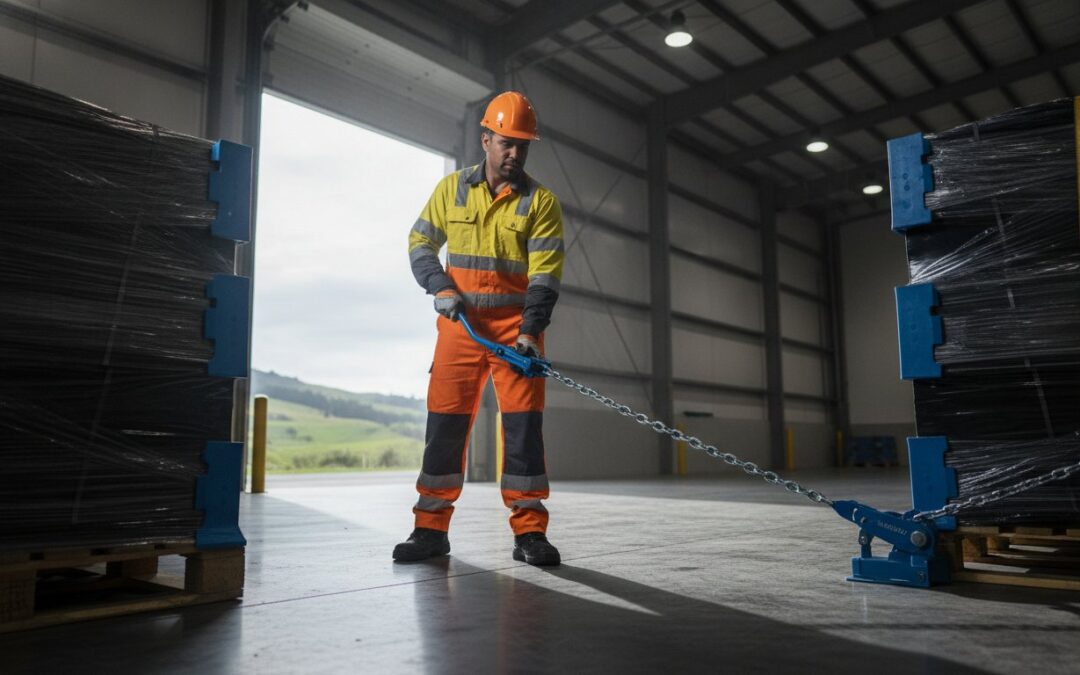
A single insecure load incident can result in a $10,000 fine for a New Zealand company, yet the financial penalty is often secondary to the risk of vehicle accidents and lost cargo. Transporting freight across the diverse terrain of the North and South Islands requires a methodical approach to restraint. You understand that maintaining high safety standards is a non-negotiable part of daily operations. Selecting the correct cargo safety equipment NZ professionals rely on is the first step toward achieving zero incidents of load shifting and ensuring total transport compliance.
This guide provides a technical overview of how to select, apply, and maintain professional-grade hardware to secure your freight. We cover the practical application of AS/NZS 4344 compliant chains, the utility of Maxibinders, and the role of tamper-evident seals in modern logistics. You will gain a clear framework for standardising your loading processes and meeting the latest Land Transport Rule requirements to keep your fleet moving safely.
Key Takeaways
- Identify the specific regulatory requirements within the NZTA Load Restraint Guide to ensure your cargo safety equipment NZ selection meets national compliance standards.
- Learn to calculate load weight and friction variables to select high-performance hardware, such as the Maxibinder 8mm, for heavy-duty applications.
- Protect fragile freight and packaging from strap damage by utilising specialised Blue 1042mm Plastic Pallet Angles and cargo safety nets.
- Master a methodical step-by-step loading procedure focused on vehicle stability, weight distribution, and rigorous pre-load inspections.
- Enhance supply chain integrity and worker safety through the application of tamper-evident security seals and cordless bolt seal cutting technology.
Table of Contents
Understanding the Standards for Cargo Safety Equipment in NZ
Cargo safety equipment is the technical hardware designed to restrain, protect, and identify freight during transit. This category encompasses a broad range of tools, including high-tensile chains, ratchet tie downs, edge protectors, and security seals. Utilising the correct cargo safety equipment NZ professionals require ensures that every load remains stationary under heavy braking, sudden directional changes, or high wind speeds. Without these specific tools, freight becomes a kinetic hazard to the driver and the general public.
The NZTA (Waka Kotahi) Load Restraint Guide serves as the primary benchmark for safety on New Zealand roads. This document provides the engineering calculations and physical requirements necessary to secure various load types effectively. Adhering to these standards aligns local transport operations with global best practices for load securing, reducing the likelihood of catastrophic load shifts. Compliance is not a suggestion; it is a technical requirement for every heavy vehicle operating within the country.
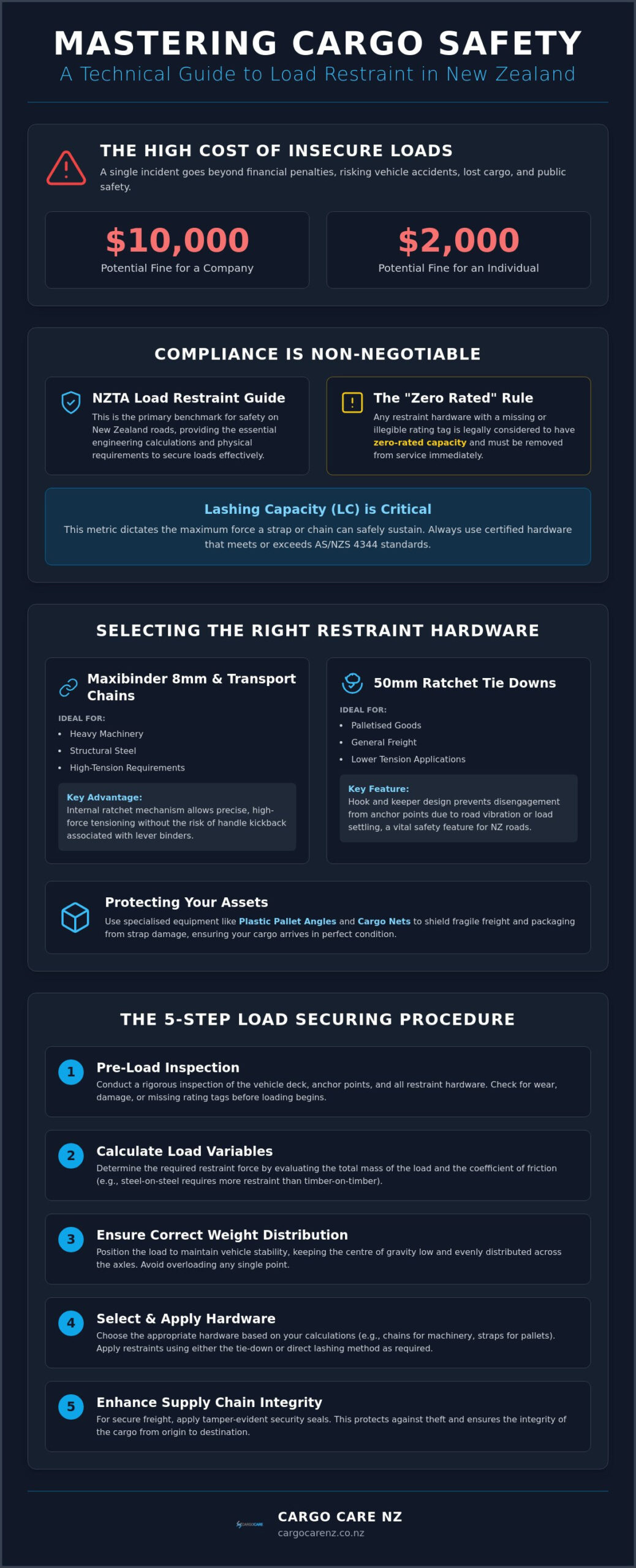
Procurement teams often face the temptation of generic, unbranded hardware to reduce overheads. However, uncertified hardware frequently fails to meet the lashing capacity requirements mandated by New Zealand law. Substandard gear is prone to metal fatigue and sudden failure under stress. The legal and financial consequences are severe. Under the Land Transport Act 1998, using damaged or unrated safety gear can result in fines of up to $2,000 for individuals and $10,000 for companies, alongside the potential for total loss of the freight being carried.
Key Regulatory Bodies and Compliance
NZTA standards govern the physical requirements for heavy vehicle load securing across the national road network. Simultaneously, WorkSafe NZ views cargo safety as a fundamental workplace health and safety obligation under the Health and Safety at Work Act 2015. Every piece of restraint hardware must feature a visible, legible rating tag. If a tag is missing or illegible, the equipment is legally considered to have a zero-rated capacity and must be removed from service immediately.
The Importance of Certified Hardware
Lashing capacity (LC) is the critical metric for your daily operations. It dictates the total force that a strap or chain can safely sustain during transit. Silverback products are the preferred choice for NZ transport professionals because they provide consistent, verified performance that meets or exceeds local certification standards. Lashing capacity represents the maximum force that a piece of restraint equipment is designed to sustain in a straight pull under New Zealand transport law.
Selecting the Right Load Restraint Hardware for Your Fleet
Selecting the correct cargo safety equipment NZ drivers use depends on the physical characteristics of the freight. You must calculate the required restraint force by evaluating the total mass of the load against the friction provided by the trailer deck. A timber-on-timber load has a higher coefficient of friction than steel-on-steel, which directly impacts the number of lashings required. If the friction is low, you must increase the downward force or use direct lashing to meet the NZTA Load Restraint Guide requirements. Understanding these variables prevents the common error of under-securing a load based on visual estimation alone.
The tie-down method relies on downward pressure to increase friction between the load and the vehicle. In contrast, direct lashing involves connecting the freight to the vehicle’s anchor points using chains or straps to prevent movement in a specific direction. For heavy-duty applications, the Maxibinder 8mm provides a significant technical advantage over traditional lever binders. Its internal ratchet mechanism allows for precise tensioning without the safety risks associated with handle kickback. This tool is specifically engineered to work with 8mm transport chains, providing a reliable solution for heavy machinery and structural steel.
Maxibinders vs. Standard Ratchet Straps
The Maxibinder 8mm is designed for high-tension requirements where standard ratchet straps lack the necessary lashing capacity. While a 50mm ratchet tie down with hook and keeper is suitable for palletised goods and general freight, heavy machinery requires the strength of grade 70 transport chain. The hook and keeper design is a vital safety feature for NZ roads. It prevents the hook from disengaging from the anchor point when the strap momentarily slackens due to load settling or road vibration. Professional-grade webbing is essential because it resists UV degradation and abrasion from the harsh NZ environment. You can view our range of certified restraint hardware to find the specific tools required for your fleet’s operational needs.
Specialised Hardware for Unique Loads
Unique freight profiles require specialised solutions. Curtain-sider operations often utilise winch straps that are permanently mounted to the vehicle frame, ensuring rapid loading and unloading. For loose loads or oddly shaped items, a cargo safety net provides a containment solution that straps alone cannot achieve. Maintaining this hardware is a critical safety task. Regularly inspect webbing for nicks, fraying, or UV damage using a structured approach — our ratchet tie downs NZ professional maintenance and inspection template provides a repeatable framework for identifying critical wear points before they become a compliance liability. Ensure ratchet mechanisms are lubricated and the locking pawls move freely. Any hardware showing signs of structural compromise or illegible rating tags must be decommissioned immediately to avoid non-compliance and transit incidents.
Protecting Assets with Pallet Angles and Cargo Nets
High-tension restraint systems are necessary for vehicle stability, yet they present a physical risk to the integrity of the freight. Applying a Maxibinder or heavy-duty ratchet strap directly to cardboard packaging or fragile surfaces often leads to crushed corners and compromised load stacks. This is where specialised cargo safety equipment NZ operators utilise becomes essential for asset protection. By distributing the downward force across a wider surface area, you maintain high lashing tension without deforming the product or its packaging. Balancing this restraint force with the structural integrity of the cargo is a technical requirement for any professional logistics operation.
The Role of Plastic Pallet Angles
The Plastic Pallet Angle – Blue 1042mm is the industry standard for New Zealand transport professionals. Its specific length is engineered to provide maximum load distribution across the edge of standard pallets, ensuring that strap pressure is uniform rather than concentrated on a single point. Unlike cardboard alternatives that degrade in the rain or metal versions that can be heavy and prone to corrosion, high-density plastic angles offer a durable, weather-resistant solution. These tools effectively “bridge” the gaps in uneven loads, allowing tie-down straps to apply consistent downward pressure without slipping or cutting into the freight. This synergy between the restraint hardware and the protective angle is what ensures the load remains secure and undamaged throughout the transit cycle.
Securing Loose Loads with Cargo Nets
New Zealand road regulations are strict regarding “loose loads” in open trailers and utility vehicles. Any item that could potentially vibrate or blow out of a vehicle must be contained. A professional-grade Cargo Safety Net provides a comprehensive containment solution that individual straps cannot replicate. When selecting a net, you must consider the mesh size relative to the smallest items in the load. A net with a tight weave prevents small components from escaping, while the overall strength of the webbing must be sufficient to withstand the wind shear experienced at highway speeds. Proper attachment is critical. You should always use the vehicle’s rated anchor points to ensure the net remains taut. This prevents the net from flapping, which can lead to material fatigue and eventual failure of the containment system. Standardising the use of nets for all loose freight reduces the risk of road debris incidents and ensures your fleet remains compliant with local transport safety laws.
How to Secure a Load for Transport: A Step-by-Step Guide
Securing freight for transit requires a disciplined, repeatable routine. Following a standardised sequence ensures that no component of the restraint system is overlooked, which is vital for maintaining total transport compliance. Utilising professional cargo safety equipment NZ drivers trust is only effective if the application follows correct technical procedures. This step-by-step guide outlines the practical actions required to secure a load for New Zealand road conditions, moving from initial deck preparation to the final safety verification.
Step 1: Preparation and Inspection
Begin by conducting a rigorous inspection of the vehicle bed. Remove any debris, gravel, or oil spills, as these contaminants significantly reduce the coefficient of friction between the deck and the load. Once the deck is clear, position the freight centrally to maintain vehicle stability and even weight distribution across the axles. This alignment ensures the vehicle’s centre of gravity remains stable during cornering on winding New Zealand state highways. Simultaneously, examine your Silverback straps for nicks, cuts, or chemical degradation. Transport professionals must perform a visual inspection of every strap and chain before every loading cycle to identify structural defects. Following a documented ratchet tie downs NZ inspection and maintenance template ensures this pre-load process is consistent, auditable, and fully aligned with AS/NZS 4380:2001 compliance requirements.
Step 2: Applying Restraints and Protection
Place Blue 1042mm pallet angles on the shoulders of the load before applying any tension. These angles distribute the downward force and prevent the webbing from cutting into the freight. Thread your ratchet tie down with hook and keeper through the vehicle’s rated anchor points. The keeper is a critical safety component that prevents the hook from detaching if the load settles and the strap momentarily loses tension. Ensure every strap is flat against the load. A single twist in the webbing significantly reduces its rated lashing capacity and creates a point of concentrated wear that leads to premature failure. If you need to upgrade your current gear, you can purchase certified cargo safety equipment NZ directly from our inventory.
Step 3: Tensioning and Secondary Checks
Apply tension using a methodical approach. For heavy-duty loads, use the Maxibinder 8mm to achieve optimal tension with minimal physical strain. The internal ratchet mechanism allows for incremental tightening, which is far safer than using traditional over-centre binders. Once the load is secured, perform a “tug test” by physically checking the tension of every lashing. Secure all excess webbing using rubber bands or velcro ties to prevent the tails from flapping in the wind or becoming entangled in the vehicle’s wheels. Your responsibility does not end at the depot gate. You must stop and re-check the tension of all restraints after the first few kilometres of travel, as loads often settle and shift slightly during the initial phase of transit.
Maintaining Security and Compliance in the Warehouse
Warehouse operations represent the final link in the secure transport chain. Maintaining integrity here requires more than just physical restraints; it involves a combination of tamper-evident hardware and precise hazardous goods identification. High-quality cargo safety equipment NZ warehouse managers implement ensures that freight is not only secure during transit but also verified and safely handled upon arrival. Integrating security protocols with your physical cargo safety routines, or even partnering with professional services like Regal Security for corporate protection, creates a comprehensive safety culture that protects assets, staff, and the public.
Safe Container Unloading and Security
Manual bolt cutters present a significant safety risk to warehouse staff. The physical force required to shear through high-security bolt seals often leads to repetitive strain injuries and acute shoulder fatigue. The Phoenix Cordless Bolt Seal Cutter 18V eliminates these ergonomic hazards by providing a motorised cutting action. This tool significantly improves efficiency in high-volume unloading environments where dozens of containers must be processed daily. It’s a professional solution that respects the physical well-being of the person on the ground.
Staff should focus on verifying tamper-evident bolt seals and documenting serial numbers rather than struggling with manual hardware. Verifying these seals upon arrival is a non-negotiable step for confirming that the cargo hasn’t been compromised since leaving the point of origin. For operations moving goods through international shipping lanes, using ISO 17712 compliant bolt seals NZ customs and carriers require is essential to avoid costly border delays and maintain a verified audit trail. If a seal shows signs of tampering or the serial number doesn’t match the manifest, you must follow your facility’s security breach protocol immediately. Maintaining a clear audit trail of these seals is as important as the physical restraint of the load itself.
Hazardous Goods and Labelling
Compliance extends to the visual identification of dangerous goods. The Class 3.0 Flammable Liquid Label – 250 mm is a technical requirement for vehicles and containers carrying combustible materials. These labels must be placed in a clearly visible position on all four sides of a container to assist emergency services in the event of an incident. Using high-visibility, weather-resistant labels ensures that critical information remains legible despite exposure to salt spray and UV radiation. It’s a simple but vital component of operational continuity.
Ensuring your facility stocks the correct labelling is a basic requirement of the Health and Safety at Work Act 2015. For a deeper look at industry standards and hardware selection, consult the Silverback Products NZ: The Professional Guide to Transport Safety and Compliance. Proper placement of these labels, combined with the use of tamper-evident security seals, ensures that your warehouse remains a secure and compliant hub within the New Zealand logistics network.
Standardising Safety for the New Zealand Road Network
Maintaining operational continuity in the transport sector requires a rigorous commitment to certified hardware and technical loading procedures. You’ve seen how the synergy between high-tensile restraints and protective pallet angles prevents both load shifts and asset damage. By adhering to the NZTA Load Restraint Guide and implementing a disciplined pre-load inspection routine, you mitigate the legal and financial risks associated with insecure freight.
Investing in professional cargo safety equipment NZ logistics experts rely on is a foundational step toward achieving a zero-incident transport environment. As the official NZ distributor of Silverback products, we provide national supply of NZTA-compliant gear designed for the rugged conditions of our local road network. Our team of specialised transport safety hardware experts is focused on providing the dependable tools your fleet requires to stay moving safely.
For logistics businesses looking to communicate their high safety standards to a broader audience, you can explore short-form video content creation and social media management with KALU Creative to enhance your digital presence.
View the full range of Silverback cargo safety equipment at Cargo Care NZ and ensure your operations remain compliant and secure. Safe transit is the result of precision and the right equipment.
Frequently Asked Questions
What is the most important cargo safety equipment for long-haul transport in NZ?
The most critical cargo safety equipment NZ professionals use is rated lashing hardware that matches the specific mass and friction profile of the load. Every strap or chain must have a legible rating tag to comply with NZTA standards. Without these tags, the equipment is legally rated at zero capacity during roadside inspections, regardless of its physical condition.
How often should I replace my ratchet tie-downs and load binders?
You must replace tie-downs and binders immediately upon discovering any physical defect. There is no set expiry date, but you must inspect gear before every loading cycle. Look for nicks, fraying, UV damage, or deformed metal components. If a tag becomes illegible, the hardware is no longer fit for purpose and should be decommissioned.
Are plastic pallet angles better than cardboard ones for NZ weather?
Plastic pallet angles are superior for the high-rainfall environment across New Zealand. Cardboard angles lose structural integrity when wet, which causes tie-down straps to lose tension as the material softens. The Blue 1042mm plastic variety is UV-stabilised and maintains its shape under high pressure, ensuring consistent load distribution in all weather conditions.
Do I really need a Maxibinder, or is a standard ratchet strap enough?
A Maxibinder is required when your load necessitates the strength of transport chains rather than synthetic webbing. While a standard 50mm ratchet strap is sufficient for general palletised freight, heavy machinery and structural steel require the higher lashing capacity of a Maxibinder. It provides safer, more precise tensioning for high-mass applications.
What are the legal requirements for cargo safety nets on utes and trailers?
New Zealand law requires any loose load to be contained so that no part of it can fall or blow from the vehicle. Under the Land Transport Rule, a cargo safety net is the most practical way to contain multiple small items in utes or open trailers. Failure to contain a loose load can result in an immediate $400 infringement fee or higher fines for commercial operators.
How do tamper-evident bolt seals improve my transport safety?
Tamper-evident bolt seals provide a clear audit trail and verify that cargo hasn’t been interfered with during transit. They are a critical requirement for high-value freight and international shipping containers. Using these seals reduces the risk of theft and ensures the integrity of the supply chain from the point of origin to the final destination.
Why should I use a cordless bolt seal cutter instead of manual ones?
A cordless bolt seal cutter, such as the Phoenix 18V model, significantly reduces the risk of repetitive strain injuries compared to manual cutters. Manual tools require high physical exertion which leads to acute fatigue and potential workplace accidents. Cordless versions provide a faster, more controlled cut, improving safety for warehouse staff during high-volume unloading tasks.
Where can I find the official NZ Load Restraint Guide for road transport?
The official New Zealand Truck Loading Code of Practice is available via the NZTA Waka Kotahi website. This document provides the engineering standards and legal requirements for securing loads on heavy vehicles. It is the essential reference for ensuring your fleet meets all national compliance benchmarks and operates safely on the road network.
Article by
Steve O'Malley