
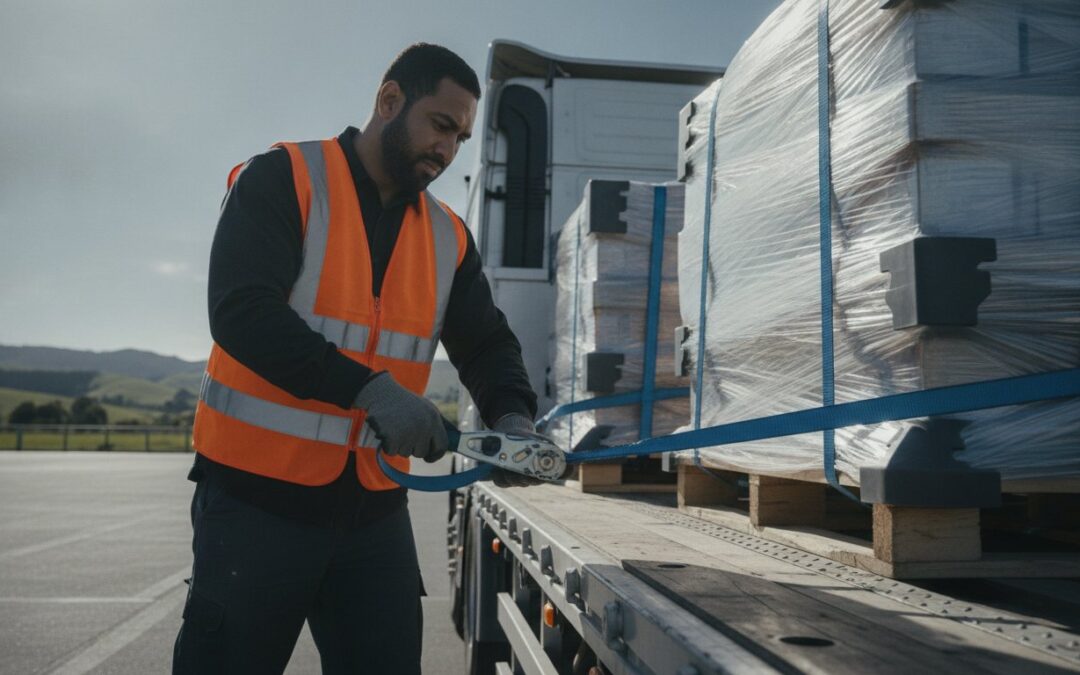
A single insecure load can result in a corporate fine of up to $10,000 and immediate roadside detention by the NZ Police. Most transport professionals understand the pressure of maintaining tight schedules while navigating the complexities of the official New Zealand Truck Loading Code. Learning how to use ratchet tie downs correctly NZ is the first step in avoiding equipment failure and costly freight damage claims.
This guide provides the technical clarity needed to master load restraint, ensuring your freight arrives intact and your operation remains fully compliant with NZTA standards. It’s about more than just pulling a strap tight; it’s about engineering a safe transit. We will examine the essential hardware requirements under AS/NZS 4380:2001, the specific physics of load restraint, and the methodical routines that keep your ute or truck tray safe on the road.
Key Takeaways
- Understand the mandatory G-force performance standards required by the NZ Transport Agency to ensure your vehicle remains compliant during roadside inspections.
- Master the technical procedures for how to use ratchet tie downs correctly NZ to ensure your lashing systems meet the AS/NZS 4380:2001 safety standard.
- Learn the operational advantages of using professional-grade hardware like 8mm Maxibinders and 1042mm plastic pallet angles for heavy-duty load stabilisation.
- Implement advanced freight security measures, including the use of tamper-evident seals, to protect your cargo integrity throughout the entire New Zealand supply chain.
Understanding the Official NZ Truck Loading Code and Load Forces
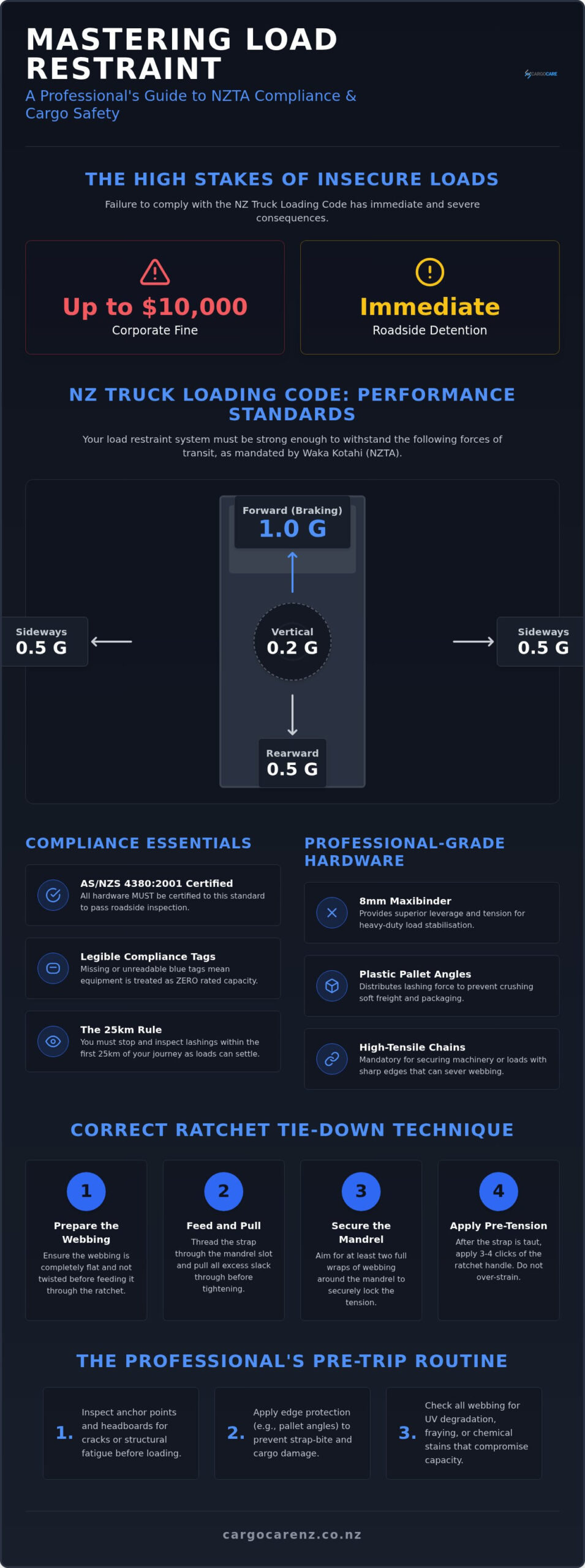
The New Zealand Truck Loading Code is a legally enforceable set of standards under the Land Transport Act 1998. For heavy vehicle operators, compliance with Waka Kotahi (NZTA) regulations is the only way to avoid corporate fines that can reach $10,000. Fundamental load securing principles dictate that cargo must be restrained against four specific forces of transit. These include 1.0g of acceleration in the forward direction during braking, 0.5g rearward, 0.5g sideways, and 0.2g vertically to prevent the load from lifting off the tray.
Liability for an insecure load often falls on the driver, regardless of who performed the initial loading. NZ law expects the person behind the wheel to ensure the vehicle is safe before entering public roads. A critical procedural check is the 25km rule. You must stop and inspect your lashings within the first 25km of any journey. Loads often settle and straps can lose tension shortly after departure. Learning how to use ratchet tie downs correctly NZ involves more than just the initial tightening; it’s a continuous process of monitoring and adjustment.
Calculating Load Restraint Requirements
NZTA inspectors evaluate the effectiveness of your setup based on Lashing Capacity (LC), not the Working Load Limit (WLL). You must ensure the combined LC of your equipment exceeds the force requirements of the load weight. Using a strap with a missing or illegible blue compliance tag is illegal. Enforcement officers will treat such equipment as having zero rated capacity. Don’t rely on guesswork when securing a ute or truck. Every piece of hardware must be certified to AS/NZS 4380:2001 to pass a roadside inspection.
Selecting and Using Certified Ratchet Tie Downs and Hardware
Selecting the right hardware is a matter of both safety and operational durability. In New Zealand, equipment must withstand salt-laden coastal air and extreme alpine temperatures. Professional drivers prioritise Silverback products because they meet these environmental challenges while remaining compliant with AS/NZS 4380:2001. For heavy-duty tensioning, the 8mm Maxibinder is the preferred choice. It provides superior leverage compared to standard ratchet binders, which is vital for high-tension requirements. For versatile tray securing, a Ratchet Tie Down with Hook and Keeper offers the necessary flexibility for varying load heights. While synthetic webbing is suitable for most palletised freight, high-tensile chains are mandatory when securing machinery or loads with sharp edges that could sever a synthetic strap.
How to Use Ratchet Tie Downs Correctly in NZ
To master how to use ratchet tie downs correctly NZ, start by ensuring the webbing is completely flat. Feed the strap through the mandrel slot and pull the excess through before you begin ratcheting. This simple step prevents the mandrel from jamming with bunched material. Aim for at least two full wraps around the mandrel to lock the tension securely. Avoid over-straining the handle; usually, three to four clicks after the strap is taut provides sufficient pre-tension for most loads. For those managing heavier freight, understanding the difference between a Maxibinder vs ratchet binder NZ is essential for choosing the right restraint level. You can source these certified load restraint tools to ensure your hardware remains compliant and durable.
Protecting Cargo Integrity and Ensuring En-Route Security
High-tension lashing systems provide essential security but can easily crush soft freight or deform cardboard packaging. This results in costly freight damage claims that erode profit margins. Using 1042mm Plastic Pallet Angles effectively distributes the strap’s downward force across a wider surface area, preserving the structural integrity of the load. It’s a critical component of how to use ratchet tie downs correctly NZ, as protecting the cargo is just as vital as securing it to the tray.
Security remains a priority during long-haul transit and overnight stops. Tamper-evident security seals provide a clear audit trail and deter unauthorised access. For high-volume operations, the Phoenix cordless bolt seal cutter 18V is a game-changer for de-vanning. It removes heavy-duty bolt seals in seconds, reducing physical strain and accelerating unloading routines. This tool ensures that once the load is secured, it can be accessed quickly and safely by the receiver.
Regular equipment audits prevent roadside failures. When training staff on how to use ratchet tie downs correctly NZ, emphasize inspecting straps and cargo safety net NZ for UV degradation. NZ’s high UV index weakens synthetic fibres quickly, making routine replacement a non-negotiable part of your safety protocol. Always check for fraying or chemical staining that could compromise the lashing capacity of your gear.
The Professional Load Check Routine
Consistency in your pre-trip checks reduces the risk of en-route incidents. Follow this methodical three-step routine to maintain high safety standards:
- Step 1: Inspect anchor points and headboards for cracks or structural fatigue before loading cargo.
- Step 2: Apply edge protection using plastic pallet angles NZ to prevent strap-bite and cargo deformation.
- Step 3: Verify seal integrity with tamper evident security seals NZ for high-value logistics to ensure the supply chain remains uncompromised.
Optimising Your Load Restraint Strategy
Achieving full compliance with the NZ Truck Loading Code requires a combination of certified hardware and rigorous procedural checks. By mastering how to use ratchet tie downs correctly NZ and integrating professional-grade tools like Maxibinders and plastic pallet angles, you eliminate the risks of roadside fines and freight damage. Maintaining cargo integrity is a continuous responsibility that starts at the headboard and ends with a verified security seal. As the official NZ distributor of Silverback products, CargoCare NZ provides expert technical support for transport compliance alongside national shipping on all load restraint hardware.
Browse the full range of Silverback load restraint hardware at CargoCare NZ and ensure your fleet operates with maximum safety and efficiency on every journey.
Frequently Asked Questions
What is the most common cause of load restraint fines in New Zealand?
Inadequate lashing capacity and missing or illegible compliance tags are primary reasons for roadside fines. NZ Police and NZTA inspectors strictly enforce the presence of the blue AS/NZS 4380:2001 tag on all synthetic straps. If a tag is damaged or absent, the lashing is legally rated at zero capacity. Corporate fines for these breaches can reach $10,000 per incident.
Can I use ropes to secure a heavy truck load in NZ?
Ropes are generally unsuitable for heavy freight because they lack a certified Lashing Capacity and cannot provide the tension required by the NZ Truck Loading Code. While appropriate for light, non-critical items on a ute tray, heavy loads require certified webbing or chains. Understanding how to use ratchet tie downs correctly NZ ensures you achieve the mechanical advantage needed for legal compliance.
How often must I stop to check my load lashings during a long-haul trip?
You should inspect your lashings at the 25km mark and then at every subsequent rest stop or whenever road conditions change significantly. Factors like high winds or winding alpine roads can cause freight to shift, leading to tension loss in synthetic webbing. Regular checks ensure your cargo remains secure against lateral and vertical forces throughout the entire duration of the transit.
What is the difference between a Maxibinder and a standard ratchet binder?
A Maxibinder is an advanced tensioning tool that provides significantly more leverage and pre-tension than a standard ratchet binder. It features a more ergonomic design, allowing operators to achieve high tension with less physical strain. This makes it the preferred choice for heavy-duty chain restraint systems where maintaining consistent lashing tension is vital for safety and meeting strict performance standards.

Article by
Steve O'Malley