
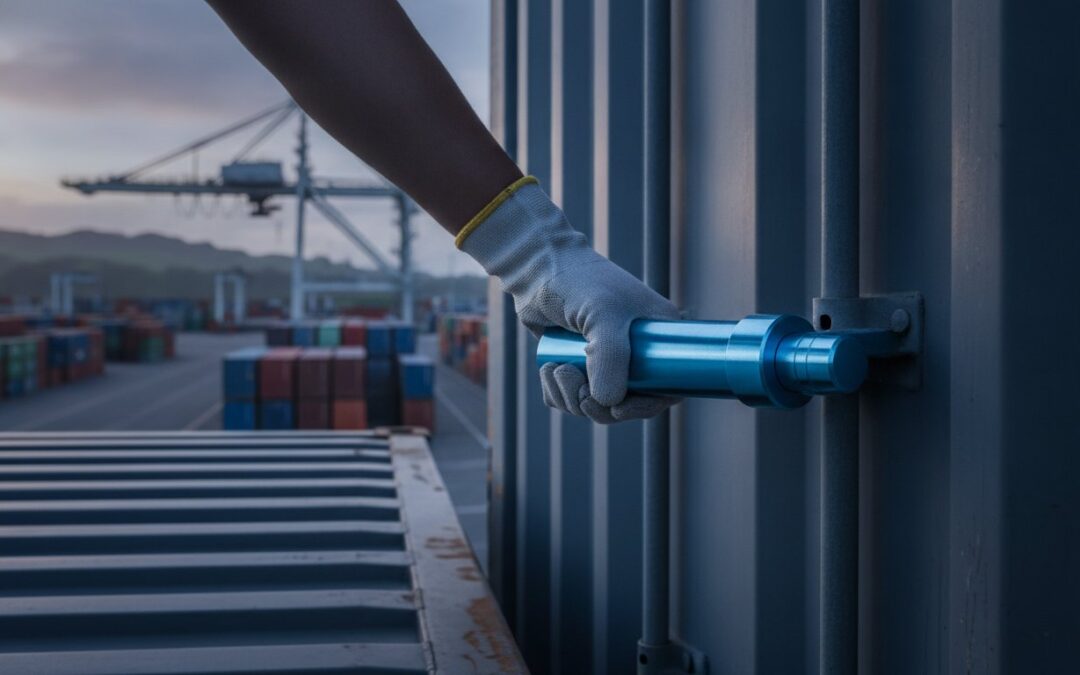
A single non-compliant bolt seal can halt an entire supply chain at the border, resulting in costly delays and rigorous inspection fees. You understand that cargo security is more than a procedural checkbox; it’s a critical component of operational continuity and international compliance. Selecting the correct tamper proof seals for shipping requires a clear understanding of the technical distinctions between indicative and high-security hardware.
This guide provides a professional framework for selecting seals based on cargo value and transport risk. You’ll learn the essential differences between seal types to secure your supply chain and ensure full compliance with NZ transport security expectations. We’ll also cover how to streamline your security protocols to prevent inefficient removal processes from slowing down your unloading operations.
Key Takeaways
- Learn to categorise seals into indicative, security, and high-security tiers to align your hardware choice with specific cargo risk levels.
- Clarify the technical distinction between tamper-evident and tamper proof seals for shipping to better manage supply chain expectations and security outcomes.
- Identify the requirements for ISO 17712 compliance to ensure your international shipments meet global transport standards and pass customs without delay.
- Establish efficient sealing and removal protocols that use technical inspection methods and specialised cutters to prevent operational bottlenecks during unloading.
Comparing Shipping Seal Types: From Plastic Tags to Bolt Seals
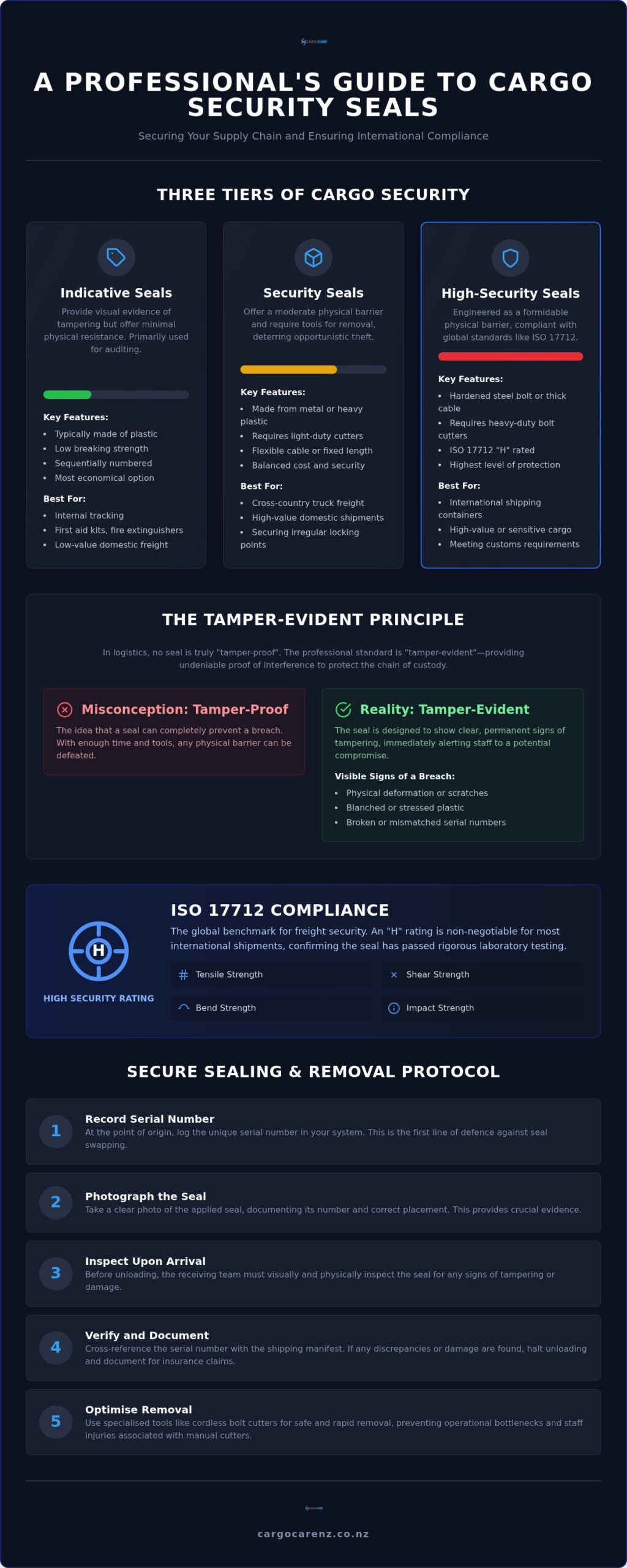
Professional logistics operations classify hardware into three distinct categories: Indicative, Security, and High Security. An indicative seal, typically made of thin plastic, serves primarily to show evidence of entry rather than providing a physical barrier. Security seals offer a moderate level of resistance, while High Security seals are engineered to withstand significant force. A barrier seal is a physical deterrent that requires specialised tools for removal.
Managers must balance the cost-to-security ratio when selecting tamper proof seals for shipping. While plastic pull-tight seals are the most economical, they provide no physical resistance against theft. Metal cable and bolt seals require a larger budget but are necessary for high-value assets where the cost of cargo loss far outweighs the price of the hardware. This tiered approach ensures that security spend aligns with the actual risk profile of the transport route. A Security seal should always be chosen based on the specific vulnerabilities of the cargo and its destination.
When to Use Light-Duty Plastic vs. Heavy-Duty Metal Seals
Light-duty plastic seals are suitable for internal tracking or items requiring quick access, such as fire extinguishers and first aid kits. They provide a clear visual audit trail without obstructing emergency use. However, once cargo enters the public supply chain or international waters, the security requirements escalate significantly.
High-value freight and international containers require tamper evident bolt seals to meet ISO 17712 standards. These heavy-duty metal options prevent opportunistic theft and ensure transport compliance at the border. For irregular locking mechanisms, such as tank valves or curved door handles, flexible metal cable seals provide the necessary barrier where rigid bolts cannot be applied. Choosing the correct format for tamper proof seals for shipping prevents operational delays and secures the integrity of the load.
Tamper-Evident vs. Tamper-Proof: Selection Criteria
In the logistics industry, “tamper-proof” is a technical misnomer. Every physical barrier can eventually be defeated with sufficient time and specialised equipment. Consequently, industry veterans focus on tamper-evident features that provide undeniable proof of interference. Using high-quality tamper proof seals for shipping ensures that any breach is immediately visible through physical deformation, blanched plastic, or broken serial number sequences. These indicators alert receiving staff to potential cargo compromise before the doors are even opened.
Effective security relies on an airtight audit trail. Logistics managers utilise barcodes and laser-etched serial numbers to track cargo at every checkpoint. Colour coding also plays a vital role, allowing staff to distinguish between transit legs or specific cargo types at a glance. Silverback security solutions are designed with these practicalities in mind. Implementing tamper evident security seals NZ allows providers to maintain a secure chain of custody from the point of origin to the final destination.
The Role of ISO 17712 Compliance in Freight Security
International shipping demands adherence to the ISO 17712 standard. This global benchmark categorises seals based on their physical strength and tamper-evident properties. For many customs programmes or insurance policies, using ISO 17712 compliant bolt seals NZ is a non-negotiable requirement to mitigate risk. Failure to use the correct classification can result in container rejection at international ports.
An ISO 17712 “H” (High Security) rating indicates a seal has passed rigorous laboratory testing for tensile, shear, bend, and impact strength, confirming it as a high-strength barrier for international shipping containers.
To ensure your operations remain compliant with international transport standards, you can view our range of certified security hardware. Selecting the right rating is the first step in protecting your cargo from opportunistic theft.
Implementing a Secure Sealing and Removal Protocol
A secure protocol begins long before the container reaches the wharf. Recording unique serial numbers at the point of origin is the primary defence against “seal swapping,” where an intruder replaces the original hardware with a duplicate after a breach. Logistics staff should photograph the applied seal to document its specific orientation and number. Upon arrival, the receiving team must inspect the seal integrity before any unloading commences. Any sign of physical deformation or mismatched numbers requires an immediate halt to the process to preserve evidence for insurance purposes.
While high-security hardware is essential for protection, it often creates operational friction during unloading. Standard manual bolt cutters are bulky, require significant physical force, and can lead to strain injuries for warehouse staff. The Phoenix Cordless Bolt Seal Cutter 18V provides a professional solution for rapid, safe container processing. This tool eliminates the manual effort required to breach tamper proof seals for shipping, allowing teams to move from inspection to unloading in seconds without compromising safety standards.
Optimising the Unloading Process with Professional Tools
Manual cutters often struggle with the hardened steel used in “H” rated hardware, leading to jagged edges and accelerated tool wear. Switching to cordless 18V technology improves warehouse throughput and reduces the risk of workplace accidents. Integrating high-security Silverback products NZ into your protection strategy creates a seamless transition between security and logistics efficiency. Finally, ensure used seals are disposed of securely by destroying the serial numbers. This prevents third parties from identifying your sealing patterns or sourcing matching hardware for future illicit use.
Securing Your Supply Chain for International Compliance
Securing your supply chain requires a technical understanding of hardware capabilities and international standards. By differentiating between indicative tags and ISO 17712 compliant barrier hardware, you protect cargo from opportunistic theft and ensure transport compliance. Implementing a strict audit trail and using specialised tools like the Phoenix 18V cutter streamlines warehouse operations without compromising safety.
As the official national distributor for Silverback products, CargoCare NZ provides technical solutions for modern logistics. We stock ISO 17712 compliant hardware and cordless removal tools to keep your freight moving. Choosing the right tamper proof seals for shipping is fundamental to maintaining operational continuity and cargo integrity.
View our range of high-security tamper evident seals today to secure your next shipment. We look forward to supporting your transport security needs.
Frequently Asked Questions
What is the difference between an indicative seal and a high-security bolt seal?
Indicative seals are designed to provide a visual audit trail but offer negligible physical resistance. High-security bolt seals are constructed from hardened steel and must meet ISO 17712 tensile and impact standards. While indicative options are suitable for internal inventory, bolt seals are necessary for securing high-value cargo against forced entry during transport.
Are all tamper-evident seals ISO 17712 compliant?
No, tamper-evident is a general descriptive term, whereas ISO 17712 is a specific technical standard. Only hardware that has passed rigorous laboratory testing for physical strength and tamper resistance can claim compliance. Shippers should check for the “H” rating on the seal body to ensure it meets international customs and insurance requirements.
Can I use plastic security seals for international shipping containers?
Plastic seals are generally unsuitable for international shipping containers as they do not provide the physical barrier required by customs authorities. Most international routes mandate the use of metal hardware. You should only use plastic variants for indicative purposes, whereas tamper proof seals for shipping must meet the “H” rating to ensure compliance and security at the border.
How do I remove high-security bolt seals safely at the warehouse?
High-security seals require specialised tools for removal because they are engineered to resist manual tampering. Standard manual bolt cutters are often heavy and difficult to operate safely. Using the Phoenix Cordless Bolt Seal Cutter 18V provides a fast, ergonomic solution that allows staff to breach tamper proof seals for shipping without the physical strain associated with manual tools.

Article by
Steve O'Malley