
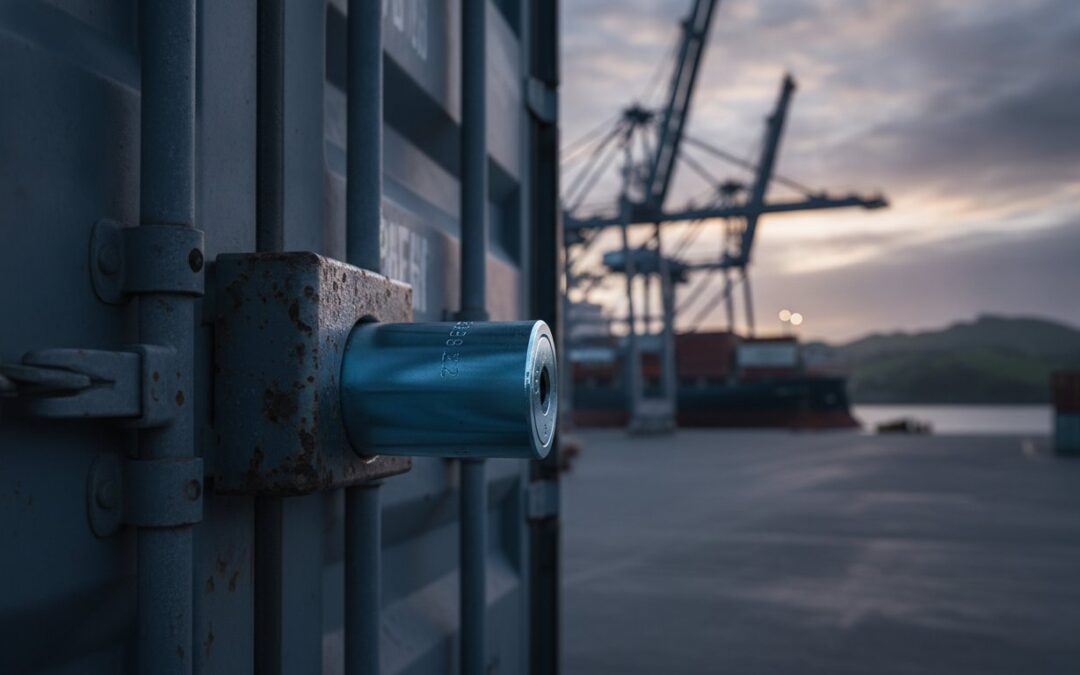
A single compromised container can invalidate an insurance claim and halt your supply chain operations overnight. You already know that maintaining the integrity of international freight requires more than just a physical barrier. It demands a rigorous, no-nonsense adherence to global security standards, specifically through the use of high security bolt seals NZ professionals rely on for export. Protecting your cargo is a dual-stage process that begins with selecting the right hardware and ends with efficient, safe removal at the destination.
This professional guide explains how to secure your supply chain with ISO 17712:2013 compliant hardware while meeting the strict requirements of the NZ Customs Secure Exports Scheme. We also preview the specialised tools, such as 18V cordless cutters, required to manage these heavy-duty seals effectively. This ensures your unloading processes remain fast and your operators stay safe from manual strain injuries. By the end of this guide, you will understand how to maintain operational continuity while upholding the highest security benchmarks.
Key Takeaways
- Understand the ISO 17712:2013 classification system to ensure your cargo meets international H-class high-security requirements.
- Learn the correct application procedures for tamper-evident bolt seals to eliminate security gaps and reduce the risk of insurance claim denials.
- Discover how high security bolt seals NZ logistics firms rely on can be managed more efficiently using specialised 18V cordless cutters.
- Optimise your unloading workflow by transitioning from high-strain manual tools to professional-grade mechanical solutions for seal removal.
Understanding ISO 17712 Standards for New Zealand Transport
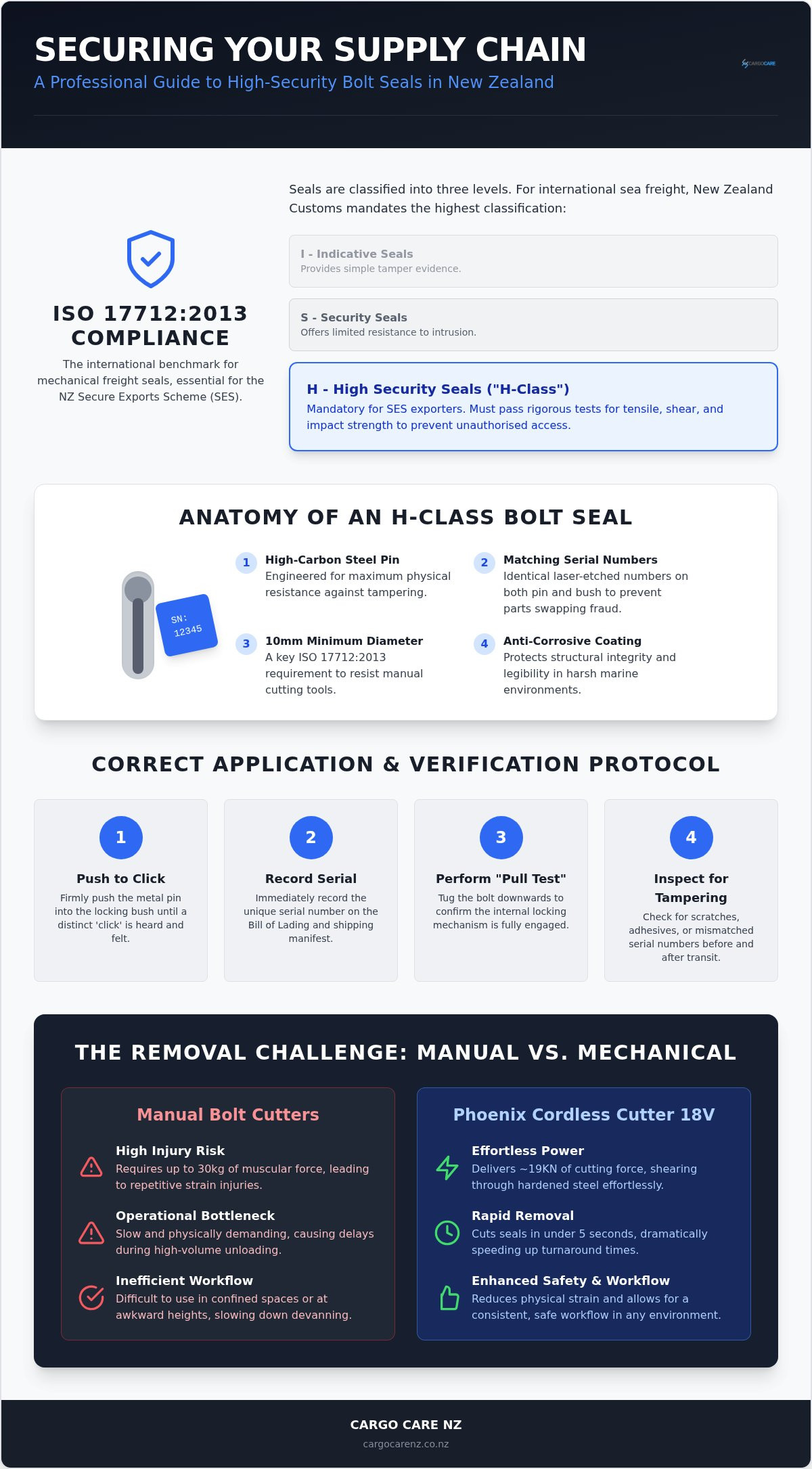
ISO 17712:2013 is the definitive international benchmark for mechanical freight seals. It establishes uniform procedures for the classification and testing of every Security seal used on ocean containers. The standard categorises hardware into three distinct levels: indicative, security, and high security. For logistics professionals, identifying the correct high security bolt seals NZ requirements is essential to prevent unauthorised access and ensure the physical integrity of the shipment remains intact throughout the voyage.
New Zealand Customs frequently mandates “H-class” (High Security) seals for international sea freight, particularly for exporters enrolled in the Secure Exports Scheme (SES). This classification isn’t just a label; it requires the seal to pass rigorous tests for tensile, shear, and impact strength. Using Silverback products NZ ensures your hardware meets these exacting ISO 17712:2013 specifications, providing the necessary documentation to satisfy both local customs and international port authorities.
The Components of a Certified High Security Bolt Seal
A compliant H-class bolt seal consists of a high-carbon steel pin and a locking bush, typically featuring a minimum bolt diameter of 10mm to resist manual tampering. Effective high security bolt seals NZ operations also rely on tamper-evident features, such as identical laser-etched serial numbers on both the pin and the bush. These markings must match to prevent “parts swapping” fraud. Additionally, specialised anti-corrosive coatings are applied to the steel components. This protection is vital for maintaining the seal’s structural integrity and legibility when exposed to harsh salt-spray environments during long-haul transit.
Selecting and Applying Tamper-Evident Secure Bolt Seals
Choosing appropriate hardware is the first step in robust cargo protection. For high-value or bonded goods, H-class seals are the industry standard. When applying high security bolt seals NZ operators must ensure the metal pin is pushed firmly into the locking bush until it clicks. A partially seated bolt is a major security vulnerability that allows for non-destructive removal. Proper seating ensures the bolt and bush act as a single, matched unit throughout the journey.
Supply chain integrity relies on a transparent audit trail. Every seal features a unique serial number that must be recorded on the Bill of Lading and shipping manifest immediately after application. For complex logistics chains, using tamper evident security seals NZ alongside bolt seals creates a multi-layered defence. This dual approach ensures that any unauthorised attempt at entry is immediately visible to customs officers or warehouse staff. You can source professional-grade Tamper Evident Secure Bolt Seals to maintain this level of operational security.
Best Practices for Seal Inspection and Verification
Verification is as critical as the seal itself. Operators should always perform a “Pull Test” by tugging the bolt downwards to confirm the internal locking mechanism has engaged properly. Always inspect the hardware for signs of tampering, such as fine scratches around the bush, traces of adhesive, or mismatched serial numbers. For technical requirements, refer to our guide on ISO 17712 compliant bolt seals NZ to ensure your equipment meets the ISO 17712:2013 international standard. Consistent verification prevents insurance disputes and maintains the reliability of your transport network.
Efficient Removal: The Role of Cordless Bolt Seal Cutters
While the primary focus of cargo protection is preventing unauthorised access, the physical removal of high security bolt seals NZ professionals use can become a significant operational bottleneck. Manual bolt cutters often require up to 30kg of muscular force to operate. This creates a high risk of repetitive strain injuries for warehouse staff. Because H-class seals are designed for maximum physical resistance, traditional removal methods are both slow and physically demanding.
Transitioning to the Phoenix Cordless Bolt Seal Cutter 18V addresses these efficiency gaps. This specialised tool provides a mechanical solution that mirrors the rugged requirements of the transport sector. In a busy container yard, the safety benefits of cordless technology are immediate. Operators no longer need to struggle with long-handled manual cutters in confined spaces or at awkward heights. This reduction in physical exertion allows for a more consistent workflow during high-volume unloading periods.
Utilising professional-grade removal tools directly impacts nationwide turnaround times. Rapid devanning is essential for maintaining supply chain momentum. By minimising the time spent on seal removal, logistics providers ensure that freight moves from the port to the warehouse floor without unnecessary technical delays.
Phoenix Cordless Bolt Seal Cutter 18V Specifications
The 18V power system is engineered to shear through hardened steel bolts in under five seconds. It delivers approximately 19KN of cutting force, ensuring even the most resilient ISO-compliant pins are managed with ease. Ergonomic design features, including balanced weight distribution and a specialised grip, further improve operator safety compared to traditional manual alternatives. The Phoenix cutter is the industry-leading tool for NZ logistics professionals.
Securing Your Supply Chain for Global Trade
Adherence to ISO 17712:2013 standards is non-negotiable for international sea freight. Proper application and documentation of high security bolt seals NZ professionals use ensure customs compliance and significantly reduce the risk of insurance claim denials. Upgrading to specialised 18V cordless cutters further transforms the unloading process from a high-strain manual task into a streamlined mechanical operation; this protects your staff while maintaining cargo momentum.
CargoCare NZ is the official New Zealand distributor of Silverback products, providing national delivery of ISO 17712 compliant hardware and specialised 18V cutting solutions. View our range of High-Security Bolt Seals and Professional Cutters to ensure your operations meet the highest industry benchmarks. Maintaining a secure and efficient logistics chain requires the right combination of certified hardware and professional tools. Start optimising your freight protection today.
Frequently Asked Questions
What makes a bolt seal “High Security” under ISO 17712?
A bolt seal achieves the “High Security” (H-class) designation by passing rigorous physical tests for tensile, shear, and impact strength as defined by ISO 17712:2013. These seals must be constructed from heavy-duty materials, typically featuring a bolt diameter of at least 10mm. This classification ensures the hardware can withstand significant force, providing a robust barrier against unauthorised access for high security bolt seals NZ shipments.
Can high security bolt seals be reused after they are cut?
No, high security bolt seals are strictly single-use devices designed to be destroyed during removal. Their primary function is to provide clear evidence of tampering; once the hardened steel pin is sheared, the internal locking mechanism is permanently compromised. Attempting to repair or reuse a seal would invalidate its security rating and likely lead to immediate rejection by customs authorities or insurance providers.
Do I need a specific permit to use bolt seals for New Zealand exports?
There is no specific permit required to purchase or apply high security bolt seals NZ businesses use for international trade; however, exporters participating in the NZ Customs Secure Exports Scheme (SES) must use approved hardware. These seals must be ISO 17712:2013 compliant to facilitate faster customs clearance. It’s essential to verify that your hardware meets the specific requirements of your destination port.
What is the best way to remove a hardened steel bolt seal safely?
The safest and most efficient method for removing hardened steel seals is using an 18V cordless bolt seal cutter. Manual bolt cutters require significant physical force, often exceeding 30kg, which increases the risk of operator strain. A specialised mechanical tool, like the Phoenix cordless cutter, shears through the bolt in seconds with minimal effort, ensuring a safer and faster unloading process in high-volume warehouse environments.
Article by
Steve O'Malley