
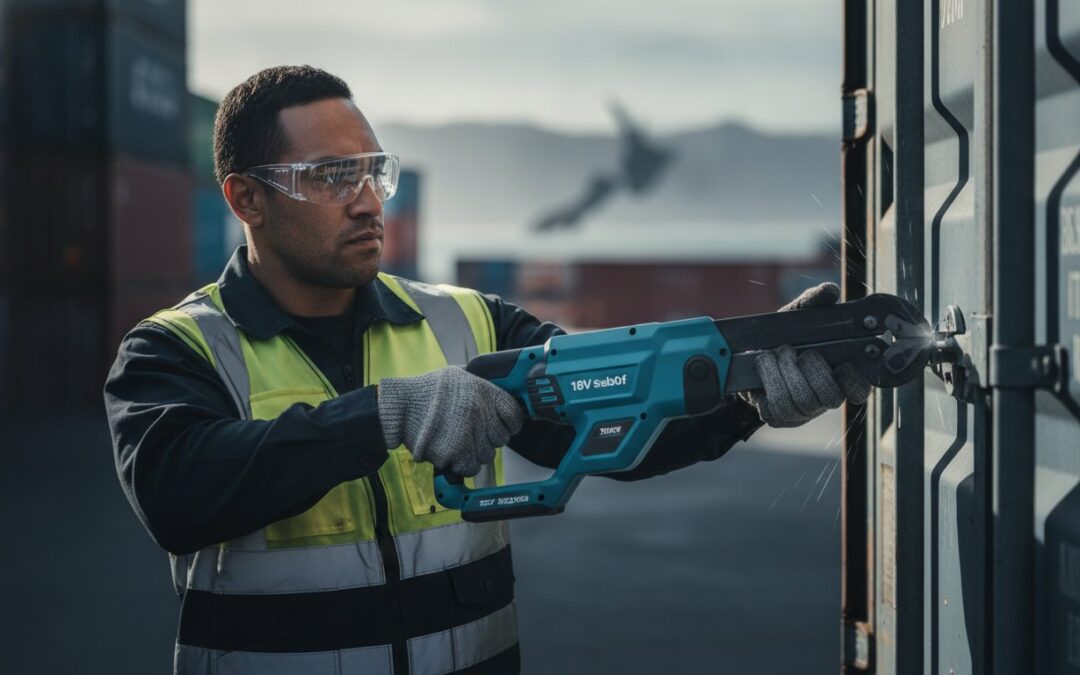
Your choice of removal tool is the difference between a streamlined unloading process and a preventable workplace injury. While manual croppers are common at many depots, they often cause significant physical fatigue and expose staff to the danger of flying metal shards. Understanding how to remove high security bolt seals safely is no longer just a mechanical task; it’s a critical safety protocol for any high-volume logistics operation. If your team is wrestling with hardened steel bolts designed to withstand over 1,000kg of force, you’re likely facing slower turnaround times and increased health and safety risks.
Delayed workflows caused by stubborn seals are a common operational bottleneck, but maintaining compliance shouldn’t come at the cost of staff wellbeing. This guide provides the most efficient methods for managing these fasteners while protecting your team from strain. We’ll explore the transition to cordless technology and the specific techniques required to keep your container stripping process fast, safe, and compliant with modern industry standards.
Key Takeaways
- Identify the technical specifications of ISO 17712:2013 “H” class hardware and why hardened carbon steel pins require specialised removal tools.
- Master the safest protocols for how to remove high security bolt seals to protect your workforce from projectile shards and repetitive strain injuries.
- Evaluate the operational advantages of transitioning from manual bolt croppers to 18V cordless technology to reduce physical fatigue and workplace injury claims.
- Optimise your depot throughput by implementing high-speed cutting solutions that streamline the container stripping process without compromising safety standards.
Understanding High-Security Bolt Seals and the Removal Challenge
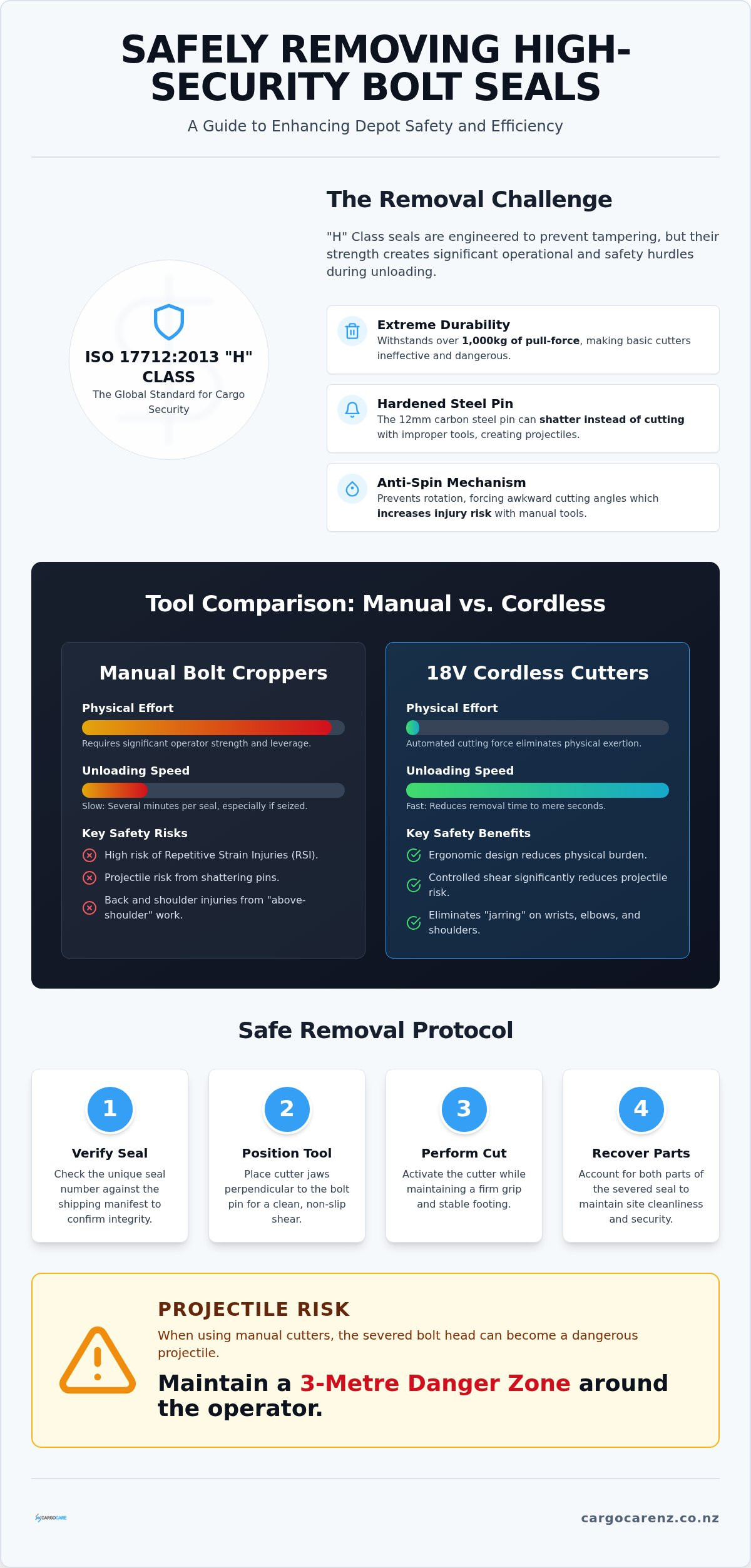
ISO 17712:2013 “H” Class hardware represents the global benchmark for securing international cargo containers. These high-security bolt seals consist of a hardened carbon steel pin and a locking chamber engineered to resist manual tampering. Standard pliers or basic wire cutters are entirely ineffective against these materials. Attempting to use underpowered tools often results in equipment damage and operational delays. For logistics professionals, understanding the physical properties of these seals is the first step in mastering how to remove high security bolt seals efficiently.
Modern bolt seals often feature an “anti-spin” mechanism. This design prevents the bolt from rotating within the locking body, which successfully prevents high-speed drill attacks. While this feature enhances security, it creates a practical challenge during the unloading process. Because the bolt remains fixed, workers can’t easily rotate the seal to find a comfortable cutting angle. This often leads to awkward manual positioning, which is a primary failure point in warehouse safety. Using the wrong tools in these restricted spaces increases the risk of repetitive strain and acute injury.
Why ISO 17712 “H” Class Seals Require Specialised Tools
To meet the “H” classification, a seal must withstand a pull-force threshold of over 1,000kg. This extreme durability ensures cargo remains secured against forced entry during transit. However, this same strength means that low-quality manual croppers often struggle to shear the 12mm pin. When a tool isn’t rated for hardened steel, the pin can “shatter” rather than cut, sending metal shards toward the operator. Maintaining a safe workplace while processing tamper evident security seals NZ businesses rely on requires professional-grade removal equipment that handles these forces without compromising staff safety.
Safe Removal Methods: Manual Croppers vs Cordless Technology
Choosing the right equipment is fundamental to depot safety. Manual bolt croppers require significant physical force to shear through hardened steel, often leading to long-term repetitive strain. When workers operate on high container latches, they frequently engage in “above-shoulder” work. This posture increases the risk of acute back and shoulder injuries. Transitioning to 18V cordless power tools eliminates this physical burden, allowing for a more ergonomic approach to how to remove high security bolt seals without the need for manual leverage.
Safety risks extend beyond physical strain. High-tension cuts on hardened steel create a “projectile risk” where the severed bolt head becomes a dangerous missile. The danger zone is defined as the 3-metre radius around the person performing the cut. Implementing a Phoenix Cordless Bolt Seal Cutter 18V significantly reduces these risks by providing a controlled, powered shear that adheres to C-TPAT security seal standards.
Step-by-Step Removal Protocol for Warehouse Safety
- Verify the unique seal number against the shipping manifest before starting the cut to confirm no tampering has occurred during transit.
- Position the tool jaws perpendicular to the bolt pin. This ensures a clean shear, prevents the tool from slipping, and avoids unnecessary jaw damage.
- Apply the “View, Verify, Tug, Twist” method in reverse. Once the cut is complete, ensure both parts of the seal are recovered and accounted for to maintain site cleanliness.
Optimising Depot Operations with Cordless Bolt Seal Cutters
High-volume logistics hubs require equipment that matches their pace. The Phoenix Cordless Bolt Seal Cutter 18V serves as the professional standard for these environments. It completely removes the physical exertion typically required to shear through 12mm hardened steel pins. By automating the cutting force, depots can standardise their approach to how to remove high security bolt seals, ensuring every operator achieves the same result regardless of their physical strength.
The impact on unloading speed is substantial. Manual removal often takes several minutes per container, especially when dealing with seized or awkwardly positioned seals. Switching to a cordless system reduces this to mere seconds. This efficiency is most effective when paired with ISO 17712 compliant bolt seals NZ. Using standardised hardware ensures the cutter blades engage with known material densities, preventing unexpected tool wear or blade failure.
Transitioning to 18V Power for High-Volume Logistics
The Phoenix system provides the portability required for large-scale distribution centres. Long battery life ensures a full shift of container stripping without frequent recharging stops. Adopting 18V technology simplifies the process of how to remove high security bolt seals while significantly improving site-wide safety metrics. The primary benefit is the reduction in workers compensation claims, as powered cutters eliminate the “jarring” effect on wrists and elbows caused by the sudden snap of manual croppers.
To maintain operational continuity, follow this maintenance checklist for your cordless cutters:
- Inspect cutter jaws daily for chips, cracks, or misalignment.
- Clear metal debris and dust from the cutting head after every shift.
- Store batteries in a cool, dry location to preserve long-term cell health.
- Lubricate moving mechanical parts weekly according to the manufacturer’s specifications.
Secure Your Depot Workflow with Professional Tools
Transitioning from manual croppers to powered removal technology is a necessary step for any high-volume logistics facility. By eliminating the physical strain of shearing hardened steel, you protect your workforce from long-term repetitive injuries and acute accidents. Mastering how to remove high security bolt seals with precision ensures that your container stripping process remains fast, compliant, and safe. As the official NZ distributor of Silverback products, we provide specialised 18V cordless hardware designed specifically for these rugged environments. Our expert NZ transport security support helps you maintain operational continuity while meeting the highest safety standards.
Enquire about the Phoenix Cordless Bolt Seal Cutter 18V at CargoCare NZ to upgrade your depot equipment. We’re here to help you build a safer and more efficient unloading protocol for your team.
Frequently Asked Questions
What is the best tool for removing high-security bolt seals?
A cordless hydraulic cutter like the Phoenix Cordless Bolt Seal Cutter 18V is the superior choice for high-volume depots. Manual croppers require excessive physical force and often lead to operator fatigue or strain. Cordless technology provides a consistent, powered shear that manages hardened carbon steel pins efficiently without the physical leverage required by traditional manual tools.
Can I use an angle grinder to remove a shipping container seal?
Using an angle grinder is generally discouraged due to the high risk of sparks and heat generation. This creates a fire hazard, particularly when handling dangerous goods or flammable cargo. Grinders also require hot work permits and generate significant noise. A dedicated 18V cutter is a safer, more compliant solution that maintains operational speed without these additional risks.
How do I safely handle the projectile risk when cutting a bolt seal?
You must establish a 3-metre exclusion zone around the operator to manage projectile risks. High-security bolts are under tension, and the severed head can become a dangerous missile upon release. Operators should always wear eye protection and ensure the cutting jaw is perpendicular to the pin to minimise the chance of metal shards shattering during the removal process.
What should I do if the bolt seal is too hard to cut with manual croppers?
If a seal resists manual croppers, you should stop immediately and use a powered cutter. Forcing a manual tool often leads to slipped jaws or sudden, uncontrolled breaks that cause injury. Part of knowing how to remove high security bolt seals is recognising that hardened steel hardware requires professional-grade power to ensure a safe and efficient unloading process without risking staff safety.
Article by
Steve O'Malley