
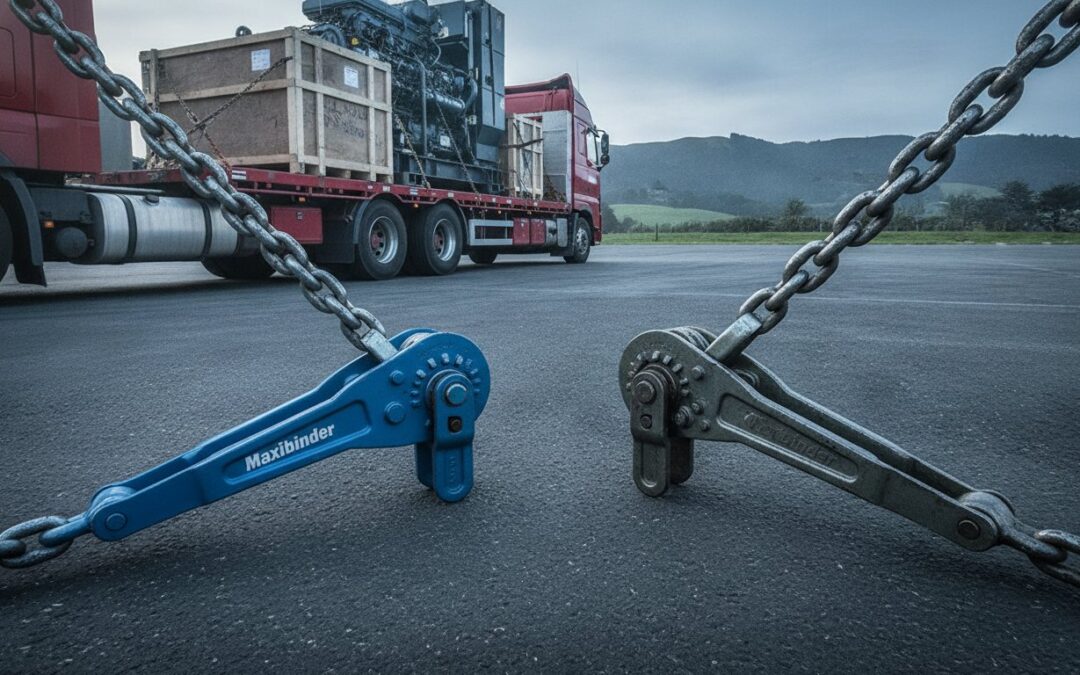
With 93% of all freight in New Zealand transported by road, the choice between a Maxibinder vs ratchet binder NZ is a decision that directly impacts operational safety and fleet compliance. Every logistics professional understands the physical toll of manual handling strain and the constant risk of load shift on our demanding regional routes. You need equipment that stays tight under pressure while protecting your operators from the dangerous snap-back injuries associated with traditional lever binders.
This guide explains the critical technical differences between these tools to ensure your gear meets AS/NZS 4344 standards and the latest NZTA Truck Loading Code. We will compare the 3,800kg lashing capacity of the Maxibinder against standard alternatives, focusing on pre-tensioning force and long-term durability. You will learn how the right hardware selection leads to faster turn-around times and a significant reduction in operator fatigue.
Key Takeaways
- Understand the hybrid engineering that allows the Maxibinder to combine the speed of a ratchet tie-down with the heavy-duty tensioning power of a load binder.
- Discover how controlled release mechanisms and ergonomic handles eliminate the risk of snap-back injuries, protecting drivers during high-tension operations.
- Compare the operational benefits of a Maxibinder vs ratchet binder NZ to ensure your fleet adheres to AS/NZS 4344 compliance and NZTA safety protocols.
- Gain insights into effective equipment integration and maintenance to minimise load shift and improve loading turn-around times across your logistics chain.
Maxibinder vs Ratchet Binder: Understanding the Hybrid Advantage
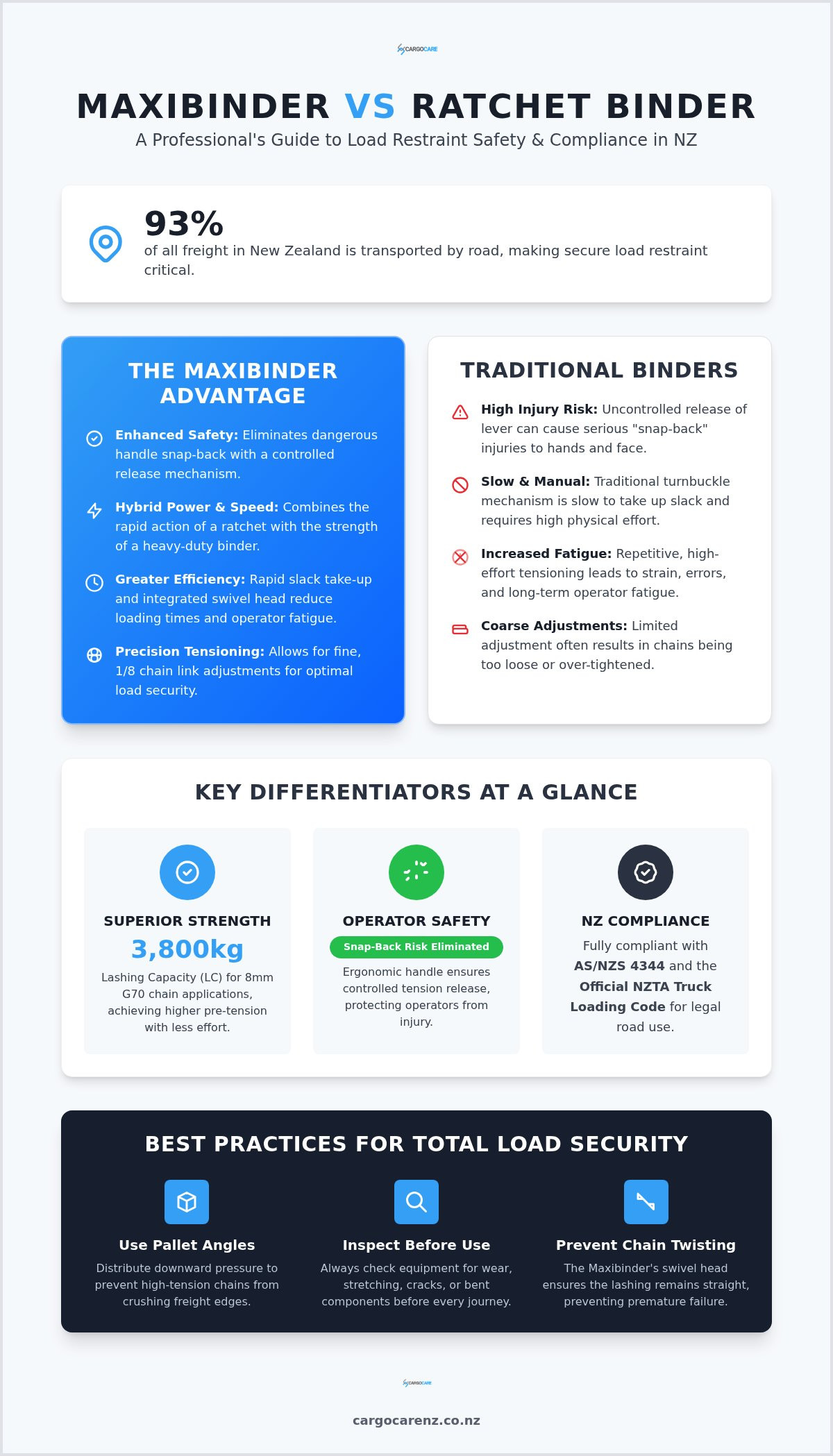
Selecting between a Maxibinder vs ratchet binder NZ depends on the specific requirements of your heavy haulage task. Standard ratchet binders operate on the mechanical principle of a turnbuckle, utilising a screw system that applies tension as the handle is rotated. While effective, these traditional tools are often slow to take up slack. The Silverback products NZ range introduces a patented hybrid design. This innovation combines the rapid action of a textile ratchet tie-down with the high-strength tensioning of a steel load binder.
Precision is a major differentiator. Traditional lever binders offer coarse adjustments, frequently leaving chains either too loose or excessively tight. The Maxibinder allows for 1/8 chain link adjustment precision. This level of control ensures optimal tension without over-stressing the G70 chain or the anchor points on the trailer.
Mechanical Efficiency and Pre-Tensioning Power
The patented hybrid mechanism enables operators to achieve higher pre-tensioning force with significantly less physical exertion. For 8mm G70 chain applications, the Silverback Maxibinder delivers a lashing capacity (LC) of 3,800kg. Efficiency is further improved by the integrated swivel head. Unlike standard ratchet threads that require multiple rotations to engage, the swivel head facilitates rapid slack take-up. This reduces the time spent at the side of the road and lowers the risk of operator fatigue during multi-drop loading cycles. It’s a professional solution for rugged NZ conditions where load security is non-negotiable.
Operational Safety: Preventing Fatigue and Handle Snap-Back
Handle snap-back is the uncontrolled release of stored energy in a tensioning lever. This phenomenon is a primary cause of hand and facial injuries when releasing tension on traditional binders. When evaluating a Maxibinder vs ratchet binder NZ, the safety profile of the handle is a critical consideration. The Maxibinder ergonomic handle is engineered to stay in the operator’s control throughout the entire tensioning and release cycle. This controlled movement eliminates the violent kick often associated with older lever-style hardware.
Selecting the right Maxibinder vs ratchet binder NZ setup directly impacts driver health. Reducing operator fatigue is essential for long-haul drivers who secure multiple loads per shift while traversing the country. Physical strain from repetitive, high-effort tensioning leads to errors and increased injury rates. Using hardware that aligns with the Official New Zealand Truck Loading Code ensures that your restraint systems are both compliant and safe for daily use. Reliable tools allow drivers to maintain high safety standards without the exhaustion of inferior gear.
The Role of the Swivel Head in Safety
The integrated swivel head serves as a vital safety feature by preventing chain twisting. This ensures the lashing remains straight and secure, as twisted links can fail prematurely or lose tension during transit. Durability is maintained through heat-treated alloy steel construction, which ensures the unit does not deform even when operating at its maximum lashing capacity. For operators prioritising safety and efficiency, investing in a professional Maxibinder is a practical step toward fleet-wide risk reduction.
Compliance and Integration: Meeting NZTA Standards
Compliance is non-negotiable for New Zealand road safety. All load restraint hardware must comply with the AS/NZS 4344 standard to be legal for road use. It’s critical to inspect load restraint straps NZ and chain binders for wear, stretching, or cracks before every journey. When choosing between a Maxibinder vs ratchet binder NZ, matching the tool to the cargo is essential. Maxibinders are the preferred choice for heavy machinery and steel products that require high pre-tension to remain stable on regional routes.
Integrating chain binders with specialised edge protection prevents damage to both the cargo and the restraint itself. High-tension chains can easily crush freight if not properly shielded. Using the correct combination of hardware ensures that you aren’t just legal, but also operationally efficient. Regular maintenance checks should identify bent handles or compromised hooks that could fail under tension.
Protecting Cargo with Pallet Angles and Binders
Using plastic pallet angles is necessary when securing loads with high-tension chain binders. These 1042mm pallet angles distribute downward pressure across a wider surface area, preventing the chain from crushing freight edges. This is particularly important for palletised goods or sensitive machinery components. Guidance on selecting the correct binder size depends on the total weight of the load. While 8mm Maxibinders are standard for most G70 applications, 10mm binders are required for heavier industrial tasks. This distinction is vital when comparing a Maxibinder vs ratchet binder NZ for specific fleet requirements. Professional loading requires a systematic approach where every component, from the chain to the edge protector, works in unison to meet NZTA safety standards.
Optimising Safety and Efficiency on NZ Roads
Upgrading your fleet’s restraint hardware is a strategic investment in long-term operational continuity and driver wellbeing. When weighing up the Maxibinder vs ratchet binder NZ, the decision hinges on balancing loading speed with high-tension security. Professional load restraint reduces equipment damage and protects your operators from the physical demands of high-volume loading cycles. As the official New Zealand distributor of Silverback products, CargoCare NZ provides AS/NZS 4344 compliant hardware and heavy-duty G70 rated equipment built for our demanding local conditions. Selecting the correct tools ensures your cargo remains stable while your business meets its safety obligations. View the Silverback Maxibinder and Load Restraint Range at CargoCare NZ to ensure your fleet remains compliant and efficient. Stay safe and stay moving on New Zealand’s challenging regional routes.
Frequently Asked Questions
Is the Maxibinder compliant with NZTA load restraint standards?
Yes, the Maxibinder is fully compliant with NZTA load restraint standards. It meets the AS/NZS 4344:2001 specification, which is the mandatory standard for transport chain and components used on New Zealand roads. When deciding on a Maxibinder vs ratchet binder NZ, compliance is a top priority. Always check for legible lashing capacity tags to ensure your setup meets the Official New Zealand Truck Loading Code.
What is the lashing capacity of an 8mm Silverback Maxibinder?
An 8mm Silverback Maxibinder has a lashing capacity (LC) of 3,800kg. This rating is specifically engineered for Grade 70 transport chain applications. When evaluating a Maxibinder vs ratchet binder NZ, this lashing capacity ensures the tool can handle heavy industrial cargo. It’s vital to ensure that all components in your restraint system, including the chain, meet this minimum capacity to remain compliant.
How does a Maxibinder prevent handle snap-back compared to lever binders?
Maxibinders prevent handle snap-back by utilising a geared ratchet mechanism instead of a simple high-tension lever. This allows the operator to release stored energy in small, controlled increments. Unlike traditional binders that can kick back violently when the tension is tripped, the Maxibinder handle remains under the operator’s control throughout the release. This mechanical advantage significantly reduces the risk of impact injuries during unloading.
Can I use Maxibinders for overhead lifting applications?
No, you cannot use Maxibinders for overhead lifting applications. These tools are designed and rated strictly for load restraint purposes under AS/NZS 4344. Using restraint equipment for lifting is dangerous and breaches New Zealand safety regulations. For any lifting task, you must use specialised equipment that is specifically certified for lifting and meets the relevant Australian and New Zealand lifting standards.
Article by
Steve O'Malley