
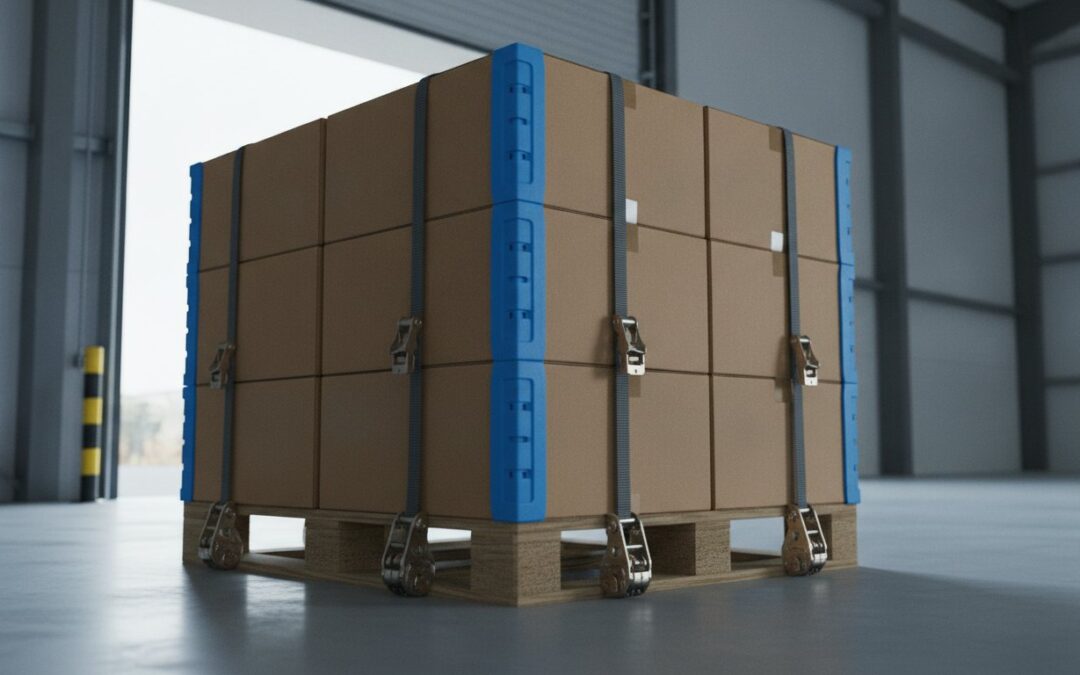
Can your logistics budget absorb a $10,000 fine for a single non-compliant load? Under current Waka Kotahi regulations, the financial and operational stakes for improperly secured freight have never been higher. Most transport professionals understand that preventing pallet damage during shipping NZ involves much more than just a layer of shrink wrap. It requires a technical approach to edge protection and calibrated mechanical restraint. When a pallet fails in transit, you don’t just lose stock. You risk your reputation with major retailers and face the administrative burden of high-cost insurance claims.
At CargoCare NZ, we agree that consistent delivery performance shouldn’t be left to chance or guesswork. This professional transport checklist provides the definitive framework to eliminate freight losses and ensure full compliance with NZ load securing standards. You’ll learn how to implement repeatable loading processes using industry-standard hardware like 1042mm plastic pallet angles and Maxibinders. This guide outlines the essential equipment and stacking protocols required to achieve zero-damage delivery rates across the New Zealand transport network.
Key Takeaways
- Identify structural pallet defects before loading to ensure the base can withstand high-tension mechanical restraint.
- Apply 1042mm plastic pallet angles as the industry standard for distributing lashing pressure and protecting cargo edges.
- Implement specific stacking and containment protocols for preventing pallet damage during shipping NZ while maintaining a low centre of gravity.
- Select professional-grade hardware like Maxibinders and ratchet tie downs to achieve full compliance with Waka Kotahi load restraint standards.
- Establish a repeatable three-phase checklist to reduce freight losses and maintain professional standing with New Zealand retailers.
Phase 1: Pre-Loading Inspection and Edge Reinforcement
Effective freight management begins on the warehouse floor before a single strap is tightened. Technical failure often originates from a compromised base. Operators must conduct a rigorous visual assessment of the timber or plastic structure. While most staff understand what is a pallet in a general sense, professional transit requires identifying specific structural weaknesses. Look for cracked stringers, missing blocks, or splintered lead boards. A damaged base cannot withstand the high-tension forces required for compliant load restraint and will likely collapse during transit.
Correct stacking geometry is equally vital for load stability. Boxes should be organised in a column-stack pattern, aligning vertical corners precisely. While interlocking patterns are common, they significantly reduce the compression strength of the packaging. Vertical alignment ensures the weight is carried by the strongest part of the cartons. Furthermore, ensure zero ‘overhang’. If cargo extends beyond the pallet footprint, it becomes vulnerable to side-impact damage and complicates the positioning of preventing pallet damage during shipping NZ protocols.
The Role of Plastic Pallet Angles in Damage Prevention
Securing a load for New Zealand’s demanding terrain requires high lashing tension, which often leads to ‘strap bite’. This occurs when tie-downs crush the corners of cardboard or plastic-wrapped goods. Heavy-duty 1042mm plastic pallet angles act as a high-impact buffer, distributing strap pressure evenly across the entire edge of the load. These angles improve load stability by creating a rigid frame that maintains the structural integrity of the cargo under mechanical stress. This simple addition prevents the deformation of fragile packaging and ensures the goods arrive in retail-ready condition.
Selecting the Right Cargo Handling Supplies NZ
Professional transport standards dictate the use of durable, purpose-built hardware. When sourcing cargo handling supplies NZ, it is essential to match the equipment to the specific load profile. For standard NZ pallets, the 1042mm angle is the industry benchmark for providing full-edge coverage. Using undersized or flimsy protection leads to inconsistent results and potential compliance issues. Selecting professional-grade supplies ensures that your edge protection can withstand the rigours of long-haul transit without cracking or shifting.
Phase 2: Stacking, Wrapping, and Containment Protocols
Once the pallet base is verified, the focus shifts to the physical arrangement of the cargo. A critical factor in preventing pallet damage during shipping NZ is the precise centring of the load. Operators must place the heaviest items at the bottom to maintain a low centre of gravity. This prevents the unit from tipping during the lateral forces experienced on New Zealand’s winding roads. Adhering to WorkSafe pallet safety guidelines regarding load height and weight distribution is essential for both vehicle safety and warehouse racking stability.
Containment force is the mechanical pressure applied by pallet wrap to hold the load together. It’s not enough to simply cover the goods; the wrap must be tensioned to pull the boxes into a single, cohesive unit. For long-haul transit, a pallet cap or additional top-wrapping is recommended to prevent moisture ingress and dust contamination. If the consignment contains chemicals or flammables, legal compliance requires hazardous goods transport labels on at least two opposing sides to ensure visibility for emergency services and handlers.
Column Stacking vs. Interlocking
Professional logistics standards favour column stacking over interlocking patterns for heavy freight. Column stacking aligns the strongest parts of the cartons, providing maximum vertical integrity. While interlocking might appear more stable on the warehouse floor, it often leads to ‘box bulge’ under the pressure of mechanical tie-downs. This deformation compromises the load structure and increases the risk of product damage during transit. Maintaining vertical alignment ensures the weight is distributed through the corners of the packaging where strength is highest.
Optimising Pallet Wrap Application
Effective containment starts at the bottom. The ‘three-layer’ rule is the industry standard: apply at least three full rotations around the pallet base and the first layer of cargo. This anchors the load to the timber and prevents the freight from sliding off the pallet base during sudden stops. Before the vehicle departs, check for signs of wrap failure such as punctures or ‘tailing’ where the wrap has come loose. Utilising high-quality load containment supplies is vital for maintaining this tension over long distances and varied climates.
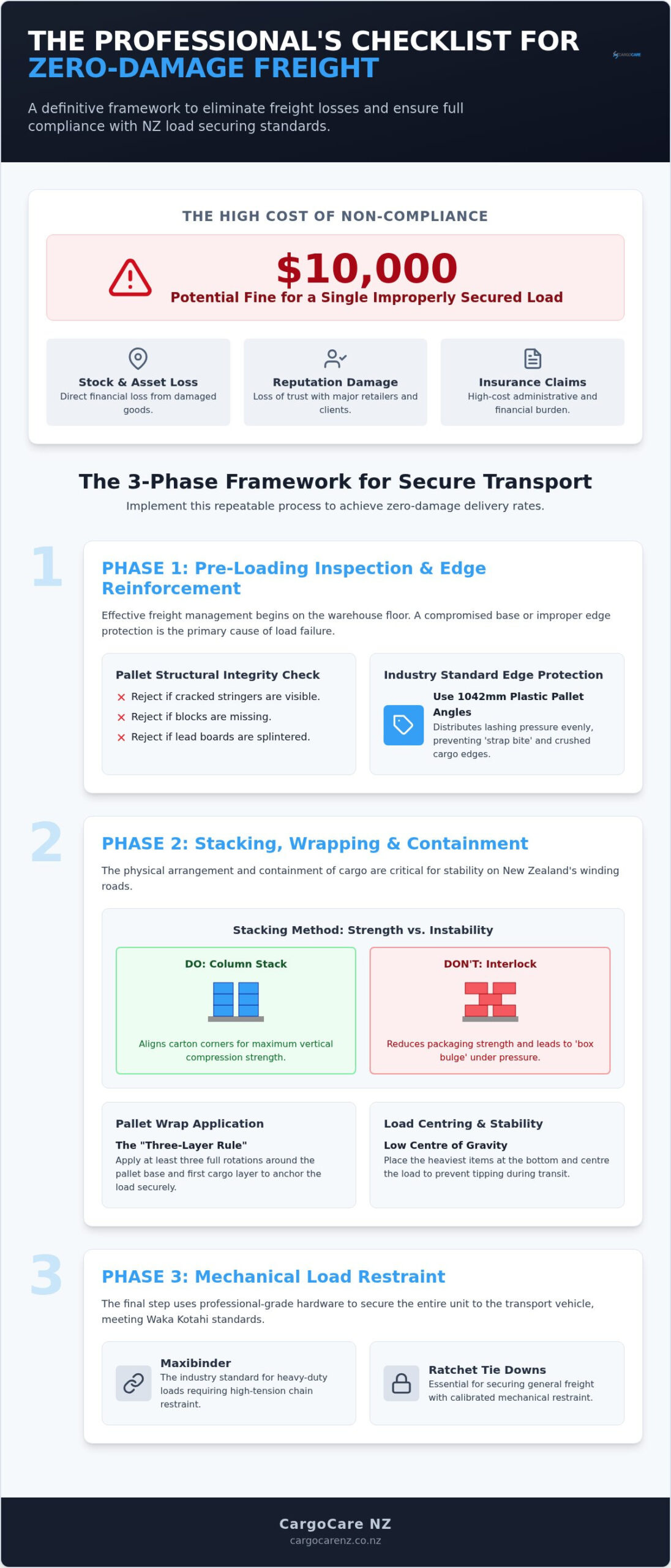
Phase 3: Mechanical Load Restraint and Final Security
The final phase of the checklist focuses on the mechanical forces that secure the palletised unit to the transport vehicle. Selecting the appropriate binder is a technical requirement based on the weight and nature of the cargo. For heavy-duty loads requiring high-tension chain restraint, the Maxibinder is the industry standard. For general freight, utilise ratchet tie downs with hook and keeper to secure the pallet to the vehicle bed. A critical step in preventing pallet damage during shipping NZ is ensuring that every strap or chain runs directly over the previously installed plastic pallet angles. This placement prevents the restraint from crushing the cargo while providing the necessary downward force to keep the load stationary.
For containerised freight, security is as important as stability. Apply ISO 17712 compliant bolt seals NZ to ensure the integrity of the consignment from origin to destination. These high-security measures are essential for meeting international shipping standards and protecting high-value goods during long-haul transit.
Using Maxibinders and Ratchet Straps Effectively
Tensioning a Maxibinder requires a methodical approach to avoid over-straining the hardware or the load. Place the binder in a position where the lever can be operated safely and apply tension until the chain is taut without being rigid. Before every trip, operators must conduct a physical inspection of all load restraint straps NZ. Look for frays, cuts, or UV degradation. Under AS/NZS 4380:2001, any webbing with visible damage or a missing lashing capacity tag is non-compliant and must be removed from service immediately.
Final Security and Compliance Check
A pre-departure walkaround is the final line of defence against transit failure. Check that the tension remains consistent across all straps and that the pallet wrap has not loosened during the loading process. To protect against cargo interference or unauthorised access, implement tamper evident security seals NZ on all access points. This provides a clear audit trail and reinforces your commitment to professional transport standards. Verifying these details ensures the vehicle meets NZTA load restraint requirements and protects your business from potential corporate fines.
Securing Operational Continuity Across the NZ Transport Network
Achieving zero-damage delivery rates requires a methodical transition from standard warehouse packing to professional-grade load restraint. By implementing a rigorous pre-loading inspection and utilising high-impact 1042mm plastic pallet angles, operators can eliminate the structural failures that lead to stock loss. Effective containment relies on the combination of low centre-of-gravity stacking and calibrated mechanical tension through hardware like Maxibinders. This technical approach is the only reliable method for preventing pallet damage during shipping NZ while maintaining full compliance with current Waka Kotahi safety standards.
CargoCare NZ is the national distributor for Silverback products, providing the rugged hardware required for New Zealand’s unique transport conditions. We maintain a deep inventory of heavy-duty 1042mm pallet angles and high-tension binders to ensure your fleet stays compliant and your freight remains secure. Our team offers expert advice on NZ load restraint compliance to help you refine your repeatable loading processes. Shop our range of professional cargo handling supplies NZ to upgrade your transit security. Standardising your transit protocols today protects your reputation and your bottom line for every kilometre on the road.
Frequently Asked Questions
How do plastic pallet angles actually prevent damage?
Plastic pallet angles prevent damage by distributing the downward pressure of lashing straps across a wider surface area. This eliminates ‘strap bite’, where high-tension webbing cuts into cardboard packaging or plastic-wrapped goods. Using a 1042mm heavy-duty angle creates a rigid frame that maintains the structural integrity of the load during mechanical restraint.
What is the difference between a Maxibinder and a standard ratchet strap?
A Maxibinder is a high-tension gear-driven device used primarily with transport chains for heavy-duty loads. In contrast, a ratchet tie down utilises synthetic webbing to secure lighter or more fragile cargo. While both are essential for preventing pallet damage during shipping NZ, the Maxibinder provides superior tensioning force for dense, high-mass consignments that require rigid restraint.
Are there specific NZTA rules for palletised load restraint?
New Zealand transport operators must comply with the Land Transport Rule: Load Restraint. This regulation mandates that all palletised cargo be secured to withstand specific forces, including 0.8g in the forward direction and 0.5g sideways or rearwards. Failure to meet these standards can result in corporate fines of up to $10,000 as of July 2026, making professional-grade equipment a legal necessity.
Can I reuse plastic pallet angles for multiple shipments?
High-durability plastic pallet angles are designed for multiple reuses provided they remain structurally sound. Operators should inspect angles before each trip for stress fractures, warping, or impact damage. Unlike cardboard edge protectors, heavy-duty plastic versions are weather-resistant and maintain their shape under the high-tension requirements of professional NZ load restraint protocols.

Article by
Steve O'Malley