
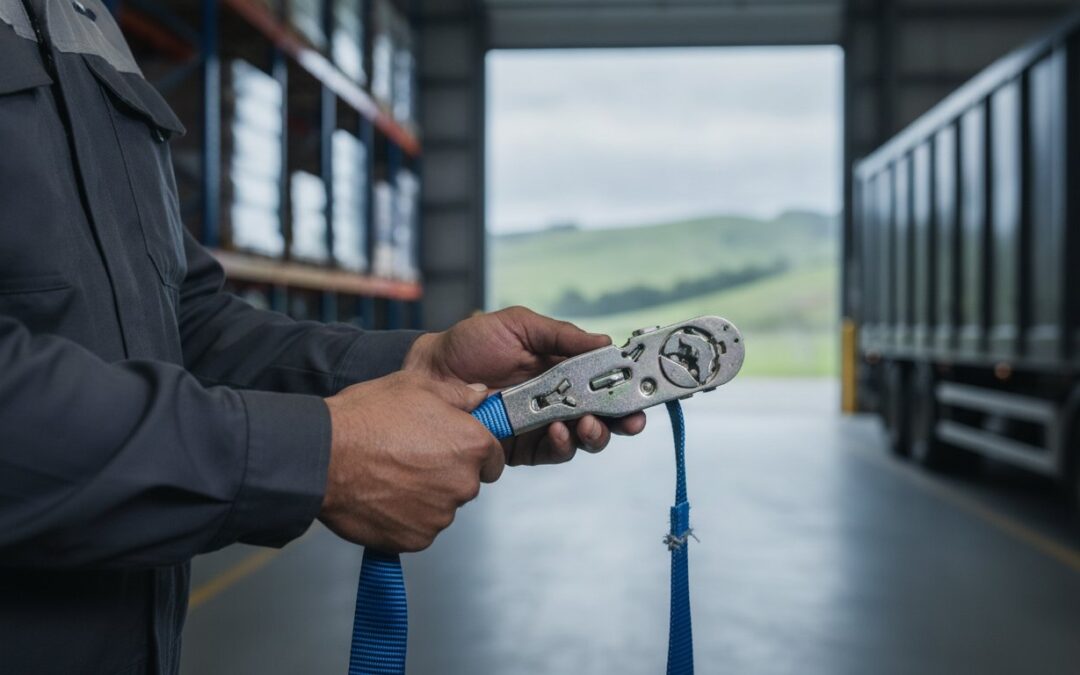
What if a single overlooked tear in your lashing gear resulted in a $10,000 corporate fine under the Land Transport Act? In the New Zealand transport sector, the difference between a secure load and a major liability often comes down to the condition of the ratchet tie downs NZ professionals deploy daily. You recognise that maintaining compliant equipment is non-negotiable for operational safety, yet technical confusion between lashing capacity and breaking strength continues to cause avoidable failures during transit. These risks threaten both your cargo integrity and your business reputation on national roads.
This article delivers a comprehensive framework to master load restraint safety through our professional inspection template and maintenance guide tailored for New Zealand conditions. You will learn to identify critical wear points and implement a routine that guarantees compliance with AS/NZS 4380:2001. We provide the technical clarity required to extend the lifespan of your expensive lashing equipment while ensuring your fleet remains fully compliant with NZTA standards. Our systematic approach moves from understanding regulatory benchmarks to practical, on-the-ground maintenance strategies.
Key Takeaways
- Understand why Lashing Capacity (LC) is the mandatory metric for NZ compliance and how to verify legible safety tags during roadside inspections.
- Learn a systematic inspection method for ratchet tie downs NZ operators use to identify webbing fatigue and hardware failure before departure.
- Master the “Three-Strike” rule to determine exactly when lashing equipment requires professional repair or immediate decommissioning to avoid heavy fines.
- Discover the performance advantages of using industrial-grade Silverback hardware to ensure long-term durability in rugged transport environments.
- Identify how to integrate plastic pallet angles to protect strap integrity and prevent cargo damage during long-haul transit.
Understanding Ratchet Tie Down Standards in New Zealand
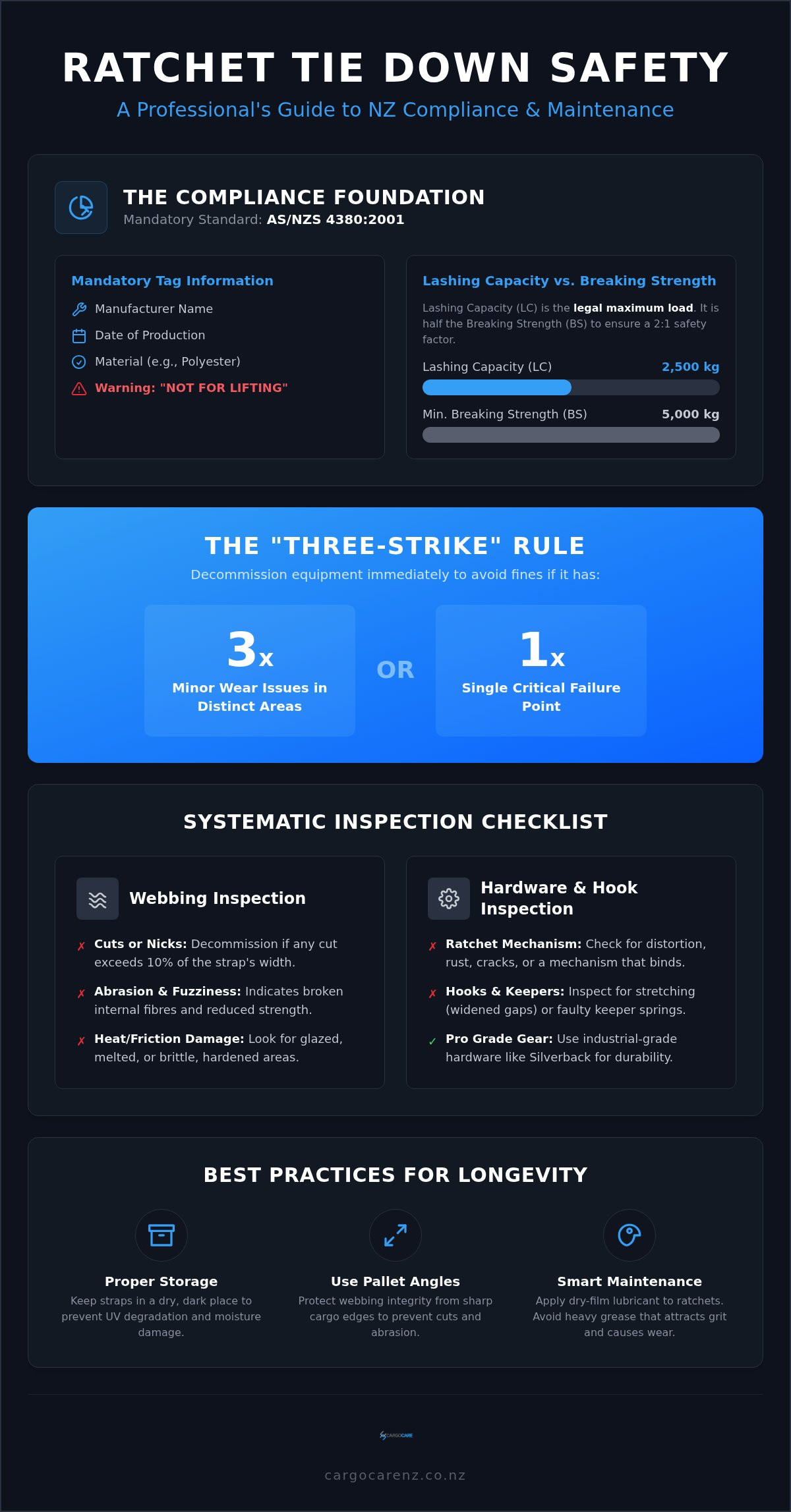
Compliance with AS/NZS 4380:2001 is the mandatory baseline for all ratchet tie downs NZ transport firms utilise. This specific standard governs the manufacturing, testing, and marking of webbed systems used on New Zealand roads. NZTA inspectors use these benchmarks to verify vehicle safety during roadside stops. If your gear lacks the correct certification markings, it’s legally non-compliant, regardless of its physical state. Maintaining high standards ensures operational continuity and mitigates the legal liabilities associated with insecure cargo.
Mandatory Tag Information for NZ Compliance
Every compliant strap must feature a permanently attached, legible safety tag that acts as its legal passport. This tag must specify the manufacturer, date of production, and the lashing capacity (LC). The material, usually polyester, must be clearly identified alongside a mandatory “NOT FOR LIFTING” warning. Essential tie-down hardware components like the buckle and hooks are rated as part of this assembly to ensure the entire system meets the stated LC. Without this legible documentation, the equipment fails NZTA standards immediately.
Lashing Capacity vs. Breaking Strength
Lashing Capacity is the only metric used for legal load restraint calculations. While “Breaking Strength” is often cited by manufacturers, it’s a secondary engineering figure used to establish the required 2:1 safety factor. For instance, a strap with an LC of 2500kg must possess a minimum breaking strength of 5000kg. Using the higher breaking strength figure for load calculations is a dangerous error that leads to insecure loads and significant legal penalties. Professional ratchet tie downs NZ suppliers prioritise LC visibility to help drivers maintain these safety margins accurately and stay within the Truck Loading Code requirements. Understanding the full scope of NZ load securing standards is essential for ensuring every strap in your fleet meets the 80/50/50 force rule and current legal benchmarks.
The Ultimate Ratchet Tie Down Inspection and Maintenance Template
A systematic inspection routine is the only way to ensure the ratchet tie downs NZ transport firms deploy remain safe for the road. Operators should adopt a “Three-Strike” rule: any strap showing minor wear in three distinct areas, or a single critical failure in one, must be decommissioned immediately. This proactive approach aligns with the Official New Zealand Truck Loading Code, which mandates that all restraint equipment must be in good working order. Regular maintenance ensures compliance and extends the operational life of your lashing gear.
Webbing Inspection Checklist
Inspect the full length of the polyester webbing for surface degradation. Look for “fuzziness,” which indicates broken internal fibres caused by abrasion. Identify any nicks or cuts along the edges; if a cut exceeds 10% of the strap width, the lashing capacity is compromised and the strap is no longer legal. Check for friction burns or heat damage that has glazed or melted the surface. These hardened areas are brittle and prone to sudden snapping under tension.
Hardware and Hook Maintenance
Mechanical failure is just as dangerous as webbing fatigue. Examine the ratchet handle for signs of distortion, rust, or cracked spring plates. The mechanism must engage and release smoothly without binding. Inspect the hook and keeper to ensure the metal hasn’t been stretched; an increased opening gap indicates the hardware has been overloaded. Verify that the “keeper” spring functions correctly to prevent the hook from detaching during transit. For those requiring replacement gear, choosing industrial-grade Ratchet Tie Down with Hook and Keeper options from CargoCare NZ ensures consistent mechanical reliability.
Environmental factors in New Zealand, such as high UV levels and road salt, accelerate equipment degradation. Store straps in a dry, dark toolbox when not in use to prevent UV rot. Periodically apply a dry-film lubricant to the ratchet’s moving parts to maintain smooth operation. Avoid using heavy greases that attract grit, as this will eventually grind down the internal gears and cause the mechanism to seize. A well-maintained ratchet ensures you can achieve proper tension without excessive physical force.
Selecting Professional Cargo Safety Equipment for National Freight
Procuring high-quality ratchet tie downs NZ transport firms require for long-haul operations is a strategic investment in fleet safety. Generic hardware often fails under the repetitive stress of national freight routes, leading to costly delays and premature gear replacement. Professional-grade equipment ensures that your restraint system maintains its lashing capacity even in harsh New Zealand weather conditions. Sourcing compliant gear from a dependable national distributor provides the consistency needed for large-scale logistics operations and long-term durability.
Silverback Hardware: Engineered for Durability
Silverback hardware represents the industry benchmark for heavy transport durability. Specifically, the 50mm ratchet tie downs with hook and keeper are designed to handle the high-tension requirements of industrial loads. These components are essential for maintaining transport safety and compliance across your entire fleet. The robust construction of the ratchet mechanism prevents the slipping or jamming often found in lower-tier alternatives, ensuring a secure hold from the depot to the final delivery point.
Holistic Load Securing
Effective load restraint involves more than just tensioning a strap. Integrating plastic pallet angles NZ into your setup protects the webbing from sharp cargo edges, significantly reducing the risk of strap failure. This integration is a core component of a professional cargo safety equipment NZ strategy. For mixed or loose loads, using load restraint straps NZ alongside a compliant cargo net for truck NZ provides a secondary layer of containment that prevents smaller items from shifting during transit.
Before departure, perform a manual “Tug Test” on every strap to verify that the ratchet is locked and the webbing is tight. Load settlement is a common occurrence during the initial stages of a journey. Drivers must stop and re-tension all ratchet tie downs NZ within the first 20km of travel. This final check accounts for any movement in the cargo and ensures the load remains secure for the remainder of the trip. Adopting these rigorous standards protects your equipment, your cargo, and the safety of all road users.
Securing Long-Term Fleet Compliance and Safety
Maintaining a safe and compliant fleet requires more than meeting minimum legal requirements; it demands a rigorous, condition-based inspection culture. By implementing a systematic check and prioritising Lashing Capacity over secondary breaking strength figures, you protect your cargo and your business from the risks of equipment failure and NZTA penalties. These routine assessments ensure every component of your load restraint system remains operational in New Zealand’s demanding transport environment. Operators seeking a comprehensive reference should consult the latest NZ load securing standards guide to stay aligned with the updated Truck Loading Code and lashing technique requirements for curtain-siders and mixed freight.
Standardising your fleet with industrial-grade equipment is the most effective way to guarantee performance. As the official NZ distributor of Silverback products, Cargo Care NZ provides heavy-duty hardware engineered specifically for local conditions. We offer a nationwide supply of compliant gear, including 50mm ratchet tie downs NZ operators trust for durability and reliability. High-quality lashing equipment combined with proper maintenance reduces long-term operational costs and ensures your team remains safe on the road.
Equip your fleet with Silverback Ratchet Tie Downs from Cargo Care NZ to ensure your load restraint strategy meets the highest professional standards. We are committed to supporting New Zealand’s transport sector with dependable tools and expert guidance.
Frequently Asked Questions
How often should I inspect my ratchet tie downs NZ?
Perform a visual check before every load is secured. A more comprehensive technical inspection of your ratchet tie downs NZ should occur monthly for equipment in frequent use. This routine identifies webbing fatigue or mechanical defects before they result in cargo failure or NZTA penalties. Condition-based retirement is standard practice; most professional gear lasts between two and four years depending on the operational environment.
Can I still use a ratchet strap if the tag is missing or unreadable?
You cannot legally use a ratchet strap if the safety tag is missing or unreadable. New Zealand compliance standards mandate that the Lashing Capacity (LC) and manufacturer details must be clearly visible for inspection. A strap without a legible tag is technically non-compliant and must be removed from service immediately. Maintaining clear documentation on the webbing is essential for passing roadside enforcement checks.
What is the difference between a hook and keeper and a J-hook?
A hook and keeper features a spring-loaded safety latch that prevents the fitting from detaching if the load settles and the strap loses tension. In contrast, a J-hook is an open wire fitting without a secondary retention mechanism. The hook and keeper design is the industry standard for professional transport because it provides a more reliable connection in rugged New Zealand conditions.
How do I clean polyester webbing without damaging the fibres?
Wash polyester webbing using warm water and a mild, pH-neutral detergent to remove road salt and grime. You must avoid using harsh chemicals, solvents, or high-pressure washers, as these can weaken the synthetic fibres and reduce the strap’s lashing capacity. Always air dry your equipment in a shaded area. High heat or direct sunlight during the drying process can cause brittleness.
Is it legal to knot two ratchet straps together to reach a longer distance?
It is illegal to knot two ratchet straps together to increase their reach. A knot creates a severe stress point that can reduce the rated lashing capacity of the webbing by up to 50%. This practice violates the Truck Loading Code and poses a significant safety risk. If your current ratchet tie downs NZ are too short, you must source a single, longer compliant strap.
How does New Zealand’s UV index affect the lifespan of my tie downs?
New Zealand’s high UV index accelerates the degradation of polyester webbing through a process called photo-oxidation. This breaks down the internal fibres, leading to a loss of strength and a brittle texture. Straps that appear faded or feel stiff have likely suffered UV damage and may fail under tension. Storing your gear in a closed toolbox or under a cover is vital for longevity.

Article by
Steve O'Malley