
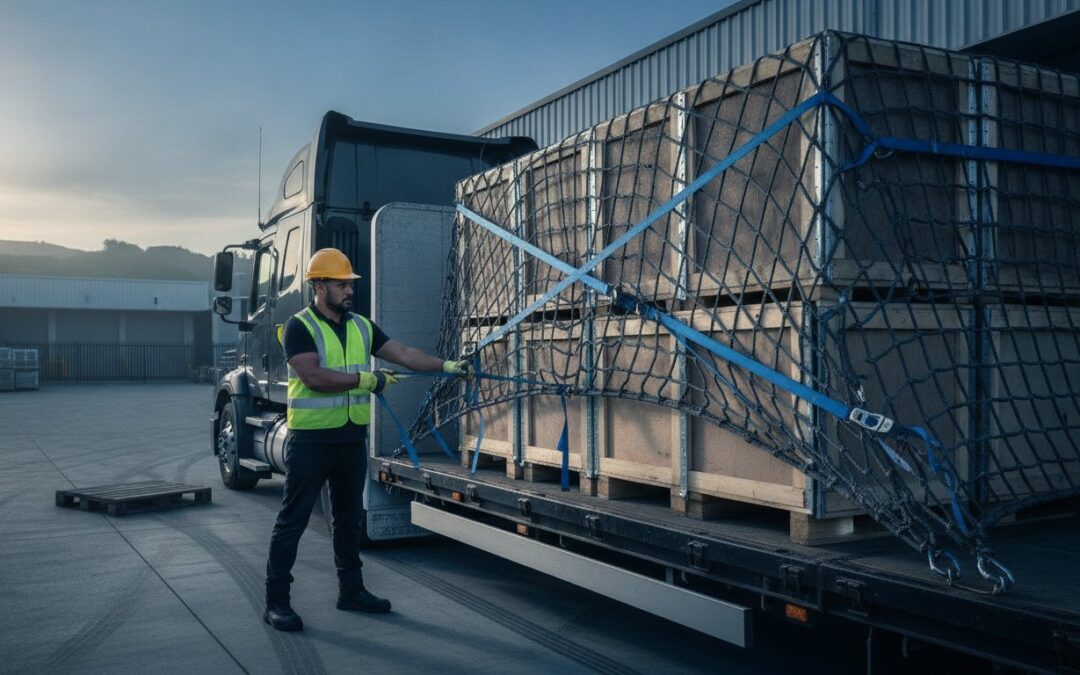
In 2022, drivers across New Zealand were issued over NZ$1 million in fines for insecure load offences. You understand that securing freight on local roads involves more than just a quick cover; it requires equipment that stands up to NZTA scrutiny and the country’s intense UV levels. Selecting the correct cargo net for truck NZ applications is a critical decision for any transport professional who values operational continuity. This 2026 guide explains how to identify load-rated equipment and understand the role of containment nets to ensure transport compliance and maximum freight security. We will examine the latest updates to the NZ Truck Loading Code, the technical differences between containment and primary restraint, and the specific material attributes required to withstand the local climate. You’ll gain the technical knowledge needed to kit out your fleet with confidence.
Key Takeaways
- Understand the 2026 updates to the NZ Truck Loading Code to avoid infringement fees and ensure your fleet remains fully compliant.
- Identify the technical specifications of a cargo net for truck NZ that differentiate professional-grade restraint from standard consumer-grade bungee nets.
- Evaluate material quality by prioritising UV-stabilised polyester webbing, which is essential for preventing equipment degradation in high-exposure environments.
- Master fleet implementation techniques, including correct tensioning and the strategic use of perimeter bungee cords to eliminate wind flap and load movement.
Understanding Load Restraint Compliance and Safety Standards in NZ
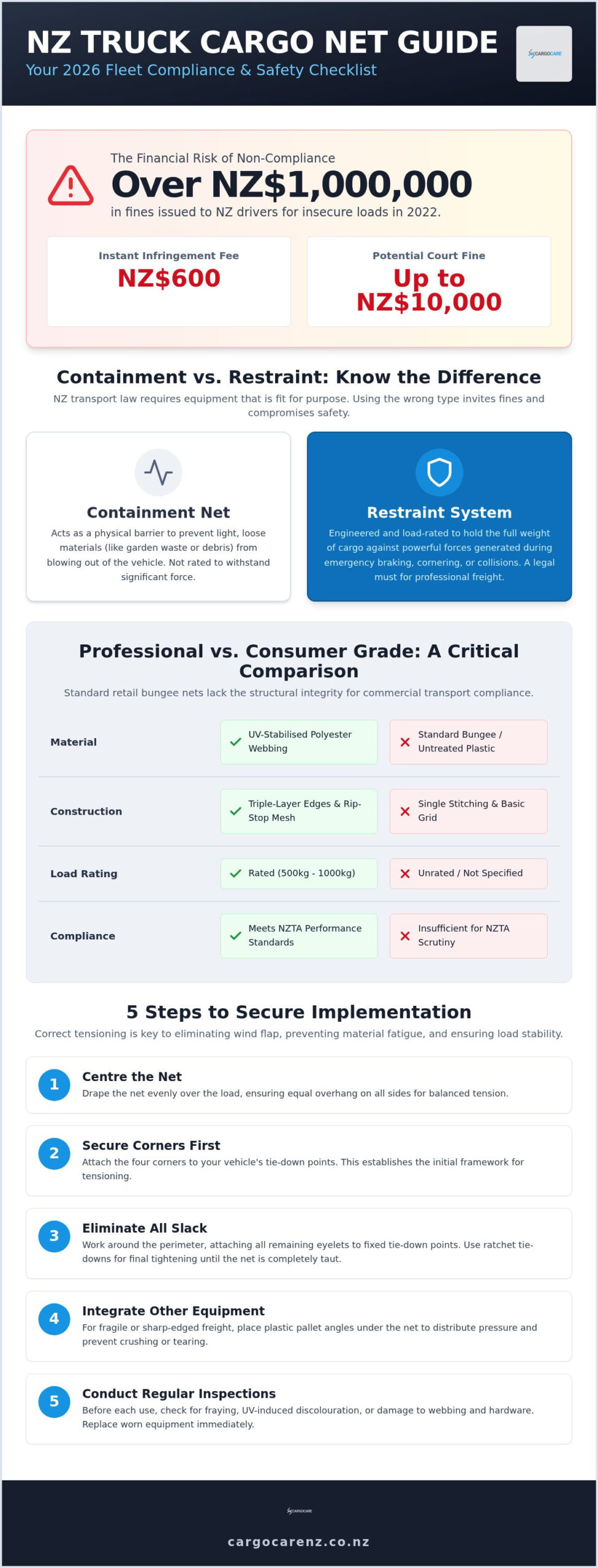
Securing a load on New Zealand roads involves strict adherence to the Land Transport Act 1998. Using a dedicated cargo net for truck NZ operations serves two distinct purposes: primary restraint or secondary containment. For loose materials, a net acts as a physical barrier to prevent debris from exiting the vehicle. However, failing to secure a load properly carries an instant NZ$600 infringement fee. If a case proceeds to court, companies can face fines up to NZ$10,000 for an individual offence. Adopting a comprehensive cargo safety equipment NZ strategy is the most effective way to mitigate these financial and operational risks.
Standard bungee nets often found in retail stores are insufficient for a professional cargo net for truck NZ setup. These items lack the structural integrity to meet NZTA performance requirements. While they might keep a light tarp in place, they cannot withstand the forces generated during emergency braking or sharp cornering. Professional logistics operators rely on industrial-grade equipment built to withstand the physical demands of the transport sector, ensuring every trip remains compliant and safe.
The Legal Necessity of Rated Cargo Safety Nets
New Zealand transport law distinguishes between ‘containment’ and ‘restraint’. Containment involves preventing small items from blowing away; restraint requires the equipment to hold the weight of the load against force. Implementing correct load securing principles ensures that your equipment is fit for purpose. For professional freight, you must verify if your equipment is rated for primary restraint or intended only for containment. Using unrated gear for primary restraint doesn’t just invite fines; it compromises the safety of every road user. Professional operators prioritising safety always check the manufacturer’s specifications before deployment.
Key Features to Evaluate When Selecting a Professional Cargo Net
Selecting a professional cargo net for truck NZ applications requires a focus on engineering over aesthetics. In New Zealand, high UV levels cause rapid degradation of standard plastics. UV-stabilised polyester webbing is non-negotiable for commercial longevity. Unlike cheaper alternatives, this material maintains its tensile strength even after prolonged exposure to the sun. It won’t become brittle or snap when you need it most.
Durability is further enhanced by specific construction methods. Look for triple-layered edges and heavy-duty eyelets. These features prevent the perimeter from fraying under high tension. Mesh density is equally vital; a smaller grid prevents small items from escaping, which is a key requirement under New Zealand’s official load restraint guidelines. To ensure a secure fit, measure your truck bed or trailer precisely. A net that’s too large will flap in the wind, causing premature wear and potential load instability.
Load Ratings and Material Durability for Commercial Freight
Commercial nets typically carry ratings from 500kg to 1000kg. These ratings define the maximum force the net can withstand during transit. For sharp or jagged cargo, rip-stop mesh technology is essential. It prevents minor punctures from developing into large tears that compromise the entire load. You can identify high-quality Silverback products NZ by reviewing their technical data sheets for these specific industrial attributes. Ensuring your equipment meets these standards is the best way to maintain operational efficiency on the road. If you’re upgrading your fleet, consider our range of load-rated cargo safety nets to ensure total compliance.
Fleet Implementation: Securing Your Load with Silverback Cargo Nets
Correct fleet implementation starts with eliminating slack. A loose cargo net for truck NZ applications creates wind flap, which accelerates material fatigue and can destabilise light items. Start by centering the net over the load. Secure the four corners first to establish a baseline tension. Use perimeter bungee cords for initial positioning, but always transition to fixed tie-down points for the final securement. It’s a methodical approach that ensures the net remains taut at highway speeds, adhering to the NZ load securing standards set by NZTA.
Operational safety relies on consistent equipment health. Regularly inspect your nets for signs of fraying or UV-induced discolouration. Even high-quality webbing won’t last forever if neglected under the harsh New Zealand sun. Integrating these checks into your standard vehicle inspection routine is essential for maintaining compliance. For a structured approach, follow our ratchet tie downs NZ maintenance guide to ensure all hardware remains in peak condition.
Integrating Nets with Ratchet Tie Downs and Pallet Angles
For complex loads, a cargo net often works as part of a multi-component system. Using plastic pallet angles beneath the net helps distribute pressure across fragile freight, preventing edge crushing while allowing for maximum tension. This combination is particularly effective when hauling mixed palletised goods. Relying on a cohesive suite of Silverback-branded hardware ensures that hooks, ratchets, and nets interface correctly. A unified restraint system reduces the risk of hardware mismatch and improves the speed of loading operations across your fleet.
Optimising Fleet Compliance and Freight Security
Maintaining road safety and regulatory compliance requires more than basic containment. By prioritising load-rated equipment and UV-stabilised materials, you protect your fleet from environmental degradation and significant NZTA infringement fees. Implementing a high-quality cargo net for truck NZ operations ensures that loose items remain secure under all transit conditions. You’ll find that investing in professional-grade hardware reduces operational risk and extends the service life of your gear.
As the official NZ distributor of Silverback products, CargoCare NZ provides industrial-grade solutions trusted by transport professionals for over a decade. Our equipment is engineered to withstand the specific challenges of local logistics, including harsh UV exposure and high-tension requirements. Secure your fleet with professional Silverback cargo nets from CargoCare NZ to maintain total compliance on the road. We’re ready to help you streamline your load restraint processes today.
Frequently Asked Questions
What is the difference between a load-rated and non-rated cargo net?
A load-rated net is engineered and certified to act as a primary restraint, capable of holding specific weights against transit forces. Conversely, a non-rated net is designed purely for secondary containment, such as preventing light debris or loose items from blowing out of a vehicle. For commercial compliance, you must verify the rating matches your specific load requirements to avoid NZTA infringement fees.
How do I know if my cargo net for truck NZ meets transport regulations?
To confirm a cargo net for truck NZ meets transport regulations, check for a permanent rating tag showing its manufacturer and load capacity. Equipment must align with the NZ load securing standards performance requirements for restraint and containment. Professional operators should verify that the net’s material is industrial-grade and UV-stabilised to prevent the rapid degradation often seen in the New Zealand climate.
Can I use a cargo net as the sole restraint for heavy machinery?
No, a cargo net should never be used as the sole restraint for heavy machinery. Machinery requires primary restraint equipment like transport chains or heavy-duty ratchet tie-downs to secure the mass against movement. A net is only appropriate as a secondary measure to contain loose components, manuals, or smaller attachments that might otherwise dislodge during transit on New Zealand roads.
What size cargo net do I need for a standard New Zealand flatbed truck?
Standard New Zealand flatbed trucks typically require nets that accommodate a 2.4-metre bed width plus the height of the intended load. You should measure the total surface area of your freight rather than just the deck dimensions to ensure full coverage. A properly sized cargo net for truck NZ use should overlap the edges sufficiently to allow for secure tensioning at multiple tie-down points.
Article by
Steve O'Malley