
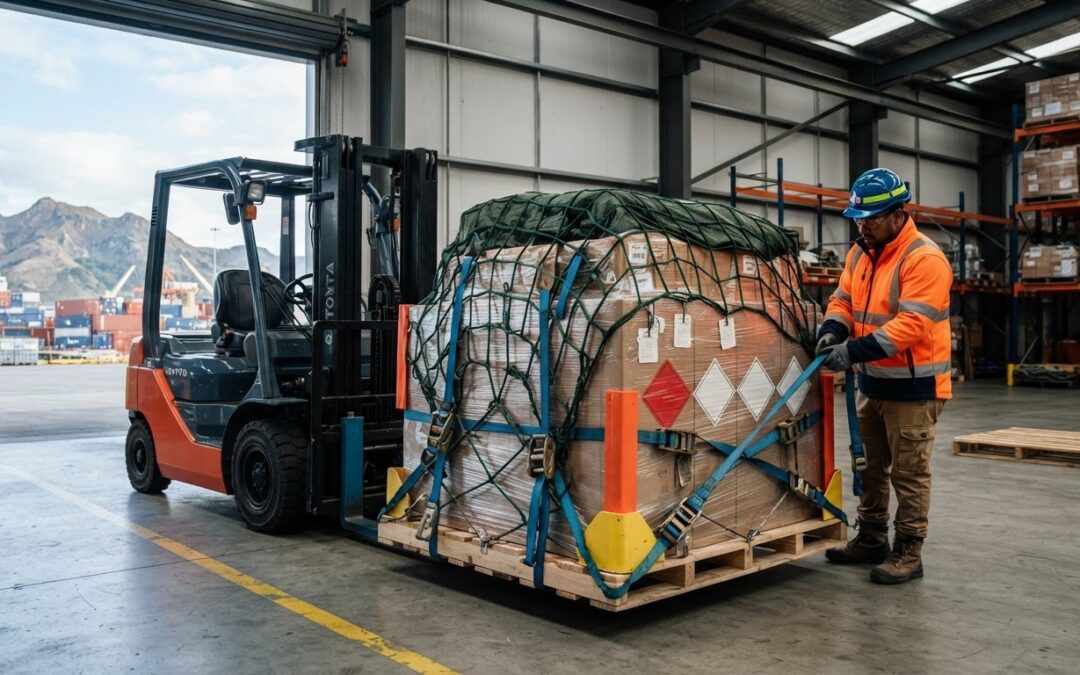
The right cargo handling supplies depend on the job, not just the catalogue category. Choosing cargo handling supplies NZ freight teams need starts with the load: its shape, packaging, handling requirements, transport conditions and exposure to movement or damage. One task may call for restraint, while another needs edge protection, a cargo safety net, security seals or dangerous goods labelling.
When a job involves several risks, it can be difficult to tell which products are relevant. Use this practical checklist to define the task, compare product categories and check specifications before ordering. The key is to match each item to the work it needs to do, rather than assuming one product will address every risk.
Key Takeaways
- Match cargo handling supplies NZ freight tasks require to the load, handling stages and specific risks, rather than choosing by product category alone.
- Separate protection, restraint, containment, security and dangerous goods labelling needs to identify the right product type for each task.
- Before ordering, note load details and transport conditions, then check product dimensions, compatibility, intended use and manufacturer guidance.
- Prepare the task and specification details before contacting a supplier. CargoCare NZ supplies products nationwide and is the official New Zealand distributor of Silverback products.
Cargo handling supplies NZ: identify the job before choosing equipment
Start with the job, not the product name. Consider the freight, each handling stage and the risks involved, such as edge damage, shifting loads, loss of containment, tampering or unclear hazard information. Material handling includes moving, protecting, storing and controlling goods, so the equipment should suit the specific task in that workflow.
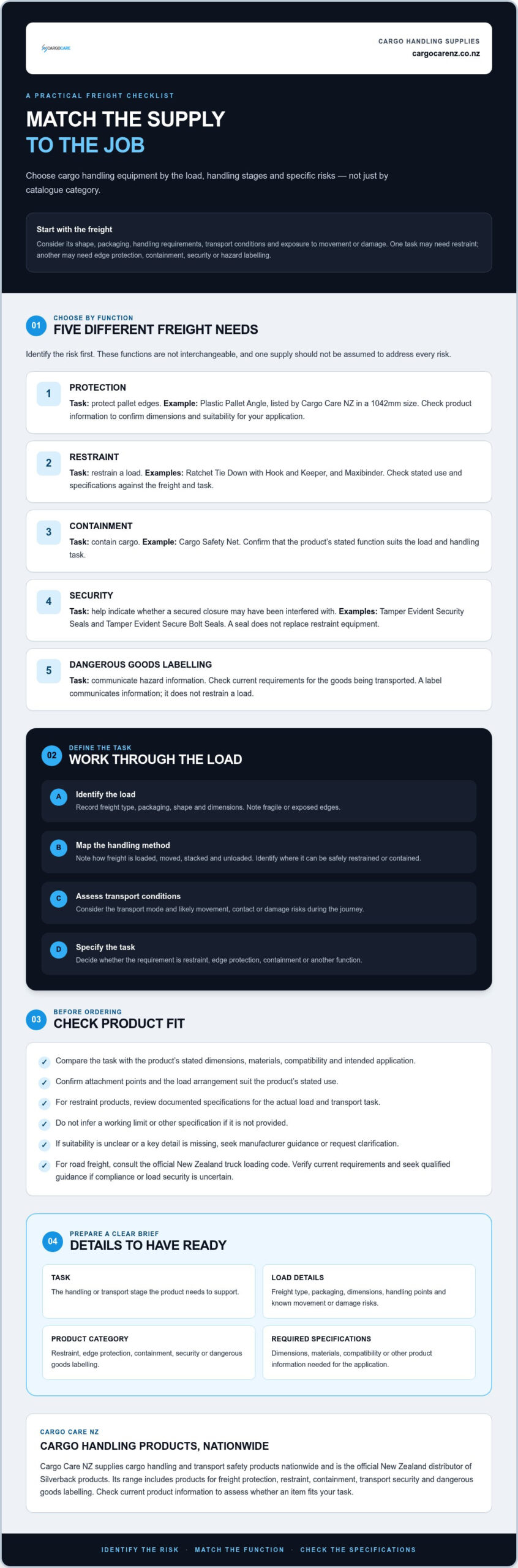
For cargo handling supplies NZ operators can use effectively, separate five functions: cargo protection, load restraint, load containment, security and dangerous goods labelling. These functions are not interchangeable. A label communicates hazard information, but does not restrain a load. A seal can provide evidence that a secured closure may have been interfered with, but it does not replace restraint equipment.
Which cargo handling supply categories serve different freight tasks?
Protection: Plastic Pallet Angle is intended for pallet-edge protection. Cargo Care NZ lists a 1042mm Plastic Pallet Angle. Check the product information to confirm the dimensions and suitability for your application. Containment: Cargo Safety Net is a containment product. Review the cargo safety net guide for more on that task.
Restraint: Ratchet Tie Down with Hook and Keeper and Maxibinder are load restraint products. Check each product’s stated use and specifications against the freight and task. Security: Tamper Evident Security Seals and Tamper Evident Secure Bolt Seals serve a different purpose, helping indicate whether a secured closure may have been interfered with. Labelling: Dangerous Goods Label products communicate hazard information. Check current requirements for the goods being transported.
Use material handling as a broad logistics reference, then verify each item’s intended function. Identify the risk first, and don’t assume one supply covers every need.
How to select cargo handling supplies for freight and transport conditions
Assess the full task, from loading and transfer through to transport and unloading. A product that suits one stage may not address risks at another. Use this checklist to define what the freight needs before comparing cargo handling supplies NZ:
- Identify the load: Record its type, packaging, shape and dimensions, and note any fragile or exposed edges.
- Map the handling method: Note how the freight is loaded, moved, stacked and unloaded. Identify where it can be safely restrained or contained.
- Assess transport conditions: Consider the transport mode and likely movement, contact or damage risks during the journey.
- Specify the task: Decide whether the requirement is restraint, edge protection, containment or another function.
Next, compare the task with the product information. Check stated dimensions, materials, compatibility and intended application. Confirm that attachment points and the load arrangement suit the product’s stated use. Don’t infer a working limit or other specification if it isn’t provided. If suitability is unclear, seek manufacturer guidance before ordering.
What should buyers check before ordering cargo handling supplies?
For restraint products, review the documented specifications and how they apply to the actual load and transport task. The load restraint straps guide can help frame those checks. For road transport, consult the official New Zealand truck loading code and seek qualified guidance if compliance or load security is uncertain. Verify current requirements before making a compliance decision.
Once the task and specifications are clear, compare them with the Cargo Care NZ product range to identify relevant product categories.
Source cargo handling supplies NZ-wide with a clear product checklist
A clear brief helps you compare cargo handling supplies NZ suppliers can provide against the job, rather than relying on a product name alone. Before contacting a supplier, prepare:
- Task: Identify the handling or transport stage the product needs to support.
- Load details: Note the freight type, packaging, dimensions, handling points and any known movement or damage risks.
- Product category: Specify whether you’re assessing restraint, edge protection, containment, security or dangerous goods labelling.
- Required specifications: List the dimensions, materials, compatibility or other product information needed for your application.
What to confirm with a cargo handling supplies supplier
Ask for current product specifications and confirm that the stated application suits your freight and operating conditions. If a key detail is missing, request clarification rather than assuming the product is suitable. For road freight, check relevant guidance such as the NZ Transport Agency’s truck loading code. If you’re unsure how requirements apply to your load, seek qualified advice.
Cargo Care NZ supplies cargo handling and transport safety products nationwide and is the official New Zealand distributor of Silverback products. Its range includes products for freight protection, restraint, containment, transport security and dangerous goods labelling. Check current product information to assess whether an item fits your task.
With your checklist ready, explore Cargo Care NZ’s cargo handling supplies and review the relevant product details.
Make your next equipment choice task-ready
Safer freight starts with a defined job. Identify the load, handling stages and transport risks, then assess cargo handling supplies NZ teams can use for that specific task. Protection, restraint, containment, security and labelling each serve distinct functions. Before ordering, check product dimensions, compatibility, intended use and current specifications.
Cargo Care NZ is the official New Zealand distributor of Silverback products, with a range covering cargo protection, restraint, security and labelling products. Use your checklist to compare relevant product information and assess suitability for your operating conditions.
Explore Cargo Care NZ’s cargo handling supplies and review the product details for your freight task.
Frequently Asked Questions
What are cargo handling supplies?
Cargo handling supplies are products used to protect, restrain, contain, secure or identify freight during handling and transport. Examples include pallet-edge protection, load restraint products, cargo nets, tamper-evident seals and dangerous goods labels. Each serves a different purpose, so choose by task and check the product’s stated application rather than assuming one item will address every freight risk.
How do I choose cargo handling supplies for a transport job?
Choose cargo handling supplies NZ transport teams can use by first recording the freight type, packaging, dimensions, handling method and transport conditions. Identify likely movement or damage risks, then decide whether the job calls for restraint, protection, containment, security or labelling. Before ordering, compare the product’s stated dimensions, compatibility, intended use and manufacturer guidance with the actual load and task.
Do cargo handling supplies need to meet New Zealand requirements?
Some cargo tasks are subject to New Zealand transport or dangerous goods requirements, so check the current rules relevant to the freight, vehicle and operation. For road freight, consult the applicable NZ Transport Agency Waka Kotahi truck loading guidance. For dangerous goods, verify current requirements through official sources and seek qualified advice if you’re unsure. Don’t rely on a product description alone to confirm compliance.
Can one supplier provide different types of cargo handling supplies?
Yes. Cargo Care NZ supplies products nationwide and is the official New Zealand distributor of Silverback products. Its range includes cargo protection, restraint, security and dangerous goods labelling products, such as Plastic Pallet Angle, Cargo Safety Net, tie-downs and tamper-evident seals. Check current product information and confirm that each item’s specifications and intended use suit your freight task.

Article by
Steve O'Malley