
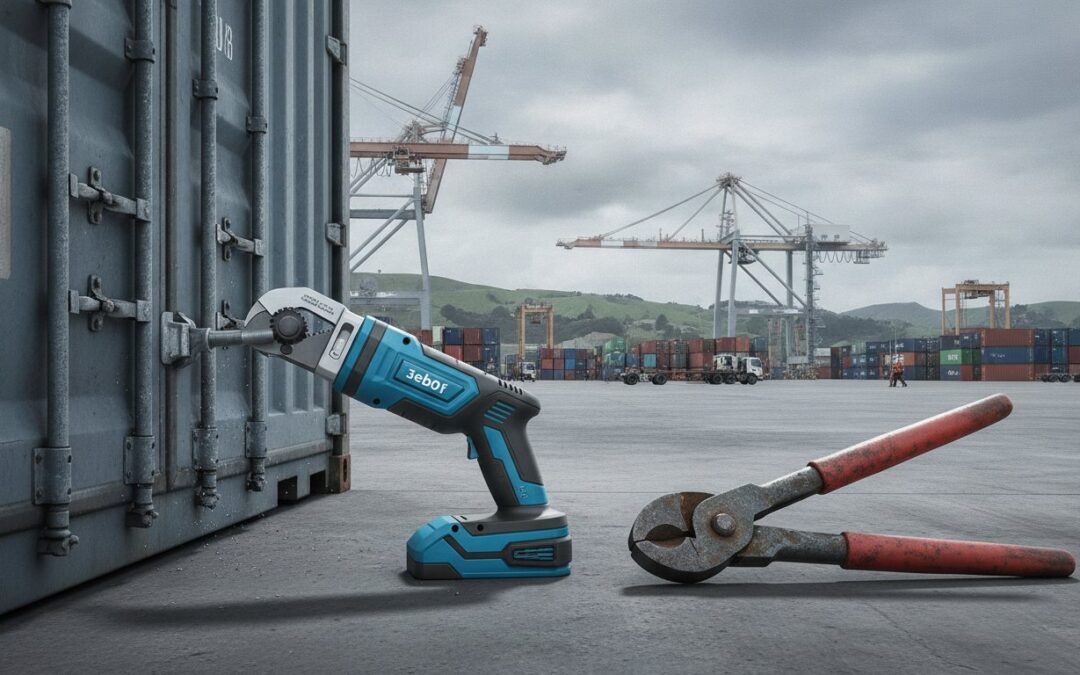
How much does a sixty-second struggle with a stubborn manual bolt cropper actually cost your operation when multiplied across an entire week of arrivals? You likely recognise that relying on physical force to clear high-security seals is no longer just a minor bottleneck; it is a genuine risk to both your equipment and your team’s physical health. When evaluating the merits of cordless vs manual bolt seal cutters in 2026, the decision impacts everything from workers compensation claims to container turnaround speeds.
This guide outlines how upgrading to professional battery-powered tools can transform your daily unloading workflow while maintaining strict compliance with ISO 17712 standards. We will compare the long-term durability of traditional manual tools against the high-speed efficiency of the Phoenix Cordless Bolt Seal Cutter 18V to help you organise a safer, more productive yard environment.
Key Takeaways
- Understand why the physical force required for manual cropping is now exceeding safe ergonomic limits for logistics staff handling high-security seals.
- Compare the speed and portability of cordless vs manual bolt seal cutters to determine the most efficient solution for your distribution centre.
- Discover how the Phoenix Cordless Bolt Seal Cutter 18V specifically addresses the challenges of removing ISO 17712 compliant hardware without damaging doors.
- Learn how to integrate professional cordless systems into your existing workflow to reduce workers compensation claims and improve operational continuity.
The Evolution of Container Security: Why Manual Cutting is Becoming Obsolete
Modern global shipping relies on high-security container seals to maintain cargo integrity during intermodal transport. These ISO 17712:2013 compliant bolts are engineered specifically to resist tampering, often featuring hardened steel cores that are difficult to penetrate. While these attributes secure the goods, they make manual removal an increasingly difficult task for yard staff. When evaluating cordless vs manual bolt seal cutters, the physical toll on the workforce is often the deciding factor for 3PL providers. Traditional bolt croppers require significant physical leverage to snap a high-security pin. This often results in jagged metal edges or dangerous “flying” shards that create immediate hazards in a busy unloading bay.
Efficient bolt seal removal is now defined by a precise balance between operational speed and long-term ergonomic safety.
The Hidden Costs of Repetitive Strain and Workplace Safety
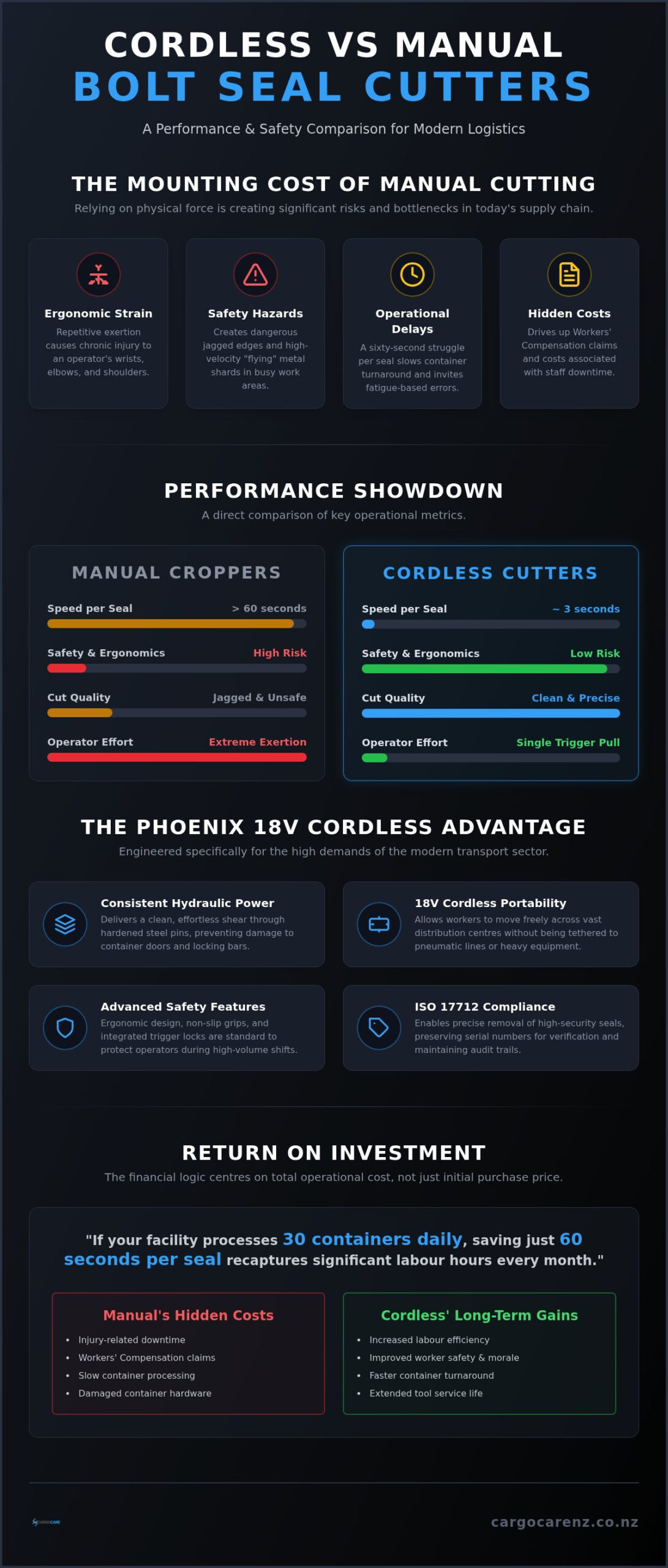
The debate between cordless vs manual bolt seal cutters often centres on initial purchase price, but the hidden costs of manual tools are substantial. Repetitive manual cropping places intense strain on a worker’s wrists, elbows, and shoulders throughout a long shift. During peak periods, this physical fatigue directly impacts container turnaround times as staff struggle with stubborn hardware. Staff who are physically exhausted are more prone to errors and slower movements. Modern Work Health and Safety (WHS) standards are driving a shift toward powered equipment to eliminate these risks. By removing the need for extreme physical exertion, logistics managers can reduce the frequency of workers compensation claims while maintaining a steady, reliable workflow that manual methods simply can’t match.
Cordless vs Manual Bolt Seal Cutters: A Performance Comparison
In the debate of cordless vs manual bolt seal cutters, a direct performance evaluation reveals a substantial gap in operational throughput. Manual cutters often require multiple attempts to bite into hardened steel, whereas a cordless unit completes the task in roughly three seconds with a single trigger pull. This speed is critical when processing high volumes of ISO 17712 compliant bolt seals NZ. Powered blades apply consistent hydraulic force, resulting in a clean shear. This eliminates the jagged edges common with manual croppers and prevents accidental damage to container door hardware or locking bars.
Portability is another factor where 18V systems excel. Workers can move freely across vast distribution centres without being tethered to pneumatic lines or heavy stationary equipment. It’s a significant upgrade for yard managers who need to maintain movement across multiple bays simultaneously. The ability to reach high-mounted seals without struggling for leverage makes the cordless option the superior choice for modern logistics sites.
Evaluating the Return on Investment for Powered Cutting Tools
The financial logic for choosing cordless vs manual bolt seal cutters centres on labour efficiency and tool longevity. If your facility processes thirty containers daily, saving just sixty seconds per seal recaptures significant labour hours over a month. High-grade blades on cordless units also resist the dulling that plagues manual cropper jaws, extending the tool’s service life. While the initial cost of 18V technology is higher, the investment is rapidly offset by reduced injury-related downtime and faster container turnaround. You can explore our range of professional removal tools to see how these systems integrate into your existing workflow.
Optimising Your Unloading Workflow with Cordless Technology
Transitioning to the Phoenix Cordless Bolt Seal Cutter 18V allows logistics managers to standardise their removal processes. Unlike generic industrial cutters, this unit is engineered specifically for the transport sector. It integrates seamlessly with existing 18V battery ecosystems, simplifying charging cycles and maintenance across the warehouse. When comparing cordless vs manual bolt seal cutters, the inclusion of safety features like trigger locks and ergonomic grips is a significant operational advantage. These design elements ensure the operator remains protected even during high-volume shifts. This tool is a core component of the wider range of Silverback products NZ, providing a complete solution for freight security and compliance.
The Phoenix 18V Advantage for Professional Logistics
The Phoenix 18V delivers consistent hydraulic power to its high-grade steel blades, ensuring durability when faced with hardened pins. To maintain 24/7 operational readiness, we recommend a dual-battery rotation system. This ensures a fresh battery is always available while the other charges. Maintaining professional-grade tools is essential for upholding strict tamper evident security seals NZ protocols. In the cordless vs manual bolt seal cutters debate, the Phoenix system provides the precision required to verify seal serial numbers during the removal process. This prevents the accidental destruction of critical security data that often occurs when using blunt manual croppers.
Future-Proofing Your Yard Operations
The transition to high-security container hardware requires a parallel upgrade in removal technology. Relying on manual force is no longer a viable strategy for high-volume logistics hubs where staff safety and speed are non-negotiable. When weighing up cordless vs manual bolt seal cutters, the operational gains in workplace health and container turnaround times make the transition essential for maintaining a competitive edge. These tools don’t just save time; they protect your most valuable asset: your people.
As an official Silverback distributor, CargoCare NZ supplies the heavy-duty 18V hydraulic performance trusted by national logistics providers. These professional systems ensure your team can handle tamper-evident hardware with consistent precision. Upgrade your warehouse efficiency with the Phoenix Cordless Bolt Seal Cutter 18V and ensure your unloading workflow remains fast, safe, and compliant. We are ready to help you streamline your cargo handling processes today.
Frequently Asked Questions
How many cuts can I expect from a single charge on a cordless bolt seal cutter?
A single charge on a high-capacity 18V battery typically provides enough power for over 100 cuts through hardened steel pins. Actual performance varies based on the battery amp-hour rating and the specific thickness of the hardware being processed. For high-volume distribution centres, rotating two batteries ensures continuous operation without downtime. This efficiency is a primary differentiator when comparing cordless vs manual bolt seal cutters.
Can cordless cutters handle all types of ISO 17712 high-security bolt seals?
Yes, the Phoenix 18V system is specifically engineered to shear through the hardened steel pins used in ISO 17712:2013 high-security seals. While manual croppers often struggle with “H” classification hardware, the hydraulic force of a powered unit ensures a clean cut every time. It is the reliable choice for removing tamper-evident secure bolt seals from international shipping containers without damaging door hardware.
What maintenance is required for a Phoenix 18V bolt seal cutter?
Maintenance requirements are minimal but essential for tool longevity. You should regularly wipe the cutting head to remove metal debris and inspect the blades for any chips or excessive wear. Lubricating the moving hydraulic components according to the manufacturer’s schedule will maintain peak performance. Proper battery management, including avoiding total discharge and storing units in a dry environment, ensures the system remains ready for daily use.
Are cordless bolt seal cutters safe to use in wet or outdoor conditions?
These tools are designed for use in professional transport environments, including outdoor loading docks and rail yards. While the rugged housing protects internal components from light rain and dust, you should avoid submerging the tool or exposing the battery terminals to heavy moisture. Wiping the unit down after use in wet weather helps prevent corrosion and maintains the integrity of the ergonomic grips for the operator.
Article by
Steve O'Malley