
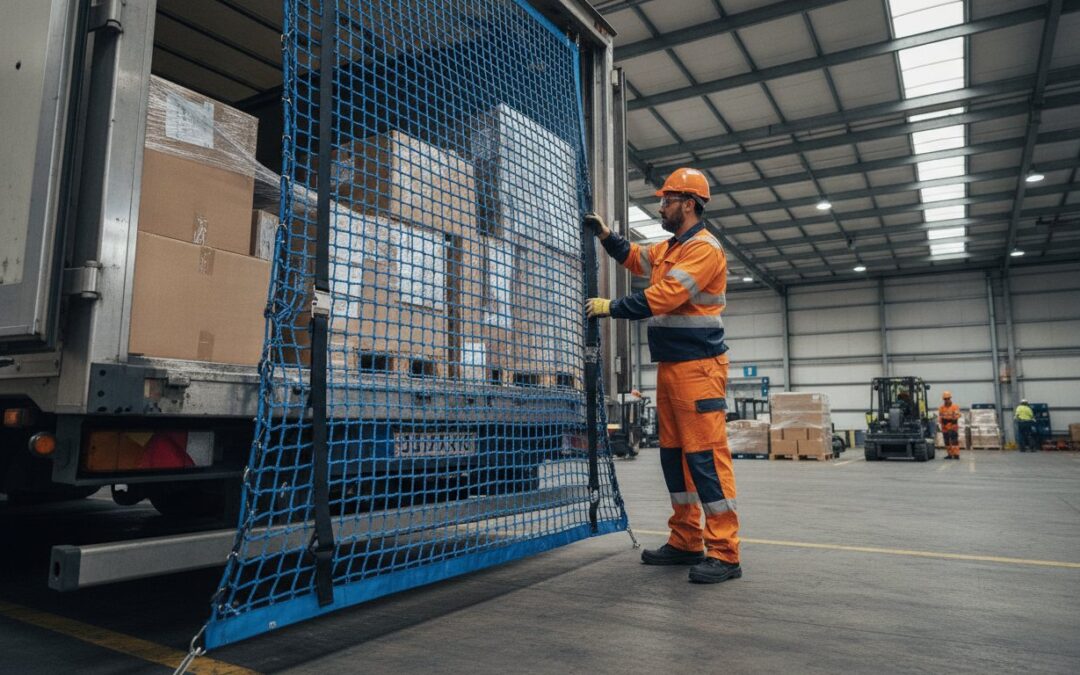
The most dangerous moment in a logistics professional’s day isn’t the transit itself; it’s the moment they unlatch a container door. You know that cargo shifting during a haul is a constant threat to your team’s safety and your operational efficiency. Relying on primary restraints alone often isn’t enough to prevent small items from falling or heavy loads from leaning dangerously against the doors. This guide shows you how to utilise professional grade cargo safety nets NZ to create a dependable secondary barrier that protects your people and your bottom line.
By selecting the right equipment, you’ll ensure full compliance with New Zealand load securing standards while streamlining your unloading processes. We’ll examine how technical features like close-weave polyethylene and cam buckle ties turn a simple net into a vital piece of safety infrastructure for every haul.
Key Takeaways
- Understand how professional-grade cargo safety nets NZ function as a critical secondary containment system to create a secure “safety envelope” for loose loads.
- Learn how to select the correct 2.2m x 2.2m sizing and weave density to suit standard shipping containers and various truck body configurations.
- Recognise the operational benefits of utilising integrated cam buckle ties instead of generic bungee cords to maintain reliable tension during long-haul transit.
- Identify the performance advantages of high-durability polyethylene netting to ensure your fleet remains compliant with New Zealand load restraint standards.
Understanding Cargo Safety Nets: A Critical Barrier for NZ Transport
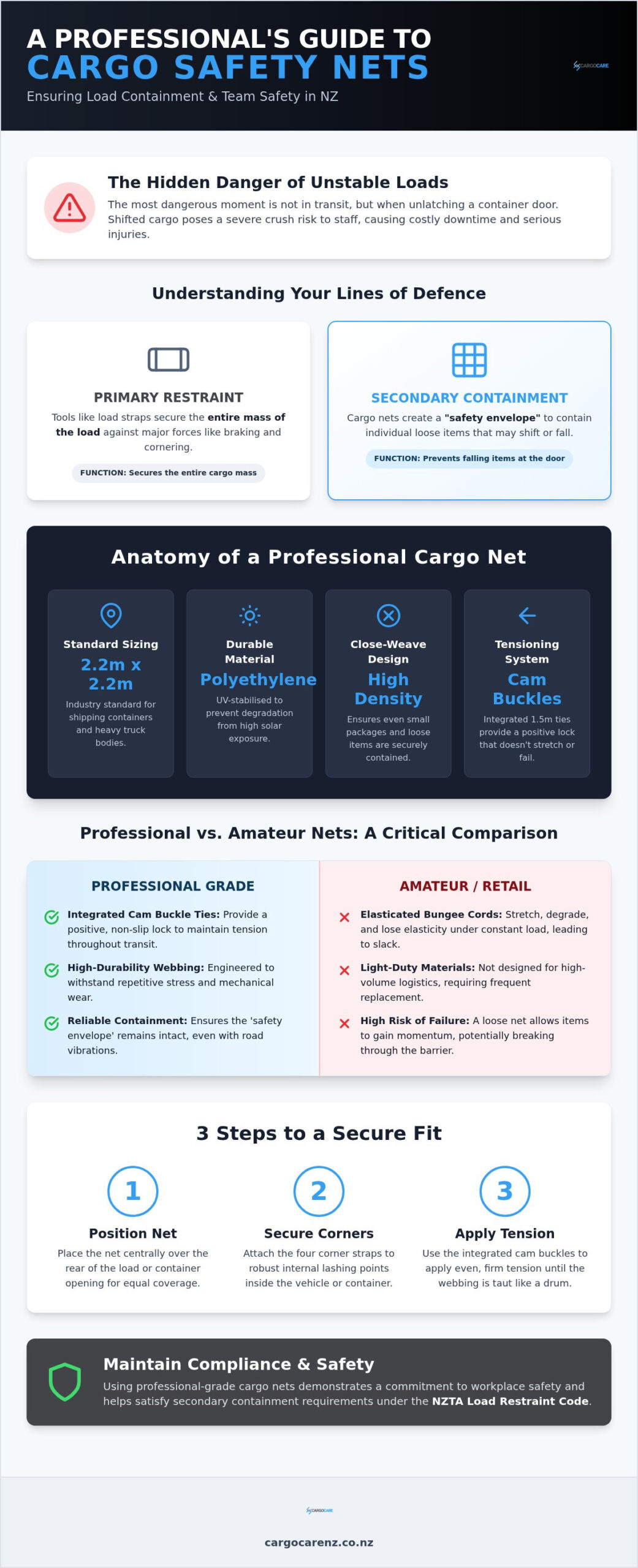
Cargo safety nets NZ act as a secondary containment system specifically designed to manage loose loaded freight. While primary restraints secure the mass of the load, nets create a “safety envelope” that prevents individual items from shifting into the gaps between the cargo and the container walls. Understanding cargo nets in a logistics context requires a shift in focus from lifting to containment. These barriers ensure that even if a pallet shifts, the items remain within a defined perimeter during transit and unloading.
It’s vital to distinguish between primary load restraint and secondary containment. Primary tools, such as load restraint straps NZ, are engineered to take the full force of the load during sudden deceleration or cornering. Nets are not primary load rated. Instead, they function as a fail-safe barrier to prevent “container door incidents.” When freight shifts and leans against the doors, it poses a severe crush risk to staff the moment the latches are released. Implementing cargo safety nets NZ ensures your team has a final line of defence against falling items.
The Role of Nets in NZ Load Securing Standards
Compliance with the NZTA Load Restraint Code often necessitates secondary containment for loose or light items that straps cannot effectively grip. Professional logistics operations prioritise close-weave polyethylene for these applications because it offers superior durability over consumer alternatives. The tight weave ensures that even small packages remain contained. Using these professional-grade systems demonstrates a commitment to workplace safety and regulatory adherence across the national transport network.
Selecting and Fitting the Right Cargo Net for Your Fleet
Selecting the right cargo safety nets NZ begins with accurate dimensions. A 2.2m x 2.2m net is the industry standard for shipping containers and heavy truck bodies. This size provides full coverage across the rear opening or over specific pallet stacks. Professionals must also assess weave density. A close-weave design is essential if the smallest items in your load could slip through standard netting. Durability is another critical factor. New Zealand conditions demand UV-stabilised polyethylene to prevent material degradation from high solar exposure during long-haul routes.
Before deployment, evaluate your vehicle’s internal lashing points. Professional grade systems require robust attachment sites to maintain tension. Unlike consumer-grade bungee nets that lose elasticity and fail under pressure, high-quality systems utilise heavy-duty webbing and 1.5m cam buckle ties. This ensures the barrier remains rigid throughout the journey. You can view our professional containment range to find technical specifications that match your fleet’s specific requirements.
How to Properly Tension a Cargo Safety Net
Correct installation ensures the net functions as intended during a cargo shift. A loose net allows items to gain momentum before impact, which can compromise the barrier. Follow these steps for a secure fit using cargo safety nets NZ:
- Step 1: Position the net centrally over the rear of the load or container opening to ensure equal coverage.
- Step 2: Secure the four corner straps to the internal lashing points of the vehicle or container.
- Step 3: Use the integrated cam buckles to apply even tension across the net surface until the webbing is taut.
Achieving a drum-tight fit prevents freight from leaning against the doors. This simple process protects your staff and keeps your operations compliant with national safety standards.
Professional Grade Solutions: Why Quality Netting Matters
High-volume logistics operations require equipment that withstands repetitive stress and mechanical wear. Investing in Silverback products NZ provides a level of reliability that generic retail netting cannot match. While light-duty nets often rely on elasticated bungee cords, professional cargo safety nets NZ utilise integrated 1.5m cam buckle ties for precise tensioning. Bungee material stretches and degrades under constant load, which often leads to containment failure. In contrast, cam buckles provide a positive lock that maintains tension throughout long-haul transit; this ensures the safety envelope remains intact despite road vibrations.
The long-term cost benefits of durable, wear-resistant safety equipment are significant for any fleet manager. Frequent replacement of inferior netting creates unnecessary operational downtime and increases total expenditure over the financial year. Sourcing from a national distributor with deep transport industry expertise ensures you receive gear engineered for the specific rigours of the local landscape. This professional support helps logistics teams select equipment that meets strict regulatory demands while surviving the high-UV conditions common across New Zealand.
Integrating Nets with Other Load Restraint Hardware
A comprehensive containment strategy involves combining nets with primary restraint tools to secure diverse freight profiles. For heavy machinery or timber, you might evaluate a Maxibinder vs ratchet binder to secure the main load, with the safety net serving as the final barrier for smaller components. To extend the operational lifespan of your netting, utilise Plastic Pallet Angles at the top of the load. These edge protectors prevent the weave from fraying against sharp cargo corners, maintaining the structural integrity of your cargo safety nets NZ over hundreds of cycles.
Securing Your Fleet with Professional Containment Systems
Implementing a rigorous load containment strategy is essential for maintaining operational continuity and protecting your workforce. By utilising professional grade cargo safety nets NZ, you transition from basic transport to a higher standard of workplace safety. These systems provide the critical secondary barrier needed to prevent shifting items from causing injury during the high-risk moment of opening container doors. Selecting UV-stabilised polyethylene and cam buckle tensioning ensures your equipment withstands the heavy demands of the national transport network.
As the official New Zealand distributor of Silverback products, we provide gear designed for professional transport compliance with national delivery across New Zealand. View our range of professional Silverback cargo safety nets to upgrade your load securing standards. We look forward to supporting your commitment to safer, more efficient logistics.
Frequently Asked Questions
Are cargo safety nets a legal requirement for trucks in New Zealand?
Compliance with the NZTA Load Restraint Code requires all freight to be secured so it cannot shift or fall from a vehicle. While the code doesn’t mandate a specific brand, using cargo safety nets NZ is a recognised method for containing loose items. These nets ensure your fleet meets safety standards by preventing small packages from becoming hazards during transit or when opening container doors.
What is the difference between a load-rated net and a containment net?
Load-rated nets are engineered as primary restraints to hold the entire weight of a load during transit. Conversely, containment nets function as a secondary barrier. The professional systems we distribute are designed for containment, meaning they manage loose items and prevent them from leaning against doors. They aren’t intended to replace primary tie-down equipment like rated ratchet straps for heavy pallets.
Can I use a cargo net as the only method of securing my load?
You shouldn’t rely on a net as your sole restraint for heavy or palletised freight. Primary security must be provided by rated straps or binders capable of withstanding shifting forces. A net acts as a final safety layer, catching loose components that primary restraints might miss. This combination ensures full compliance with New Zealand standards while protecting staff during the unloading process at the destination.
How do I maintain and inspect my cargo safety nets for wear and tear?
Conduct a visual inspection before every haul to identify frays, cuts, or signs of UV damage in the polyethylene weave. Pay close attention to the cam buckle ties and webbing for any mechanical failure or thinning. If you notice structural compromises, replace the net to maintain safety standards. Keeping nets clean and stored away from direct sunlight when they aren’t in use will maximise their operational life.
Article by
Steve O'Malley