
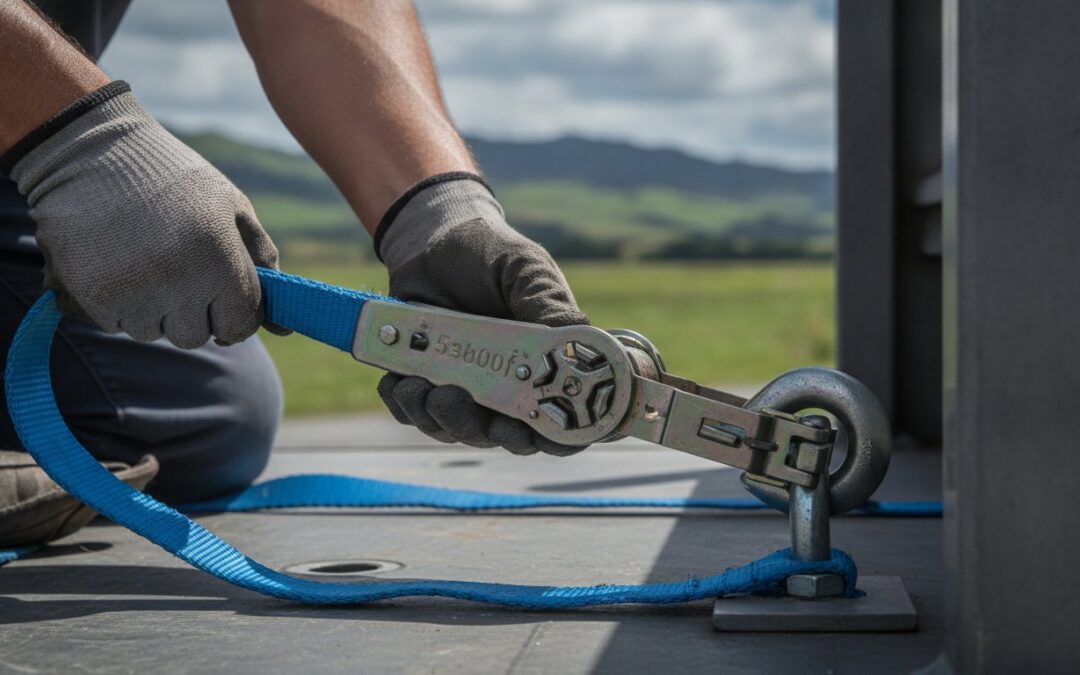
What if the difference between a secure delivery and a 10,000 dollar corporate fine for an insecure load is a small, spring-loaded component you’ve been overlooking? Most transport professionals across New Zealand understand the daily pressure of meeting Waka Kotahi load restraint standards while dealing with the reality of rugged, uneven roads. You likely already rely on a ratchet tie down with hook to secure your freight, but the frustration of jammed mechanisms or the fear of a hook slipping during transit vibrations is a constant operational headache.
It’s vital to get this right to protect both your cargo and your professional standing. This guide will teach you how to master the safe and compliant use of professional-grade restraint systems, ensuring your lashing remains secure regardless of the distance. We’ll examine the specific safety benefits of the keeper latch, provide a clear walkthrough for threading your webbing correctly, and share maintenance habits that extend the longevity of your expensive hardware.
Key Takeaways
- Discover why the spring-loaded safety latch on a ratchet tie down with hook is essential for preventing accidental detachment during transit.
- Gain clarity on NZTA load restraint compliance to protect your business from hefty fines and ensure road safety across New Zealand.
- Learn the professional inspection and threading sequence required to maintain the mechanical performance of industrial-grade restraint hardware.
- Implement specific storage techniques that prevent UV damage and mould growth, extending the service life of your transport equipment.
Understanding Your Ratchet Tie Down with Hook and Keeper
The ratchet tie down with hook and keeper is a standard requirement for heavy transport across New Zealand. Unlike basic retail straps, this professional system uses a heavy-duty hook equipped with a spring-loaded safety latch, known as the keeper. This latch ensures the hook remains attached to the anchor point even if the webbing becomes slack. Various types of tie down hardware exist for different applications, but the hook and keeper is the preferred choice for securing heavy machinery and general freight.
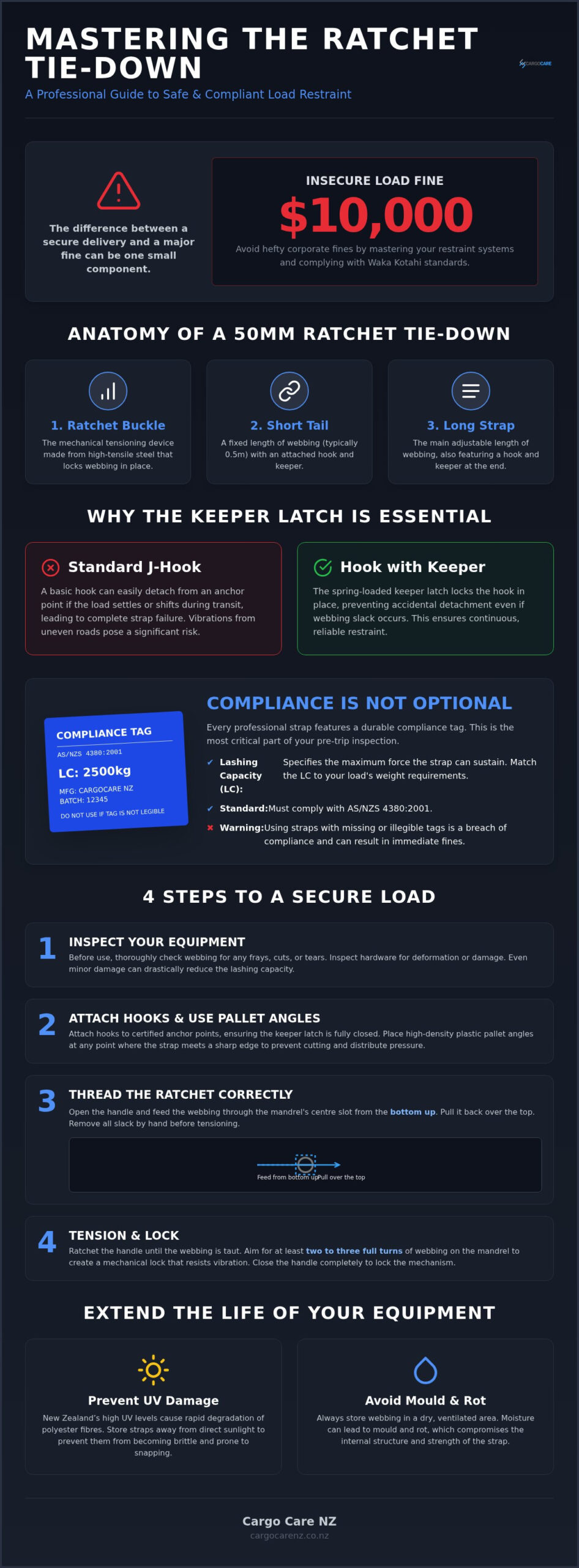
A professional 50mm restraint system consists of three primary components:
- The ratchet buckle: A mechanical tensioning device made from high-tensile steel that locks the webbing in place.
- The short tail: A fixed length of webbing, typically 0.5 metres, with an attached hook and keeper.
- The long strap: The main adjustable length of webbing, also featuring a hook and keeper at the terminal end.
Selecting a high-quality ratchet tie down with hook and keeper ensures your restraint system meets the rigorous demands of industrial use. Professional 50mm webbing offers superior abrasion resistance and higher lashing capacities than light-duty alternatives found in hardware stores.
Hook vs. Hook and Keeper: Why the Latch Matters
New Zealand’s road network often involves uneven surfaces and significant vibrations. A standard J-hook can easily unseat from an anchor point if a load settles or shifts during transit, causing the strap to fail completely. The keeper eliminates this risk by locking the hook in place. It’s particularly useful during the initial tensioning process. It allows the operator to walk back to the ratchet handle without the hook falling off the side rail.
Identifying Lashing Capacity (LC) and Compliance Tags
Every Silverback strap includes a durable blue compliance tag. This tag is the most critical part of your pre-trip inspection. It specifies the Lashing Capacity (LC), which is the maximum force the strap is designed to sustain in a straight pull. You must match the LC of your equipment to the weight requirements of your load. Using straps without legible tags is a breach of AS/NZS 4380:2001. This can lead to immediate fines during a roadside inspection.
Step-by-Step: How to Properly Secure a Load with Ratchet Straps
Operational safety begins before you even touch the cargo. Inspect every component of your ratchet tie down with hook for frays, cuts, or mechanical deformation. Even small tears in the webbing can significantly reduce lashing capacity, leading to catastrophic failure under tension. Adhering to WorkSafe NZ safety guidelines ensures you maintain a safe working environment while handling heavy equipment.
Start by attaching the short tail hook to a solid, certified anchor point. Verify the keeper is fully closed and locked against the rail or tie-down point. Once the hook is secure, pull the long strap over the load. It’s essential to pull all excess webbing through the buckle by hand before you start ratcheting. This prevents ‘spool bunching’, where too much webbing clogs the mechanism and prevents the mandrel from reaching the required tension.
The Correct Way to Thread the Ratchet Buckle
Open the ratchet handle and rotate the mandrel until the centre slot is accessible. Feed the webbing through the slot from the bottom up, then pull it back over the top towards the rear of the vehicle. You must achieve at least two to three full turns of webbing on the mandrel to ensure a mechanical lock that won’t slip under load. This creates the necessary friction to hold the strap firm during transit vibrations.
Using Pallet Angles to Protect Your Webbing
Sharp edges are the primary cause of damage to load restraint straps NZ wide. Even a minor burr on a steel beam can shear through polyester webbing under high tension. Position high-density plastic pallet angles at every contact point where the strap meets a sharp or abrasive edge. These angles distribute the downward pressure across a larger surface area, preventing concentrated stress. For drivers hauling fragile or sharp-edged freight, using a durable Plastic Pallet Angle is a non-negotiable step for equipment longevity.
Maintaining Compliance and Safety Standards in New Zealand
Compliance is an active responsibility for every driver on New Zealand roads. Waka Kotahi (NZTA) requirements dictate that all load restraint equipment must be in good working order and appropriately rated for the task. Using a professional ratchet tie down with hook and keeper provides the mechanical reliability needed to meet these standards. Drivers must remember that they’re legally accountable for any cargo that shifts or falls during transit, making equipment selection a critical business decision. Reviewing the latest load restraint products NZ professionals rely on can help you identify the right hardware for every load profile your fleet encounters.
Proper storage is vital for maintaining the lashing capacity of your gear over time. New Zealand’s high UV levels cause rapid degradation of polyester fibres, making straps brittle and prone to snapping under load. Always store webbing in a dry, ventilated area to prevent mould growth, which can rot the internal structure of the strap. For heavier applications involving chain or specialised high-tension requirements, compare Maxibinder vs ratchet binder NZ systems to ensure your equipment matches the load profile correctly. Operators managing particularly demanding heavy-duty loads should also review the Maxibinder 8mm NZ specifications, which delivers a 3,800kg lashing capacity and full AS/NZ 4344:2001 compliance for the most challenging restraint applications.
Routine Inspection: When to Retire Your Tie Downs
Adhere to the 10% rule for webbing damage during every pre-trip inspection. If you identify a cut, fray, or burn that covers more than 10% of the strap width, the unit is no longer compliant and must be replaced immediately. Inspect the metal components of your ratchet tie down with hook for signs of stretching or metal fatigue. Ensure the keeper mechanism operates freely; a frozen or weak spring latch cannot guarantee the hook will stay seated on the anchor point during transit vibrations.
Professional Selection: Silverback vs. Generic Alternatives
Quality matters when safety and compliance are the priority. Choosing Silverback products NZ wide gives you access to high-tenacity webbing and robust hardware built for rugged industrial conditions. Industrial ratchets feature precision-engineered release mechanisms that prevent the jamming common in cheaper retail versions. This investment ensures operational continuity and long-term adherence to national transport safety regulations, protecting both your freight and your professional reputation.
Master Professional Load Restraint Compliance
Achieving total load security is an ongoing commitment to best practice rather than a one-off task. By prioritising the keeper mechanism and adhering to the inspection standards discussed, you significantly reduce the risk of equipment failure during long-haul transit. These professional habits, combined with proper UV-protected storage, ensure your hardware remains a dependable asset that meets the highest safety expectations on our roads.
Investing in a high-capacity ratchet tie down with hook system is the most effective way to ensure your fleet remains compliant with national transport regulations. As the Official Silverback Distributor, CargoCare NZ provides industrial-grade hardware designed specifically for the rigours of the New Zealand transport sector. We offer a comprehensive range of compliant load restraint tools to support your operational efficiency and safety goals. Secure your cargo with professional Silverback ratchet tie downs from CargoCare NZ.
Equip your business with the strength and reliability required to navigate every New Zealand journey with total confidence.
Frequently Asked Questions
What is the difference between a J-hook and a hook and keeper?
A J-hook is a basic open fastener, whereas a hook and keeper features a spring-loaded latch that locks onto the anchor point. This keeper ensures the hook remains attached even if the load settles and the strap momentarily slackens during transit. It is the superior choice for professional drivers who need to maintain a secure connection while walking back to the ratchet handle to begin tensioning.
How do I release a jammed ratchet tie down safely?
To release a jammed mechanism, pull the release trigger and swing the handle to the fully open, flat position. If the webbing is stuck due to over-spooling or bunching in the mandrel, maintain pressure on the release bar while firmly pulling the webbing out by hand. Never use a pry bar or external leverage to force the handle open. This can damage the high-tensile steel components or cause the load to shift unexpectedly.
How many ratchet straps do I need per load according to NZ standards?
The New Zealand Truck Loading Code recommends using at least two straps for any load to ensure stability and prevent the cargo from pivoting or rotating. You must calculate the specific number of straps required based on the total weight of the cargo and the Lashing Capacity of your equipment. Always ensure the combined restraint system can withstand the forces generated by sudden braking or heavy cornering on uneven road surfaces.
Can I use a ratchet tie down if the compliance tag is missing?
No, you cannot legally use a ratchet tie down with hook if the compliance tag is missing or illegible. Under AS/NZS 4380:2001, every strap must display its rated Lashing Capacity and manufacturer details on a durable tag. Enforcement officers will treat a strap without a tag as having zero rated capacity. This often results in immediate fines and the grounding of the vehicle until the load is properly secured with compliant gear.

Article by
Steve O'Malley