
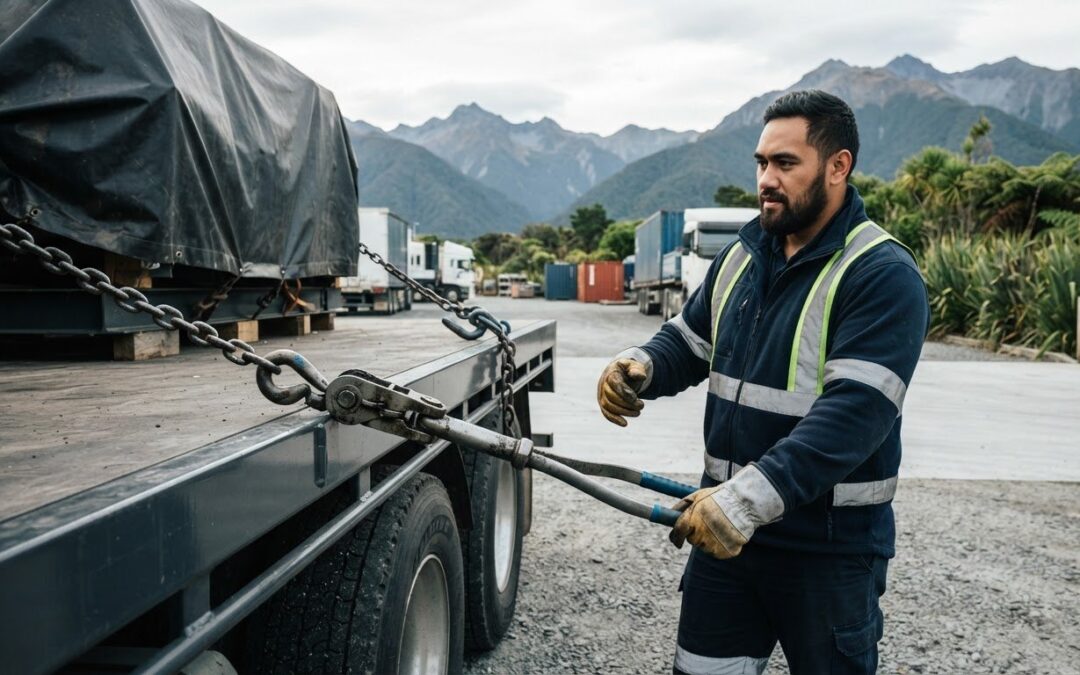
What if the binder that feels easiest to ratchet is still the wrong choice for your load? Repeated tensioning can be physically demanding, and product descriptions don’t always explain operating effort or comfort. When choosing an ergonomic ratchet load binder NZ operators can use with confidence, check more than the handle: chain compatibility, rated capacity and release control all matter.
This guide explains which ergonomic features to assess and how to match a binder to your chain and transport-restraint task. You’ll also learn which specifications and safety information to confirm before buying. CargoCare NZ supplies Maxibinders, which you can investigate as one option. Check the current model specifications and any claimed ergonomic features rather than assuming they apply. The key is to compare products using practical, verifiable details.
Key Takeaways
- Assess handle reach, grip, movement, access and release control against the demands of repeated tensioning.
- Compare handling features alongside chain compatibility and rated capacity, using the same checks for each binder.
- Confirm the binder’s rating and chain fit against the full restraint system. Don’t assume one product figure applies to every setup.
- Before selecting a Maxibinder, check the current model specifications, documented ergonomic features and user instructions.
What makes an ergonomic ratchet load binder suitable for NZ transport work?
Repeated tensioning can make binder handling a demanding part of load restraint. An ergonomic design aims to make that handling more manageable, but the label alone doesn’t show how a binder will perform in your working conditions.
An ergonomic claim describes a design intention. Product specifications and test evidence show what the binder is rated or demonstrated to do. Treat comfort, ease of operation and reduced effort as claims to verify, not guaranteed outcomes. Suitability still depends on correct chain compatibility and the binder’s role in the complete restraint system.
Which ergonomic features can buyers actually assess?
Assess the binder in the position and space where it will be used. Check the handle shape and grip surface, the movement required to operate it, whether cargo or vehicle structure restricts access, and how the mechanism is controlled during release. Consider how often the task is repeated: a feature that suits occasional use may be less practical for frequent tensioning. Don’t assume that a particular handle design requires less force unless relevant test data supports that claim.
For an ergonomic ratchet load binder NZ operators can assess properly, request current product information and compare it with the actual task. If possible, assess the handle movement and release procedure in a suitable, controlled setting, following the manufacturer’s instructions. Note any awkward reach, restricted movement or difficulty maintaining control.
A comfortable-feeling handle isn’t a substitute for selecting the correct chain size, checking the binder’s rating or following sound load-restraint practice. Compare the product specifications with the chain and intended restraint application before use. These checks help distinguish a feature that feels convenient from a binder that is suitable for the job.
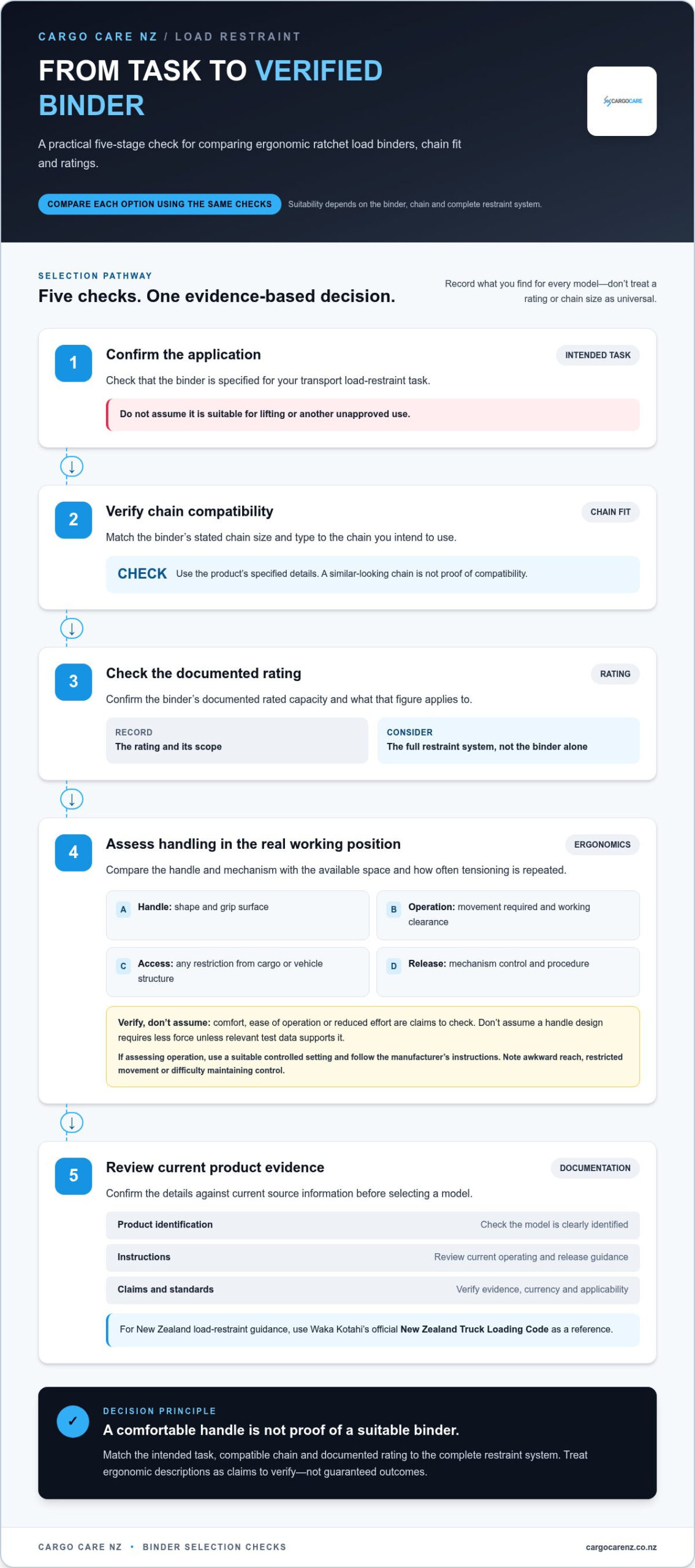
How to compare ergonomic ratchet load binders, chain fit and ratings
Use the same checks for each option and record what you find. A rating or chain size shown for one model isn’t a universal figure. Suitability depends on the binder, the chain and the complete restraint system.
- 1. Confirm the application. Check that the binder is specified for transport load restraint and your intended task, not lifting or another unapproved use.
- 2. Verify chain compatibility. Match the stated chain size and type to the chain you’ll use. Don’t assume a similar-looking chain is compatible.
- 3. Check the rating. Confirm the documented rating and consider it as part of the full restraint system, not in isolation.
- 4. Assess handling needs. Compare handle design, operating clearance and release control with the working position and frequency of use.
- 5. Review current documentation. Check product identification, manufacturer instructions and any standard or compliance claims against current source information.
| Compare | Record and verify |
|---|---|
| Chain fit | Specified chain size and type |
| Rating | Documented figure and its scope |
| Handle design | Shape, movement and working clearance |
| Release | Current manufacturer instructions |
| Evidence | Product identification and supporting documentation |
What should you confirm before buying a binder in New Zealand?
Use Waka Kotahi’s official New Zealand truck loading code as a reference for load-restraint guidance. If a supplier names a standard, verify that it is current and applicable to the product and task. For another perspective on binder selection, read this Maxibinder vs ratchet binder guide. To investigate a product option, review the Maxibinder range from Cargo Care NZ and confirm its current specifications and suitability before selecting a model.
Choosing a load binder for your operation: verification and next steps
Before selecting a binder, write down the job requirements and check each one against current product information. Product suitability depends on verified specifications and the intended restraint system, not on an ergonomic description alone.
- Intended task: Confirm the binder is designed for your transport-restraint application.
- Chain fit: Check the compatible chain size and type.
- Rating evidence: Obtain the documented rated capacity and confirm it suits the restraint system.
- Ergonomic claims: Ask which product features or test evidence support claims about handling or effort.
- User instructions: Review current operating and release instructions before use.
Cargo Care NZ lists Maxibinder among its offerings. Don’t assume a particular model has documented ergonomic features: verify its current specifications and suitability for your task. For general load-restraint guidance, consult Waka Kotahi’s Official New Zealand Truck Loading Code.
What to ask a supplier before placing an order
Request the current product specifications, compatible chain details, rated capacity and operating instructions. Ask what evidence supports any ergonomic description, and confirm the binder is suitable for your actual restraint task. If you’re comparing restraint equipment, this guide to load restraint straps in NZ covers another equipment category to consider.
Apply the same checks when reviewing the Maxibinder offering. For an ergonomic ratchet load binder NZ operators can assess with confidence, documented chain fit, rating and operating instructions should support the decision.
Make your next binder selection with confidence
A suitable binder needs to fit the chain, rating requirements and intended restraint system. Ergonomic features are worth assessing, but claims about comfort or operating effort should be supported by product information, not assumptions.
Use the same checks when considering an ergonomic ratchet load binder NZ option: confirm compatibility, verify the documented rating and review the operating instructions. Cargo Care NZ is the official New Zealand distributor of Silverback products, and Maxibinder is among its offerings. Check the specific model’s current specifications and verify any ergonomic features before deciding whether it suits your work.
Explore Cargo Care NZ’s load-restraint products and check the product details against your requirements before choosing an option.
Frequently Asked Questions
What makes a ratchet load binder ergonomic?
An ergonomic ratchet load binder is designed to make repeated handling more manageable through features such as handle shape, grip, operating movement, working clearance and release control. These are points to assess, not guaranteed benefits. Check current product information and, where available, supporting test evidence. A comfortable handle doesn’t confirm chain compatibility, rated capacity or suitability for your restraint system.
Are ratchet load binders safer than lever binders?
Not automatically. Ratchet and lever binders have different operating and release methods, and safety depends on choosing a suitable product, following its instructions and using it correctly within the restraint system. Compare how each binder can be operated and released in your working conditions. Don’t assume a ratchet design reduces injury risk or effort unless reliable product evidence supports that claim.
How do I match a ratchet load binder to my chain?
Check the binder manufacturer’s stated chain size and type, then confirm they match the chain you’ll use. Also verify the binder’s rated capacity and ensure it’s appropriate for the complete restraint system and intended transport task. Don’t treat a rating or chain specification from one model as universal. For an ergonomic ratchet load binder NZ option, assess handling features only after confirming fit and rating.
Can a load binder be used for lifting?
No. A load binder is for securing a load as part of a restraint system, not for lifting or suspending loads. Don’t use one for lifting unless the manufacturer explicitly identifies and documents that specific product for the application, and all relevant requirements are met. Check the product instructions and identification before use. Never infer lifting suitability from a binder’s appearance or capacity marking.

Article by
Steve O'Malley