
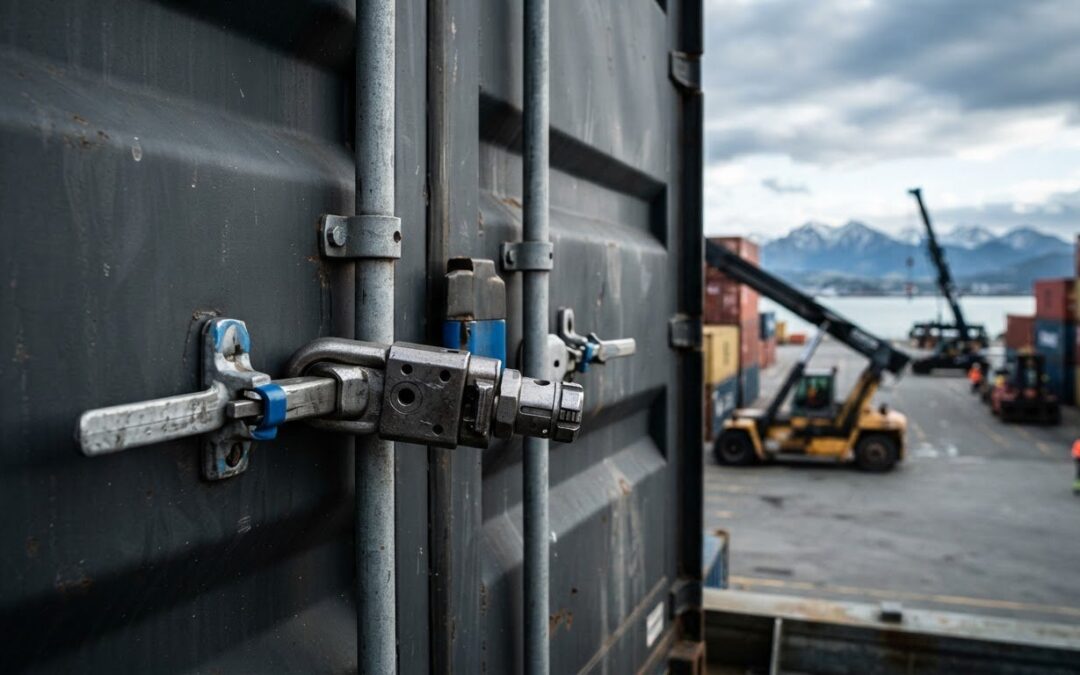
With illicit drug interceptions at the New Zealand border surging from 1.5 tons in 2018 to 6.5 tons in 2024, the integrity of your cargo has never been under greater scrutiny. You know that a single compromised shipment leads to severe compliance failures, costly delays, and reputational damage. Maintaining rigorous standards for tamper proof container seals New Zealand wide is no longer just a best practice; it’s an operational necessity for every logistics professional.
This guide shows you how to secure your supply chain using ISO 17712 compliant high-security bolt solutions while ensuring your team has the right tools for efficient removal. We’ll examine the latest 2026 regulatory updates, specific Silverback hardware requirements, and the technical methods needed to eliminate transit breaches and keep your operations moving.
Key Takeaways
- Master the regulatory distinctions between indicative plastic options and ISO 17712 compliant high-security bolt solutions for secure transit.
- Implement standard operating procedures for deploying the tamper proof container seals New Zealand freight regulations demand on your container door locking rods.
- Integrate physical verification protocols into daily load restraint checks to maintain a complete chain of custody and prevent unauthorised access.
- Streamline your destination processes by pairing durable Silverback security hardware with high-efficiency tools like the Phoenix cordless bolt seal cutter 18V.
Understanding Tamper-Evident and High-Security Seals for NZ Freight
The term “tamper-proof” is technically a misnomer in the transport sector. No physical barrier can completely prevent forced entry if given infinite time and tools. Instead, deploying an industrial security seal focuses on providing clear tamper-evidence and creating a physical delay that deters opportunistic theft. For logistics operators managing transit risks, selecting the correct tamper proof container seals New Zealand compliance frameworks dictate is the first line of defence against border threats and unauthorised access.
Compliance with international benchmarks protects both domestic movements and complex export pathways. High-security barriers prevent cargo tampering while ensuring shipments pass border inspections without costly handling delays. Utilising certified hardware establishes a verifiable chain of custody from the initial point of loading to final delivery.
The Functional Roles of Different Security Seal Tiers
Operational demands determine the necessary classification tier for transport security.
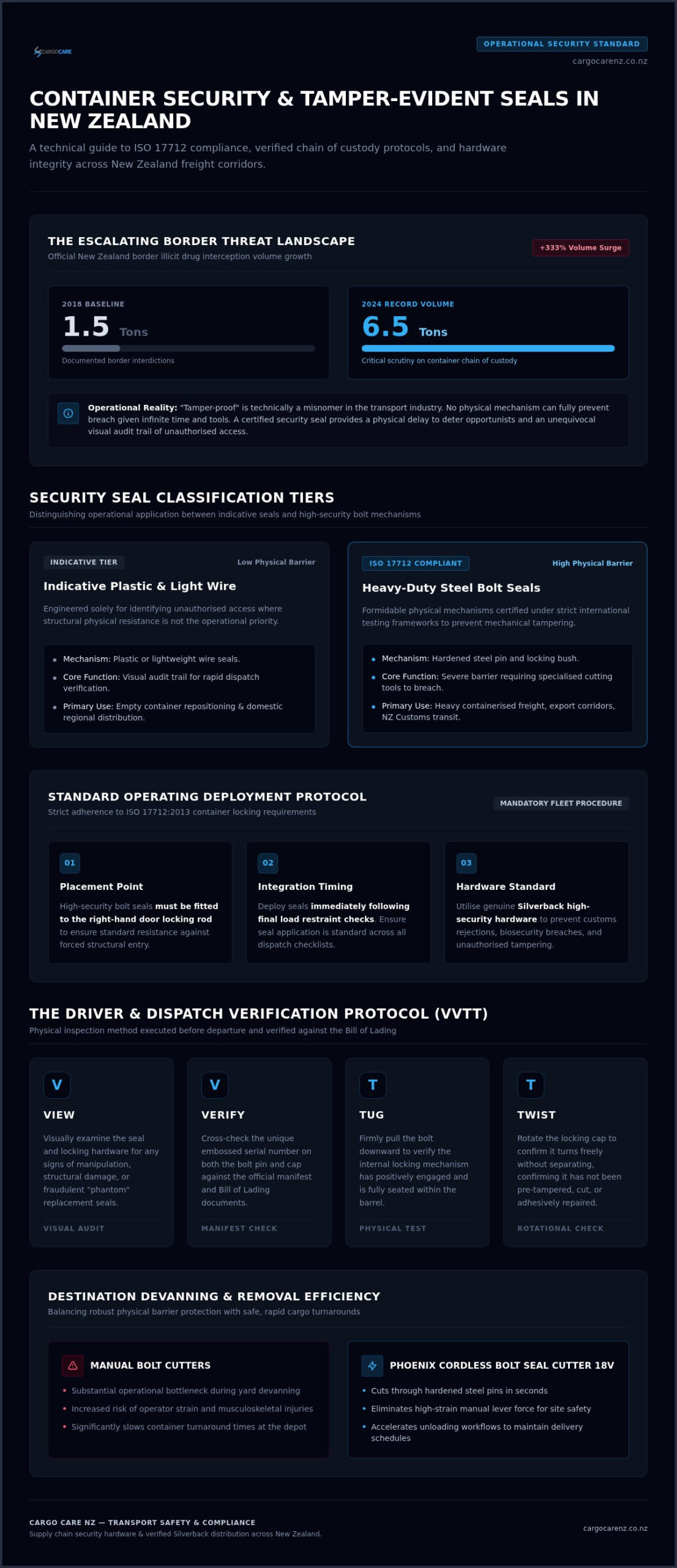
- Indicative seals: These plastic or light wire mechanisms are best for identifying unauthorised access where physical strength is not the primary concern. They serve as a reliable visual audit trail for domestic regional distribution and empty container tracking.
- High-security bolt seals: These heavy-duty steel mechanisms are designed to provide a formidable physical barrier that requires specialized tools to breach, securing heavy containerised freight against structural intrusion.
ISO 17712 establishes the strict global standard for the uniform testing, mechanical classification, and acceptance of high-security freight container seals.
Best Practices for Applying and Managing Container Security Seals
Effective deployment starts with precise application. Selecting the right tamper proof container seals New Zealand professionals trust is only half the battle; the rest is procedural discipline. In line with the ISO 17712:2013 standard, high-security bolt seals must be fitted to the right-hand door locking rod to ensure maximum resistance against forced entry. Warehouse teams should integrate this step immediately after final load restraint checks to maintain transport compliance.
Logistics managers should incorporate tamper evident security seals NZ into their daily dispatch checklists. CargoCare NZ recommends standardising these steps to ensure no container leaves the yard unsecured. Using high-quality tamper proof container seals New Zealand wide provides a uniform security posture across your entire fleet. You can view our full range of Silverback security hardware to find the right fit for your specific freight requirements and NZ Customs border security needs.
Establishing a Robust Chain of Custody Log
A seal is only effective if its unique serial number is recorded accurately on all manifests. Drivers must verify this number against the Bill of Lading before departure using the VVTT method: View the seal, Verify the number, Tug the bolt, and Twist the cap. This physical check confirms the seal is fully seated and has not been pre-tampered. If a driver discovers a “phantom” seal or signs of manipulation during transit, they must report it immediately before the container is opened. Handling discrepancies at the destination requires a documented protocol to protect your liability and maintain biosecurity integrity. Formalised logs prevent compliance gaps that lead to heavy fines or rejected shipments.
Sourcing Reliable Security Solutions and Removal Tools in New Zealand
Procuring the specific tamper proof container seals New Zealand fleets require ensures that shipments remain compliant with evolving border security standards. Silverback cargo products remain the preferred choice for transport operators due to their verified durability and strict adherence to international high-security standards. While these barriers protect cargo, they often create a significant bottleneck at the destination during the devanning process. Traditional manual bolt cutters increase injury risks and significantly slow down unloading workflows. Deploying the Phoenix cordless bolt seal cutter 18V addresses this operational bottleneck by cutting through hardened steel pins in seconds, safely accelerating turnaround times and improving site safety.
Sourcing from an official distributor ensures your fleet utilises genuine ISO 17712 compliant bolt seals NZ operations require. Counterfeit or substandard hardware compromises border security and risks cargo rejection by customs authorities under the latest border security amendments. Securing a reliable, technical supply of tamper proof container seals New Zealand wide guarantees that your freight remains compliant with local regulatory frameworks throughout the entire transit lifecycle.
The CargoCare NZ Advantage for Professional Logistics
CargoCare NZ provides direct access to a comprehensive range of certified Silverback products NZ transport fleets rely on through a robust national distribution network. This allows operators to bundle high-security seals with other vital equipment like plastic pallet angles, cargo nets, and load binders for a complete transport solution. Our technical expertise supports transport companies in maintaining full compliance with evolving safety and border security standards, ensuring uninterrupted operational continuity and protecting your commercial reputation in a demanding market.
Securing Your Fleet for Future Transit Demands
Implementing a strict security protocol protects your cargo from border delays and opportunistic theft. Ensuring your team deploys the high-integrity tamper proof container seals New Zealand compliance frameworks demand mitigates risk across every domestic and export route. Maintaining this standard ensures operational continuity. Procedural discipline during application combined with verified hardware maintains an unbroken chain of custody, ensuring that cargo reaches its final destination without unauthorised intervention.
As the official Silverback distributor, CargoCare NZ supplies certified ISO 17712 compliant hardware alongside specialised cordless removal tools to keep your operations moving efficiently. View the full range of Silverback Security Seals at CargoCare NZ today to fortify your transport workflow. Protect your cargo, maintain regulatory compliance, and streamline your devanning processes with complete confidence in your equipment’s durability.
Frequently Asked Questions
What is the difference between a tamper-proof seal and a tamper-evident seal?
A tamper-evident seal provides clear visual proof of unauthorised entry but doesn’t necessarily offer physical resistance. Conversely, “tamper-proof” is a technical misnomer because any barrier can eventually be breached with enough time. High-security bolt seals combine both features, acting as a physical deterrent that requires industrial tools to break while leaving permanent evidence of any manipulation attempt.
Are bolt seals mandatory for all shipping containers in New Zealand?
High-security bolt seals are mandatory for all international sea freight containers under the ISO 17712:2013 standard. For domestic transport, requirements depend on the cargo value and the shipper’s security protocols. However, exporters participating in the New Zealand Customs Secure Exports Scheme must use approved tamper proof container seals New Zealand wide to maintain their certified status and bypass border delays.
How do I remove a high-security bolt seal without damaging the container?
Remove high-security hardware by using a specialised tool like the Phoenix cordless bolt seal cutter 18V. Manual bolt cutters are often cumbersome and increase the risk of worker fatigue or slipping, which could damage the container’s locking rods. This cordless solution provides a clean, controlled cut through hardened steel pins, ensuring a safe devanning process without compromising the integrity of the freight container doors.
What should I do if a container seal arrives broken or looks tampered with?
Do not open the container doors if the seal appears manipulated or broken. Immediately photograph the hardware and record the serial number to compare against the Bill of Lading. You must notify the carrier and your insurance provider before proceeding. Maintaining a formal discrepancy report is critical for liability protection and assists authorities if a biosecurity or criminal breach is suspected during transit.

Article by
Steve O'Malley