
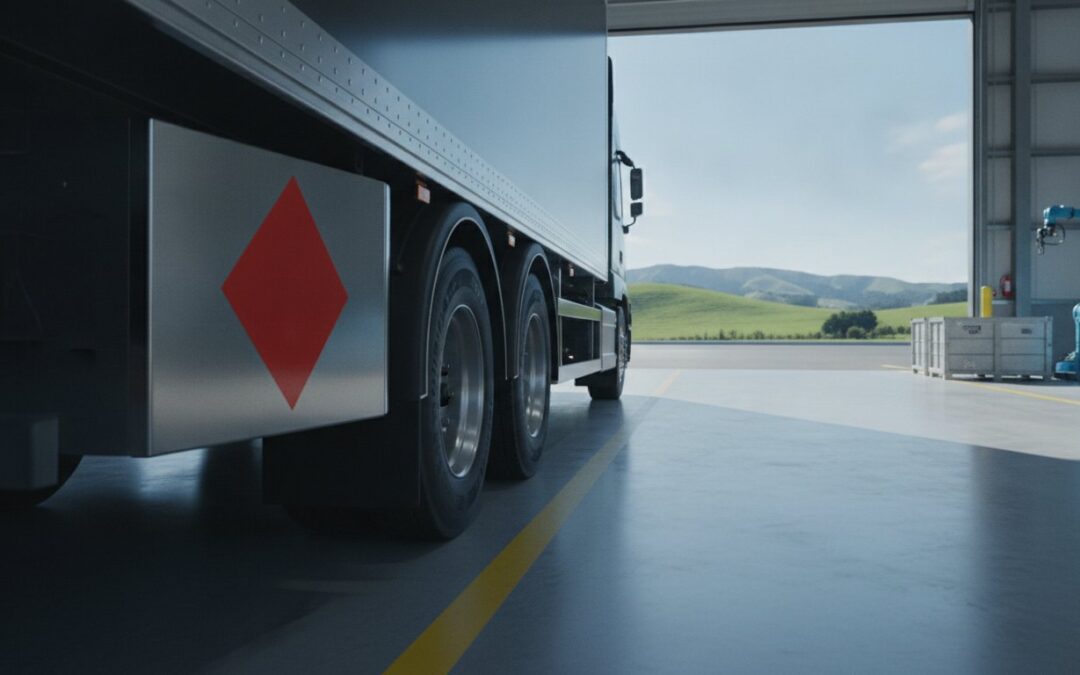
A single peeling corner on a Class 3 flammable liquid label is enough to ground a heavy vehicle during a routine NZTA roadside inspection. It’s a frustrating reality for logistics professionals who already face significant pressure from the Hazardous Substances (Importers and Manufacturers) Notice 2015 updates that took effect on 1 January 2026. You likely feel the weight of these shifting regulations and the urgent need for specific DG label types NZ authorities deem compliant to avoid heavy infringement fines. If your labels cannot withstand road grime or UV exposure, your operational continuity is at constant risk.
This guide ensures you master the complexities of the current landscape by identifying the exact requirements for various cargo classes. We’ll examine the updated Land Transport Rule standards, precise placard placement for heavy vehicles, and the technical specifications for durable labelling hardware. By the end of this article, you’ll have a clear roadmap to maintain safety and keep your fleet compliant through 2026 and beyond.
Key Takeaways
- Align your operations with the 2026 Land Transport Rule updates to meet new EPA reporting standards and avoid costly NZTA roadside fines.
- Identify the correct specific DG label types NZ regulations mandate for each of the nine primary hazard classes, including common Class 3.0 flammable liquids.
- Master the technical distinction between vehicle placarding and package labelling to ensure your entire load remains compliant during transit.
- Implement professional application techniques and use durable, UV-resistant labels to maintain visibility and prevent peeling in the harsh New Zealand climate.
Navigating the NZ Dangerous Goods Labelling Framework
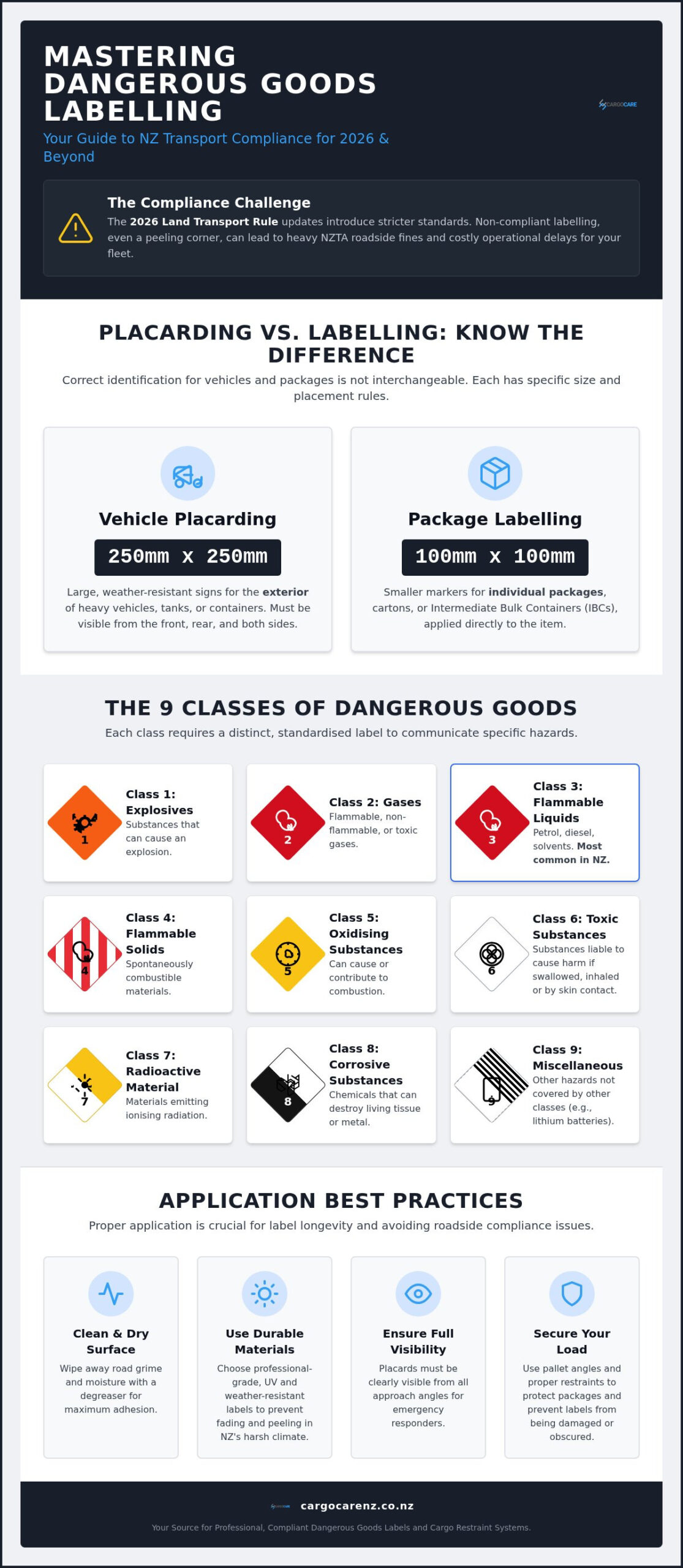
Compliance in New Zealand rests primarily on the Land Transport Rule: Dangerous Goods 2005. While the core rule is established, 2026 updates have refined standards for placard durability and visibility under harsh UV conditions. Transport operators must ensure all Dangerous Goods Classes are clearly identified using specific DG label types NZ inspectors recognise. Professional-grade labels are a non-negotiable requirement for fleet safety. Substandard stickers that fade or peel during long-haul transit lead directly to heavy NZTA infringements and operational delays.
You must maintain a clear distinction between placarding and labelling. Placards are large, weather-resistant signs required on the exterior of a vehicle, tank, or container, typically measuring at least 250mm by 250mm. Conversely, labelling applies to individual packages or intermediate bulk containers (IBCs), usually requiring 100mm by 100mm markers. Correct placement ensures that emergency responders can identify hazards from any angle. Failure to apply the correct size or type for the specific load configuration constitutes a serious breach of transport safety protocols.
The Role of the EPA and NZTA in DG Compliance
The Environmental Protection Authority (EPA) manages the classification of hazardous substances, while the NZTA regulates their physical movement on public roads. For smaller consignments, operators should identify Dangerous Goods in Limited Quantities (DGLQ) thresholds. These thresholds often permit reduced placarding requirements if the volume per package remains below specific limits defined by the substance’s hazard class. The Hazchem code system provides immediate, actionable information to emergency services regarding the correct firefighting medium and evacuation protocols required during an incident.
Identifying Specific DG Label Types and Classes
New Zealand identifies nine primary dangerous goods classes, ranging from explosives to corrosive substances. Each category requires distinct visual markers to communicate risk levels to handlers and emergency services. Using specific DG label types NZ regulations mandate ensures that every hazardous shipment remains traceable and safe during transit. Standardisation is critical. Labels must follow strict colour-coding and symbology protocols to avoid confusion in high-pressure logistics environments.
Class 3.0 Flammable Liquid labels are the most frequently utilised in the NZ road freight sector. These labels identify petrol, diesel, and various industrial solvents. Compliance involves adhering to WorkSafe Labelling Best Practices, which demand that labels remain legible and attached throughout the entire journey. For individual packages, a 100mm square label is standard. Heavy vehicle placards require a 250mm square format for maximum visibility. If you need reliable identification for your fleet, sourcing high-quality Dangerous Goods Labels is a practical step toward total compliance.
Common DG Labels for the NZ Transport Sector
Industrial gas transport relies on Class 2 labels for flammable and non-flammable gases. Chemical haulage often involves Class 8 corrosive substances, which require labels capable of resisting chemical degradation. Class 9 covers miscellaneous goods, including lithium batteries and environmentally hazardous materials. Each class demands specific DG label types NZ authorities expect to see displayed clearly. As the national distributor of Silverback products, Cargo Care NZ supplies labels designed for these rigorous professional conditions, ensuring your identifiers don’t fail when exposed to road grime.
Best Practices for Label Application and Cargo Security
Proper application of specific DG label types NZ operators use is vital for operational continuity. Labels must be applied to clean, dry, and non-porous surfaces to prevent detachment at highway speeds. New Zealand’s high UV index and frequent rainfall degrade standard paper-based stickers rapidly. Using durable materials, like those in the Silverback range, provides the necessary weather resistance required by the Land Transport Rule: Dangerous Goods 2005. Placard visibility is equally critical. You must ensure placards are visible from the front, rear, and both sides of the vehicle at all times to ensure emergency services can identify hazards immediately from any approach angle.
Adhesion failure often stems from road film or grease on the vehicle body. Drivers should wipe down the application area with a suitable degreaser before mounting these specific DG label types NZ regulations require. This simple step prevents labels from peeling at the corners, which is a common trigger for NZTA roadside inspections. Ensuring the label is flat and free of air bubbles further increases its lifespan against the abrasive wind and dust encountered on the open road.
Integrating Labelling with High-Quality Load Restraint
Securing the cargo effectively protects the integrity of the identifiers. Using plastic pallet angles prevents heavy-duty straps from crushing DG packaging or obscuring essential labels. For high-tension requirements, Maxibinders ensure zero load movement, which keeps placards in their correct orientation during transit. High-quality load restraint straps NZ transport professionals trust form the foundation of a compliant hazardous goods strategy. This integrated approach ensures that safety markers remain intact and readable from the depot to the final delivery point, even on rugged rural routes.
Securing Your Fleet for 2026 Compliance
Maintaining transport compliance requires a precise understanding of the Land Transport Rule and the application of specific DG label types NZ authorities mandate. You’ve identified that standardisation across all hazard classes, combined with strategic placement on clean surfaces, prevents the operational delays caused by NZTA infringements. High-durability materials are essential for surviving New Zealand’s variable weather conditions and high UV exposure. As the official Silverback Products NZ distributor, CargoCare NZ provides the technical expertise and hardware necessary to keep your cargo secure and your documentation accurate. Our team specialises in high-quality equipment designed specifically for the rigours of the national transport sector. Browse the full range of compliant DG labels and transport safety equipment at CargoCare NZ to ensure your fleet remains safe and efficient on the road. Professional preparation is your most effective safeguard against costly transit errors.
Frequently Asked Questions
What is the standard size for a DG placard on a truck in NZ?
The standard size for a DG placard on a heavy vehicle in New Zealand is 250mm by 250mm. This size ensures the hazard remains visible to emergency services from a significant distance. Smaller packages or intermediate bulk containers (IBCs) typically require the 100mm by 100mm label format. Using these specific DG label types NZ regulations require prevents compliance issues during NZTA roadside inspections.
Can I use hand-written signs instead of official DG labels?
No, hand-written signs are not a compliant alternative to official dangerous goods labels. New Zealand regulations require labels to meet strict standards for colour-coding, symbology, and durability. Official labels, such as the Silverback range, are specifically designed to withstand UV exposure and road grime. Using non-compliant or hand-written markers can result in heavy infringement fines and the immediate grounding of your vehicle.
How many DG labels do I need on my vehicle for a mixed load?
For a vehicle carrying a mixed load of dangerous goods, you must display placards that are visible from the front, rear, and both sides. Depending on the volume and hazard classes, you may need a “Mixed Class” placard or separate placards for each class present. Always consult the Land Transport Rule: Dangerous Goods 2005 to determine the exact requirements for your specific load configuration.
What happens if my DG labels become unreadable during transit?
If your labels become unreadable, faded, or detached during transit, your vehicle is no longer compliant with New Zealand transport laws. NZTA inspectors can issue fines if signage is obscured by road grime or physical damage. It’s essential to use high-durability, weather-resistant materials to ensure visibility. Drivers should carry spare specific DG label types NZ authorities recognise to replace damaged placards immediately and maintain operational continuity.

Article by
Steve O'Malley