
What if the most critical component of your load security isn’t the heavy-duty strap itself, but the 1042mm of plastic sitting beneath it? Every transport professional understands the frustration of reaching a delivery centre only to find crushed edges and rejected freight. It’s a costly operational reality where high-tension straps, intended to secure the load, end up compromising the structural integrity of the packaging instead. You require equipment that survives the rigours of the road without becoming brittle under harsh UV exposure. Understanding the specific benefits of plastic pallet angles allows you to transform raw strap tension into safe, distributed load containment that protects both your cargo and your bottom line. This guide examines how professional-grade, UV-stabilised gear ensures transport compliance, prevents equipment failure, and delivers consistent zero-damage results for long-haul operations throughout 2026.
Key Takeaways
- Learn how the 1042mm profile converts strap tension into distributed pressure to eliminate edge crushing on palletised goods.
- Discover the benefits of plastic pallet angles manufactured from impact-modified, UV-stabilised materials that withstand the rigours of national long-haul routes.
- Understand how professional-grade equipment ensures full compliance with transport safety regulations while protecting your fleet from roadside fines.
- Identify the operational cost savings found by replacing disposable alternatives with reusable, rigid angles that stay secure during heavy-duty loading.
Superior Load Distribution and Freight Integrity
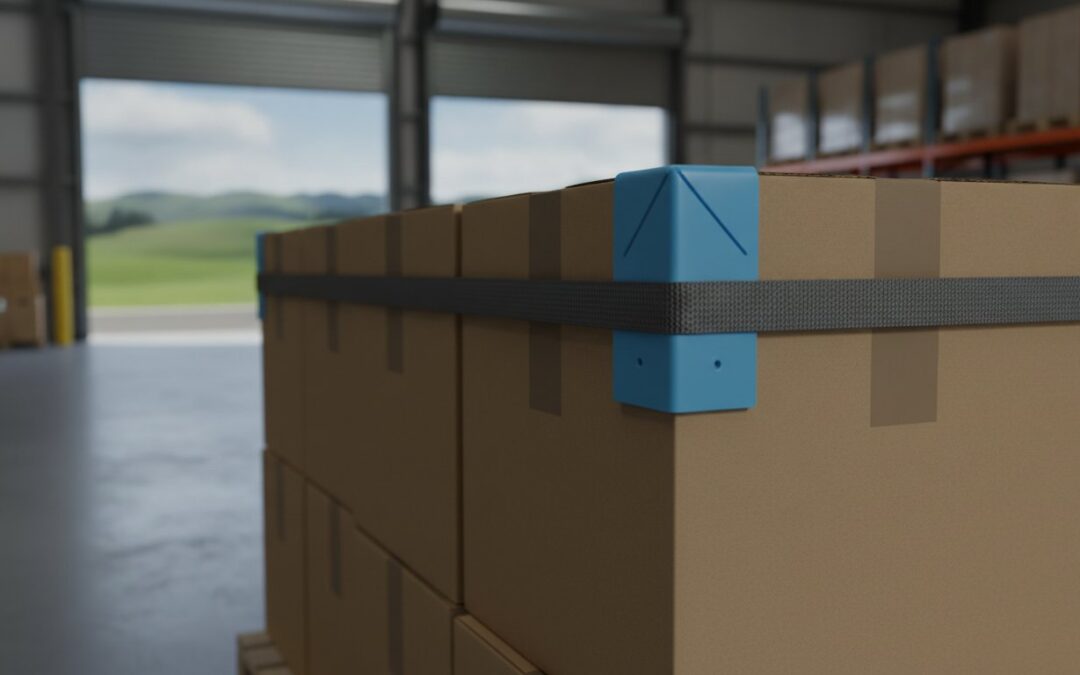
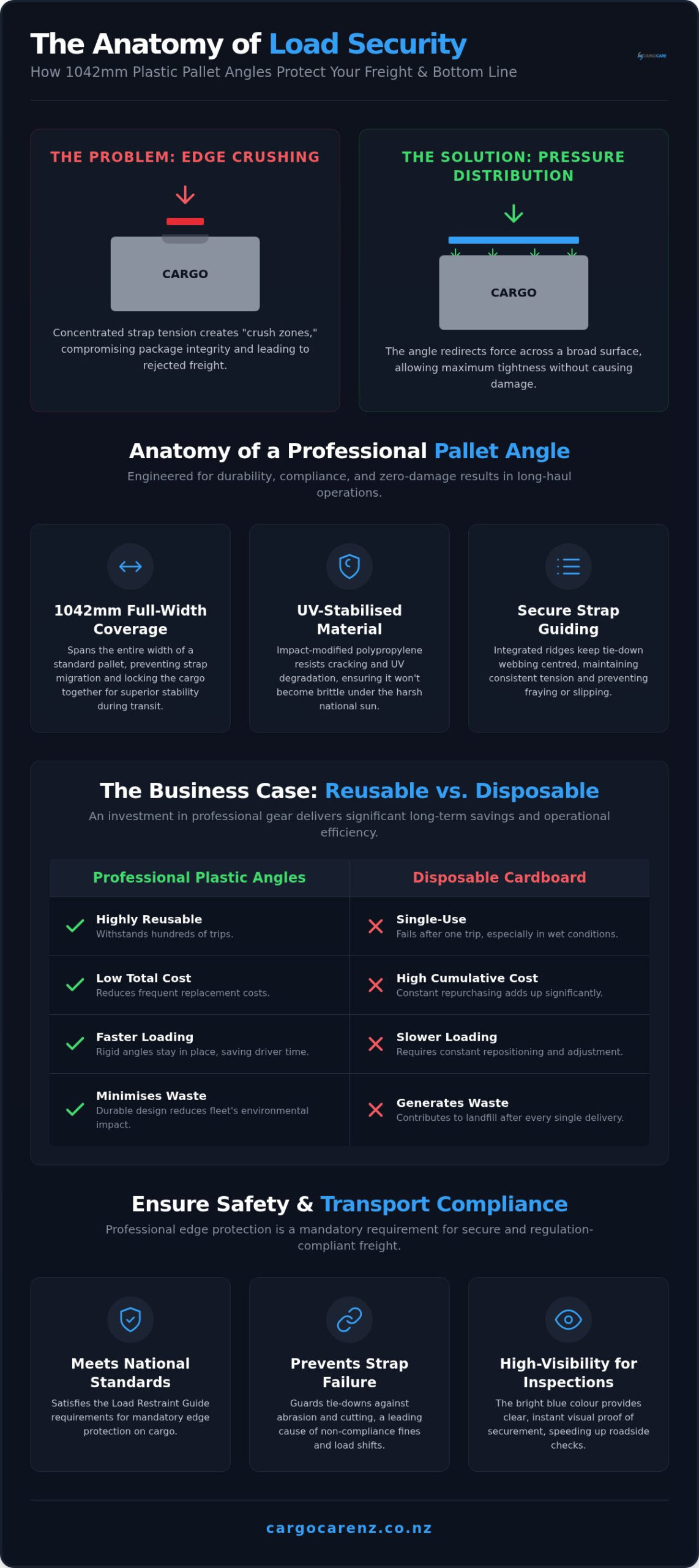
A Plastic Pallet Angle serves as the primary structural interface between high-tension tie-downs and the cargo itself. While a strap exerts intense vertical force on a narrow line, the angle redirects this energy across a much broader surface area. It’s a critical tool for securing cardboard-boxed goods where edges are vulnerable. Without it, tension creates “crush zones” that compromise the structural foundation of a unit load, leading to unstable stacks and freight rejection at the delivery centre. One of the primary benefits of plastic pallet angles is their ability to protect the integrity of soft packaging while allowing for maximum strap tightness without damage.
When evaluating the benefits of plastic pallet angles, the synergy between the angle and the strap is paramount. Using these angles alongside professional load restraint straps NZ ensures that the downward force is stabilised and uniform. When paired with high-tension tools like a Maxibinder, the plastic angle prevents “strap bite,” where the webbing would otherwise cut into the freight. This combination transforms raw tension into controlled, secure containment that holds firm over long distances.
The 1042mm Standard: Why Length Matters for Pallet Protection
The 1042mm length is the established industry benchmark because it spans the entire width of a standard pallet. This full-width coverage ensures that the strap can’t migrate or slip off the edge during the constant vibrations of a long-haul trip. It provides a continuous edge that locks the cargo together. By bridging the entire top surface, the 1042mm angle maintains the structural squareness of the load even under extreme tension. This prevents the cargo from leaning or shifting, which is vital for meeting national transport safety standards and ensuring a zero-damage delivery.
Durability and Compliance in Harsh Transport Conditions
The material composition of a Plastic Pallet Angle determines its operational lifespan and reliability. Professional-grade angles utilise impact-modified polypropylene, which provides a balance between rigidity and flexibility. This specific engineering allows the angle to absorb mechanical shocks and vibrations without cracking or splintering. Unlike standard plastics that fail under stress, these components remain resilient during the constant movement of a heavy-duty trailer. Avoiding brittle equipment is essential for maintaining a safe transport environment and preventing hazardous debris from entering the roadway.
Environmental exposure is a significant factor for gear that spends thousands of hours on the road. One of the key benefits of plastic pallet angles is the use of UV-stabilised materials. The intense national sun often causes inferior equipment to become brittle and shatter, but stabilised polypropylene resists this degradation. These angles maintain their structural integrity over years of service. Additionally, the high-visibility blue colour serves a practical purpose during roadside inspections. It provides clear visual proof of securement from a distance, helping drivers pass compliance checks with minimal delays.
Meeting National Load Restraint Standards
Adhering to the Load Restraint Guide requires more than just tight straps. Proper edge protection is a mandatory requirement under many federal cargo securement rules, which state that edge protection must be used when a tiedown is subject to abrasion or cutting. Using these tools prevents strap fraying, a leading cause of non-compliance fines and equipment failure. For fleets prioritising certified reliability, investing in Silverback products NZ ensures that every component meets rigorous safety benchmarks. You can view our full range of transport safety gear to find the right solutions for your fleet’s specific compliance needs.
The Business Case: Reusability and Operational Efficiency
Investing in a Plastic Pallet Angle offers a clear financial advantage when considering the total cost of ownership. While cardboard alternatives are inexpensive, they often fail after a single trip due to moisture or physical stress. A single Silverback angle replaces dozens of disposable units. This durability reduces the frequency of purchasing replacements and significantly minimises the waste generated by your fleet. Beyond material costs, the operational benefits of plastic pallet angles include time savings during the loading process. Rigid angles stay in place during the throw-over of straps. This allows drivers to secure loads faster without constantly repositioning shifting protectors.
Silverback-engineered angles feature integrated ridges and strap guides that specifically prevent strap migration during long-haul travel. This design keeps the webbing centred and maintains consistent tension across the cargo. Such features are critical for meeting FMCSA cargo securement regulations. These rules require edge protection to prevent tie-downs from being cut or abraded by sharp edges. Proper securement is not just a safety requirement; it’s a vital part of maintaining operational continuity and avoiding expensive delays.
Integrating Angles with Heavy-Duty Binders
Pallet angles are essential when applying the high leverage provided by tools such as the Maxibinder vs ratchet binder NZ. The plastic material acts as a buffer. It protects the strap from sharp cargo edges and extends the life of your tie-down inventory. Using standardised, high-quality cargo protection equipment also projects a professional image of your fleet. It demonstrates a commitment to safety and operational excellence that clients value. This consistency ensures that your gear remains a reliable asset rather than a recurring expense.
Optimising Load Security for 2026 and Beyond
The transition to professional-grade load protection is a strategic move for any fleet operator. By implementing the 1042mm standard, you ensure full-width pallet coverage that eliminates edge crushing and maintains the structural integrity of your cargo. These components aren’t just accessories; they’re vital tools for ensuring national transport compliance and protecting your bottom line from damage claims. Recognising the long-term benefits of plastic pallet angles allows you to invest in gear that survives the rigours of the road. As the official national distributor, CargoCare NZ provides Silverback gear engineered for high-impact resistance and UV-stabilised for long-haul durability. Browse our range of high-performance Silverback plastic pallet angles today to secure your next load with confidence. Professional equipment ensures your freight arrives in the same condition it left the warehouse.
Frequently Asked Questions
Are plastic pallet angles more effective than steel edge protectors?
Plastic Pallet Angles are often more effective for general freight because they don’t rust and possess the flexibility to absorb road vibration. One of the practical benefits of plastic pallet angles is their ability to provide a cushioned yet firm barrier that prevents straps from cutting into softer cardboard packaging. Unlike steel, these impact-modified polypropylene tools are lightweight and safer for drivers to handle.
Do these 1042mm angles fit all standard pallet sizes used in the country?
The 1042mm length is specifically engineered to span the full width of a standard pallet used nationally. This dimension ensures that the edge protection covers the entire top surface of the load, which prevents straps from slipping off the corners during transit. Recognising these benefits of plastic pallet angles allows operators to maintain a uniform and secure unit load for every delivery.
Can I use plastic pallet angles with both webbing straps and steel strapping?
Professional-grade plastic angles are compatible with both heavy-duty webbing straps and steel strapping. The rigid structure prevents steel bands from biting into the cargo, while the integrated strap guides keep 50mm webbing perfectly centred. This versatility makes them essential for fleets using various restraint methods, ensuring that tie-downs don’t fray against sharp edges or shift during the journey.
How do UV-stabilised pallet angles save money for logistics fleets over time?
UV-stabilised equipment saves money by significantly extending the replacement cycle of your cargo gear. Standard plastics often become brittle and shatter after prolonged exposure to the intense national sun, leading to frequent replacement costs and potential safety fines. Using stabilised Silverback products ensures your gear remains flexible and functional for multiple years of service, even under the most demanding environmental conditions.
Article by
Steve O'Malley