
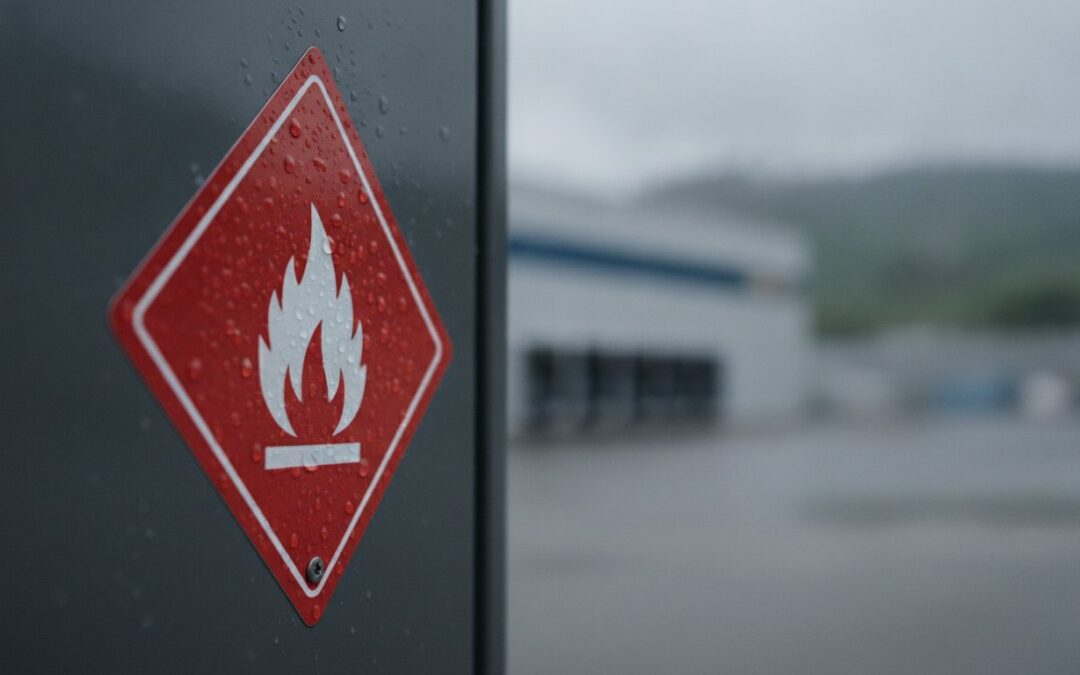
A single peeling corner on a Class 3 flammable liquid label can ground a heavy vehicle and trigger a substantial NZTA fine before the driver even clears the yard. Experienced logistics professionals know that compliance is one of the most demanding parts of the haul, particularly with the 2026 regulatory updates and harsh Kiwi conditions that degrade inferior adhesives. It’s a constant challenge to keep every unit road-legal while maintaining a fast-paced delivery schedule.
This guide ensures your fleet meets every NZTA requirement and avoids heavy penalties with an expert breakdown of dangerous goods labelling and transport safety. We examine the technical standards for the hazmat labels NZ transport operators require to maintain operational continuity. You’ll also learn how to integrate durable Silverback signage with essential load restraint gear like Maxibinders and pallet angles, ensuring your cargo stays secure and your business stays on the road.
Key Takeaways
- Master the 2026 NZ Land Transport Rule updates to prevent operational disruptions and maintain full compliance across your entire fleet.
- Identify the specific size and placement standards for hazmat labels NZ transport regulations mandate for different vehicle types and cargo volumes.
- Recognise why high-visibility Class 3.0 flammable liquid labels are the primary safety link between your drivers and emergency services.
- Streamline your safety procurement by sourcing industrial-grade Silverback labels alongside heavy-duty load restraint equipment like Maxibinders.
Navigating NZ Dangerous Goods Regulations in 2026
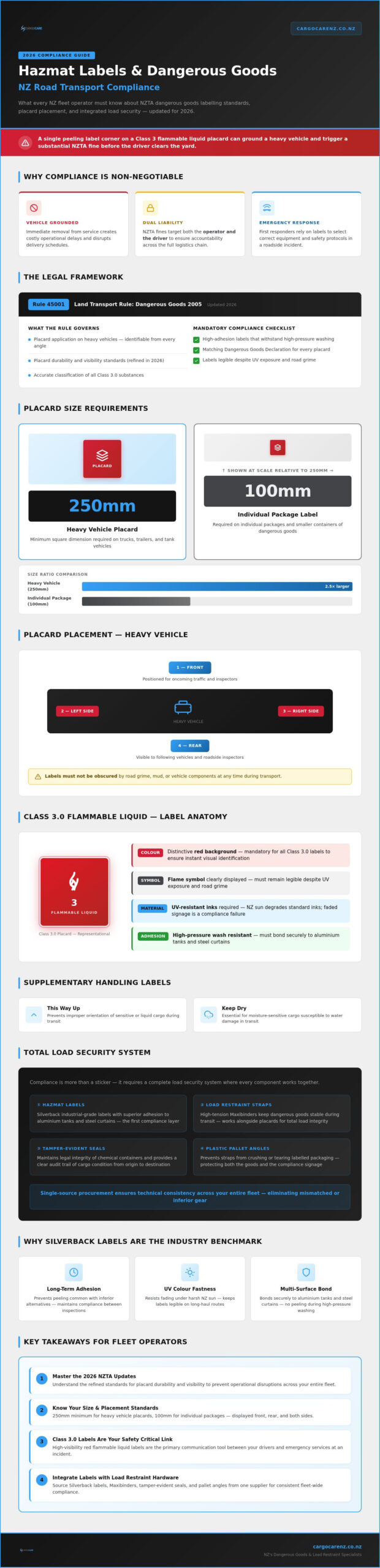
In New Zealand, dangerous goods are substances or articles with explosive, flammable, toxic, infectious, or corrosive properties. The Land Transport Rule: Dangerous Goods 2005 provides the legal framework for moving these items, identifying the hazmat labels NZ transport drivers must display. Correct labelling acts as the primary defence for emergency services. In a roadside incident, first responders rely on these visual identifiers to select the right equipment and safety protocols for containment and protection.
The 2026 updates refine the standards for placard durability and visibility. Operators must ensure their hazmat labels NZ transport signage remains legible despite UV exposure or road grime. The NZTA issues substantial fines for mislabelled cargo. These penalties target both the operator and the driver to ensure accountability across the logistics chain. Failure to meet these standards often results in the immediate removal of a vehicle from service, creating costly operational delays.
The Role of the Land Transport Rule in Fleet Safety
Rule 45001 governs the specific application of placards and labels on heavy vehicles. It mandates that hazardous loads are clearly identifiable from every angle. This physical identification must work in tandem with a Dangerous Goods Declaration. This document provides the technical details of the cargo, but the external label remains the most critical tool for hazard assessment. Effective compliance requires:
- Accurate classification of all Class 3.0 substances.
- High-adhesion labels that withstand high-pressure washing.
- Matching documentation for every placard displayed.
Selecting and Placing Hazmat Labels for Road Transport
Selecting the correct hazmat labels NZ transport fleets utilise requires precise knowledge of the cargo’s chemical properties. Class 3.0 Flammable Liquid labels are the most frequent requirement for local fuel and solvent haulage. These labels must remain legible under extreme conditions. The New Zealand sun quickly degrades standard inks, making UV-resistant materials essential to prevent fading during long-haul trips. Faded signage is a compliance failure that invites NZTA scrutiny and potential fines.
Visibility requirements differ based on the transport unit size. Heavy vehicle placards must typically measure at least 250mm square, while individual packages require 100mm labels. Proper placement ensures visibility for inspectors and emergency crews. Follow this checklist for standard heavy vehicle units:
- Affix one placard to the front, positioned clearly for oncoming traffic or inspectors.
- Place one placard on the rear of the unit.
- Mount one placard on each side of the vehicle, trailer, or tank.
- Ensure labels are not obscured by road grime, mud, or vehicle components.
Class 3.0 Flammable Liquid Labels and Beyond
Class 3.0 labels must feature the distinctive red background and flame symbol. For comprehensive cargo care, secondary handling labels like "This Way Up" or "Keep Dry" provide additional protection for sensitive freight. Choosing Silverback dangerous goods labels ensures your fleet benefits from industry-leading adhesion and colour fastness. These professional-grade products bond securely to various surfaces, including aluminium tanks and steel curtains. This prevents the peeling issues common with inferior alternatives, maintaining your professional image and safety standing on the road.
Securing Compliance with Silverback Safety Solutions
Silverback safety solutions provide the durability required for the demanding New Zealand transport environment. As the national distributor, CargoCare NZ supplies industrial-grade hazmat labels NZ transport professionals trust for long-term adhesion. These products are the industry benchmark for durability. High-quality signage prevents unnecessary operational delays during roadside inspections. When an inspector sees a well-maintained, clearly labelled unit, it reflects a culture of proactive compliance. This professionalism reduces the risk of vehicle grounding and keeps your fleet moving without the threat of heavy NZTA fines in 2026.
Sourcing safety gear from a single-source supplier ensures technical consistency across your entire fleet. Managing labels, security seals, and restraint hardware through one reliable channel simplifies procurement and inventory management. This integrated approach ensures that every component meets the same high standard of performance. It eliminates the risk of using mismatched or inferior gear that might fail under load. A proactive strategy for fleet compliance protects your drivers, the public, and your commercial reputation.
Integrating Labels with Load Restraint Hardware
Compliance involves more than just a sticker; it requires a total load security system. High-tension load restraint straps NZ and Maxibinders work alongside placards to keep dangerous goods stable during transit. To maintain the legal integrity of chemical containers, tamper evident security seals NZ provide a clear audit trail of the cargo’s condition. Using plastic pallet angles NZ prevents straps from crushing or tearing labelled packaging. This system ensures that every hazmat labels NZ transport requirement is met while physically protecting the goods from transit damage and environmental exposure.
Future-Proof Your Fleet Compliance
Adhering to the Land Transport Rule is a vital component of professional logistics management. As the 2026 regulatory updates take effect, the durability of your vehicle placards becomes even more critical for avoiding operational disruptions. High-visibility hazmat labels NZ transport operators rely on must withstand the harsh local climate without peeling or fading. Correct classification and placement ensure your drivers remain safe and your business avoids heavy NZTA fines throughout the year.
CargoCare NZ is the official New Zealand distributor for Silverback products, specialising in heavy-duty, UV-resistant materials designed for the transport sector. We provide national delivery for all transport safety gear, ensuring you have the right tools for every haul. Browse our range of Silverback Dangerous Goods Labels and transport safety gear to maintain the highest standards of safety and efficiency. Invest in professional-grade equipment to keep your fleet moving with confidence.
Frequently Asked Questions
What are the minimum size requirements for hazmat placards on NZ trucks?
NZ Land Transport Rules specify that placards displayed on heavy vehicles must have minimum dimensions of 250mm by 250mm. For smaller packages or intermediate bulk containers, the standard size is 100mm by 100mm. It’s essential that these labels remain legible and maintain their shape so emergency services can identify risks from a distance during a roadside incident.
Can I use magnetic hazmat labels for temporary dangerous goods transport?
Removable placards are permitted provided they are securely attached and remain legible under all transit conditions. While magnetic options are used for temporary tasks, they must meet the same durability and visibility standards as permanent hazmat labels NZ transport regulations require. Operators should ensure magnets have sufficient strength to withstand wind resistance and vibration on high-speed routes.
How many hazmat labels are required for a multi-compartment tanker?
Multi-compartment tankers must display placards on the front, rear, and both sides of the transport unit. If the tanker carries multiple classes of dangerous goods, a placard for each specific class must be visible on the sides and the rear. This allows first responders to accurately assess the hazards present in each section of the vehicle.
What happens if a hazmat label becomes unreadable during transit?
If a label becomes unreadable, the vehicle is technically non-compliant and can be grounded by NZTA inspectors. Drivers should inspect their hazmat labels NZ transport signage at every rest stop to ensure no peeling or fading has occurred. Carrying spare Silverback labels allows for immediate replacement, preventing costly operational delays and avoiding the heavy fines associated with improper identification.

Article by
Steve O'Malley