
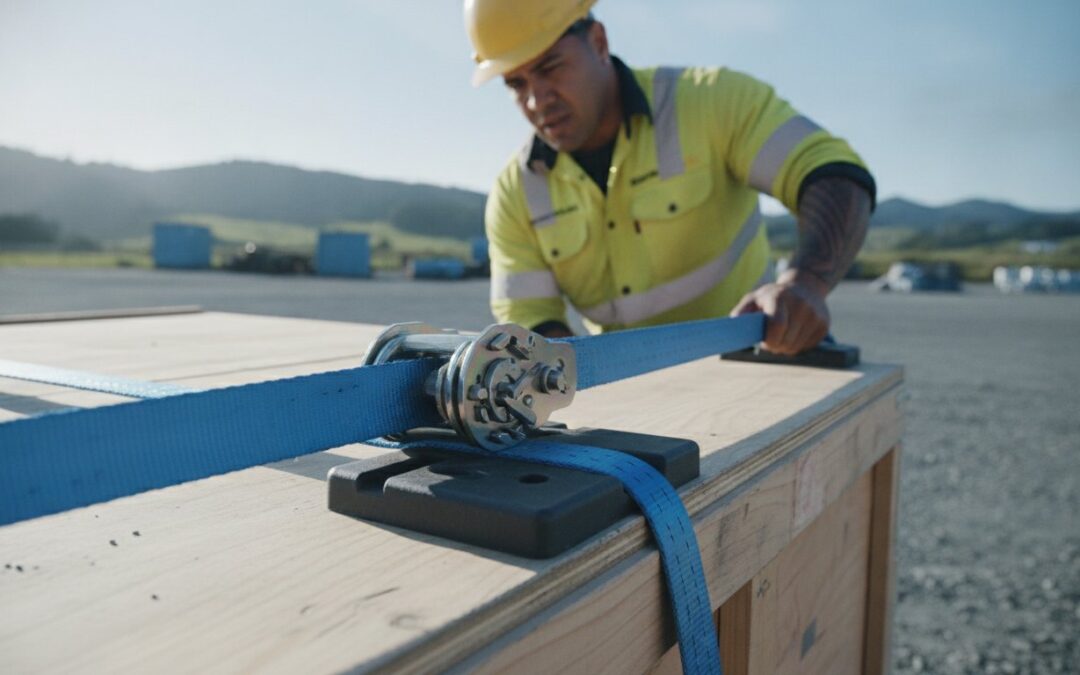
If your current cargo protection strategy relies more on habit than physics, a $10,000 corporate fine from Waka Kotahi is a matter of when, not if. Most transport operators across the country understand that keeping freight stationary is the fundamental goal of every trip. However, the reality of navigating New Zealand’s demanding terrain often exposes the weaknesses in substandard gear. Implementing professional heavy duty load restraint NZ standards is the only way to protect your business from the compounding costs of freight damage claims and failed Certificate of Fitness inspections.
We understand the pressure to maintain tight delivery schedules without compromising on safety or compliance. This guide provides the technical essentials to master heavy-duty load restraint, ensuring your cargo remains secure and your operations align with the 2026 Truck Loading Code. You will learn the specific performance requirements for forward and lateral force, the necessity of durable edge protection, and how to select high-performance hardware that stands up to the rigours of the road. We’ll show you how to achieve zero-damage delivery runs while keeping your gear in top condition for the long haul.
Key Takeaways
- Master the legal “Duty of Care” requirements under Waka Kotahi guidelines to prevent roadside fines and ensure public safety.
- Implement professional heavy duty load restraint NZ standards by integrating high-tension hardware with durable edge protection.
- Optimise cargo security using 1042mm plastic pallet angles to distribute pressure and protect both freight and webbing straps.
- Identify critical decommissioning criteria for your gear to ensure only compliant, high-integrity hardware remains in your fleet.
- Streamline unloading operations with industry-standard tools designed for durability and speed on New Zealand roads.
The Fundamentals of Heavy Duty Load Restraint NZ
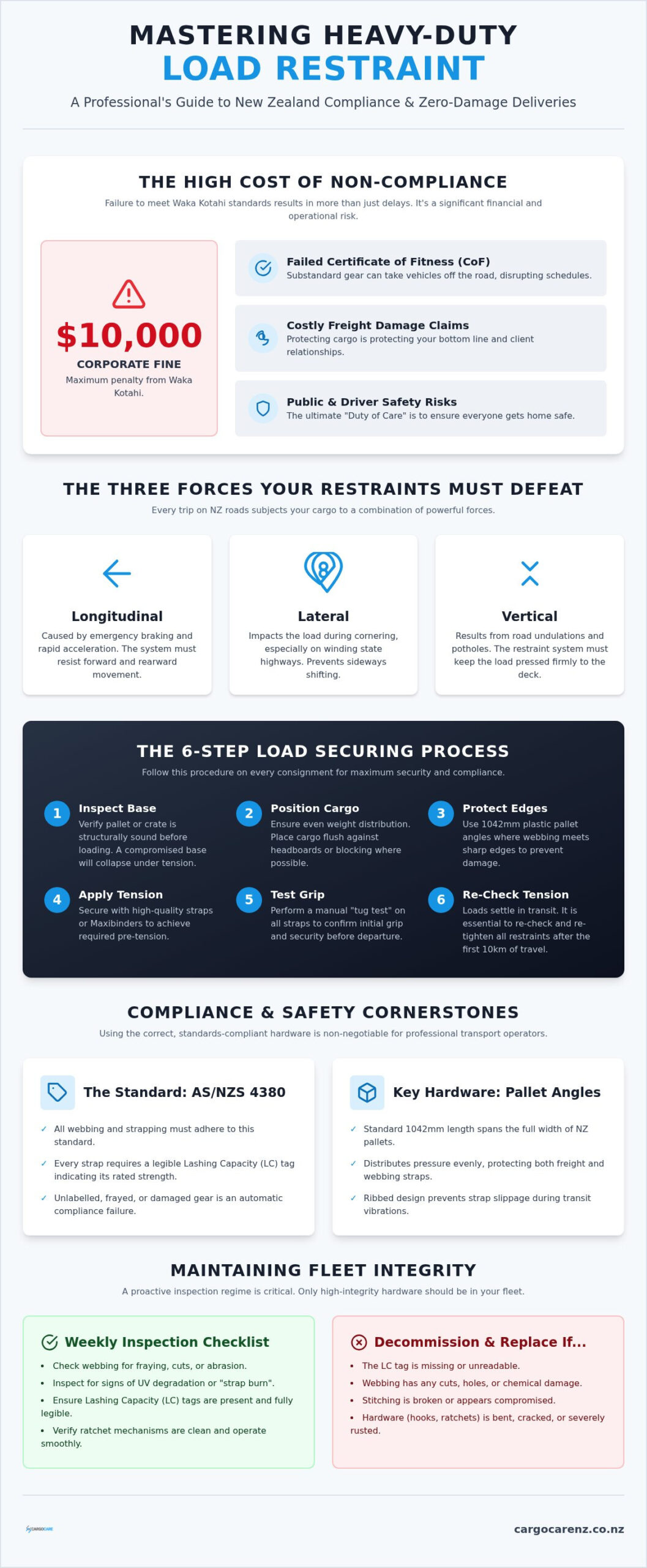
Professional heavy duty load restraint NZ refers to the integrated system of hardware designed to eliminate freight movement during transit. This system is a legal requirement under the Land Transport Rule: Load Restraint. NZ operators hold a strict “Duty of Care” to ensure that every pallet, crate, or machine stays fixed to the deck. Failure to manage this responsibility endangers the public and risks substantial corporate fines. It’s about protecting your driver, your equipment, and the safety of other road users.
To achieve compliance, a restraint system must counter three primary forces. Longitudinal forces occur during emergency braking or rapid acceleration. Lateral forces impact the load during cornering on winding state highways. Vertical forces result from road undulations and potholes common across the local network. Understanding these Fundamentals of load securing is essential for selecting the correct lashing capacity for your fleet. For many transport professionals, Silverback products NZ represent the industry benchmark for hardware that survives these constant operational stresses.
The Role of Cargo Protection Equipment
Hardware like plastic pallet angles serves a dual purpose. It protects the freight from crushing and prevents “strap burn” where high-tension webbing cuts into the load. While basic protection might suffice for light courier work, heavy-duty operations require high-impact polymers and reinforced hardware. Using certified equipment ensures your vehicle passes Certificate of Fitness (CoF) inspections without delays. This distinction between generic gear and heavy-duty hardware is what separates a safe delivery from a costly insurance claim.
NZ Load Securing Standards: AS/NZS 4380
All webbing and strapping utilised in New Zealand should adhere to the AS/NZS 4380:2001 standard. Every strap must feature a legible lashing capacity (LC) tag which indicates its rated strength. Operators must calculate their total LC based on the weight of the load and the required force resistance for forward, rearward, and lateral movement. Any restraint gear that is unlabelled, severely frayed, or structurally compromised constitutes an automatic compliance failure during a roadside enforcement check.
Step-by-Step: How to Organise Your Load for Maximum Security
Before a single strap is thrown, ensure the foundation of your consignment is sound. Conduct a thorough pre-load inspection to verify that the pallet or crate is structurally intact. A compromised base will collapse under the high tension required for heavy duty load restraint NZ compliance, leading to loose straps and potential load shifts. Once verified, position your cargo to maintain an even weight distribution across the vehicle deck, ensuring it sits flush against headboards or blocking where possible.
Proper execution requires following the Official NZ Truck Loading Code, which mandates specific restraint forces for every trip. Position 1042mm plastic pallet angles at every point where webbing meets a sharp cargo edge. Apply tension using high-quality load restraint straps NZ or Maxibinders for heavier consignments. Finish the process with a manual “tug test” to verify initial grip. It’s essential to re-check tension after the first 10 kilometres of travel, as loads naturally settle and compress during the initial stages of transit.
Applying Plastic Pallet Angles Correctly
The 1042mm blue plastic pallet angle is the preferred length for standard New Zealand pallets because it spans the full width of the load. This coverage ensures uniform pressure distribution across the freight. Unlike disposable cardboard protectors that soften in wet weather or crush under high tension, heavy-duty plastic versions offer superior durability for multiple runs. These angles feature a ribbed design that prevents strap slippage, which is a critical safety factor when navigating the vibrations of regional roads. For reliable edge protection, you can view our professional pallet angle range.
Securing Heavy Loads with Maxibinders
For loads requiring higher pre-tension than a standard ratchet handle can provide, the Maxibinder is the industry standard. It offers a significant mechanical advantage, allowing drivers to achieve high-tension security without excessive physical strain. It’s vital to match the binder size to the specific lashing capacity of your chain or strap. The integrated hook and keeper system is essential for maintaining a secure grip on anchor points, even when traversing uneven terrain that causes the vehicle chassis to flex.
Ensuring Long-Term Integrity and Supply Chain Security
Maintaining a fleet’s heavy duty load restraint NZ inventory requires a proactive inspection regime. Webbing straps are particularly vulnerable to UV degradation and abrasion from rough pallet edges. Conduct weekly inspections to identify fraying, “strap burn,” or compromised lashing capacity tags. Ratchet mechanisms must be lubricated regularly to prevent seizing and ensure smooth tensioning. Any hardware that shows signs of structural fatigue, such as bent handles or stripped gears, must be removed from service immediately to prevent operational failure.
Decommissioning criteria for plastic pallet angles are equally specific. While heavy-duty polymers are designed for longevity, they must be replaced if they show deep stress whitening, cracks, or significant warping. Using damaged edge protection compromises the tension distribution of your straps, which can lead to load instability during transit. Investing in the Silverback standard for your fleet typically reduces the total cost of ownership, as these components are engineered to last 3 to 4 times longer than generic alternatives on demanding New Zealand routes.
Tamper-Evident Solutions for Freight Security
The final stage of cargo protection involves securing the container or trailer doors. Integrating ISO 17712 compliant bolt seals NZ ensures the integrity of the supply chain from the point of origin to the receiver. These seals provide a visible barrier against unauthorised access and contamination, which is critical for high-value or sensitive consignments. To maintain operational speed at the destination, the Phoenix cordless bolt seal cutter 18V allows for rapid and safe removal, eliminating the risks and physical strain associated with manual bolt cutters.
Quick Reference: Essential NZ Load Restraint Hardware
Ensure your drivers have access to a complete kit of compliant hardware before every run. This checklist covers the basics for most heavy-duty transport requirements:
- 1042mm Blue Plastic Pallet Angles: For consistent edge protection and uniform tension distribution across the load.
- Maxibinders: For high-tension chain or strap applications on heavy machinery and industrial loads.
- Ratchet Tie Downs: Specifically those equipped with a hook and keeper for secure anchoring on uneven terrain.
- Dangerous Goods Labels: Mandatory markers for any vehicle transporting hazardous materials.
Following these maintenance and security protocols guarantees that your restraint system remains effective throughout its service life. To upgrade your fleet with the latest industry-standard hardware, you can view the full range of heavy-duty load restraint gear at CargoCare NZ.
Optimising Your Fleet for Compliance and Performance
Mastering heavy duty load restraint NZ standards ensures your operations remain profitable and fully compliant with the latest Waka Kotahi enforcement protocols. By prioritising the “Silverback standard” for hardware, you protect your freight from the intense lateral and longitudinal forces unique to New Zealand’s geography. We’ve established that high-performance gear, such as the industry-standard 1042mm plastic pallet angles and Maxibinders, is essential for maintaining strap tension and cargo integrity over long distances.
CargoCare NZ is the official New Zealand distributor of Silverback products. We maintain a comprehensive stock of ruggedised hardware specifically designed for our local road conditions. From ratchet tie downs with hook and keeper to tamper-evident bolt seals, our range ensures your supply chain remains secure and your vehicles pass every CoF inspection. Secure your next load with professional-grade restraint gear from CargoCare NZ. Investing in durable, certified equipment is a commitment to operational excellence and the safety of every driver on the road.
Frequently Asked Questions
What is the most essential piece of heavy-duty load restraint for NZ long-haul transport?
High-tension ratchet tie downs equipped with a hook and keeper are the most essential hardware for long-haul transport in New Zealand. These tools provide the necessary lashing capacity to secure heavy freight against the constant longitudinal and lateral forces encountered on regional highways. Pairing these straps with 1042mm plastic pallet angles ensures even tension distribution and protects the webbing from abrasive edges during extended transit.
How many pallet angles do I need per load to stay compliant with Waka Kotahi rules?
You must use a pallet angle at every point where a tie-down strap crosses a cargo edge to ensure the load is fully restrained. For a standard palletised load, this typically requires two 1042mm plastic pallet angles per strap to protect the top edges on both sides. Using sufficient angles prevents strap failure and load shifting, which are the primary factors Waka Kotahi enforcement officers look for during roadside inspections.
Can I reuse plastic pallet angles or are they considered single-use items?
Heavy-duty plastic pallet angles are designed for multiple uses and are not single-use items. Unlike disposable cardboard alternatives, these high-impact polymer protectors resist moisture and maintain their structural integrity over dozens of delivery runs. You must inspect them regularly for stress whitening, deep cracks, or warping. Once these signs of fatigue appear, the gear must be replaced to ensure your heavy duty load restraint NZ system remains compliant.
What is the difference between a standard ratchet strap and a Maxibinder?
The primary difference lies in the mechanical advantage and the level of pre-tension the tool can achieve. A standard ratchet tie down is suitable for general palletised freight and lighter commercial loads. A Maxibinder is a heavy-duty tensioning device used with chains or high-capacity webbing for industrial machinery and oversized cargo. It provides superior leverage, allowing the operator to apply significantly higher tension with less physical effort than a standard ratchet handle.
How do I know if my cargo protection equipment meets NZTA standards?
Compliance is verified by checking the lashing capacity (LC) tags permanently attached to the equipment. For webbing and straps, the hardware must meet the AS/NZS 4380 standard, which should be clearly printed on the tag. If the tag is missing, illegible, or the equipment does not reference a recognised New Zealand or Australian standard, it will likely result in an automatic failure during a Certificate of Fitness (CoF) inspection.
What equipment is needed for securing loose loads in a utility vehicle or trailer?
A cargo safety net is the most effective solution for securing loose or irregular items in a utility vehicle or trailer. These nets provide a comprehensive cover that prevents smaller items from becoming projectiles during sudden braking or cornering. For larger items within the tray, use rated ratchet tie downs to anchor the load directly to the vehicle’s internal lashing points. Relying on friction or lightweight ropes is insufficient under the current Truck Loading Code.
Article by
Steve O'Malley