
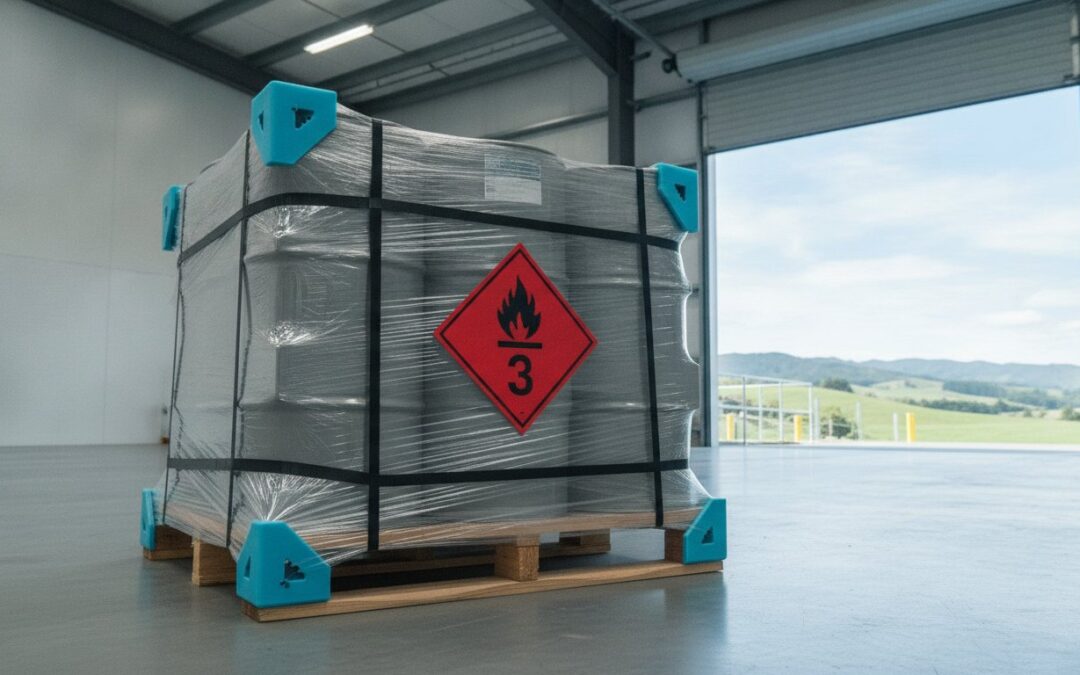
A single peeling label on a drum of flammable liquid can cost your transport operation thousands in fines before the vehicle even leaves the yard. Ensuring your Class 3 hazardous goods labels NZ are compliant and durable is a constant pressure in the rigorous New Zealand transport sector. You know that a label is more than a simple sticker. It’s a critical legal safeguard for your drivers, the public, and your bottom line.
This guide provides the technical clarity needed to master flammable liquid labelling requirements to ensure your cargo meets every safety standard. We’ll examine durability requirements for local weather conditions, upcoming regulatory updates for 2026, and how industrial-grade Silverback labels protect your operational continuity. You’ll gain a streamlined process for hazardous cargo transport that eliminates the risk of heavy penalties while keeping your fleet moving safely.
Key Takeaways
- Review the legal framework of the Land Transport Rule: Dangerous Goods 2005 and prepare for the 2026 regulatory updates affecting flammable liquid transport.
- Learn the precise technical requirements for Class 3 hazardous goods labels NZ, including the mandatory 100mm x 100mm sizing and high-contrast colour standards.
- Discover why weather-resistant, self-adhesive vinyl Silverback labels are the industry benchmark for durability in rugged transport environments.
- Understand how to combine compliant labelling with load restraint tools like plastic pallet angles to ensure total cargo safety and avoid heavy compliance fines.
Understanding Class 3 Flammable Liquid Labels and NZ Regulations
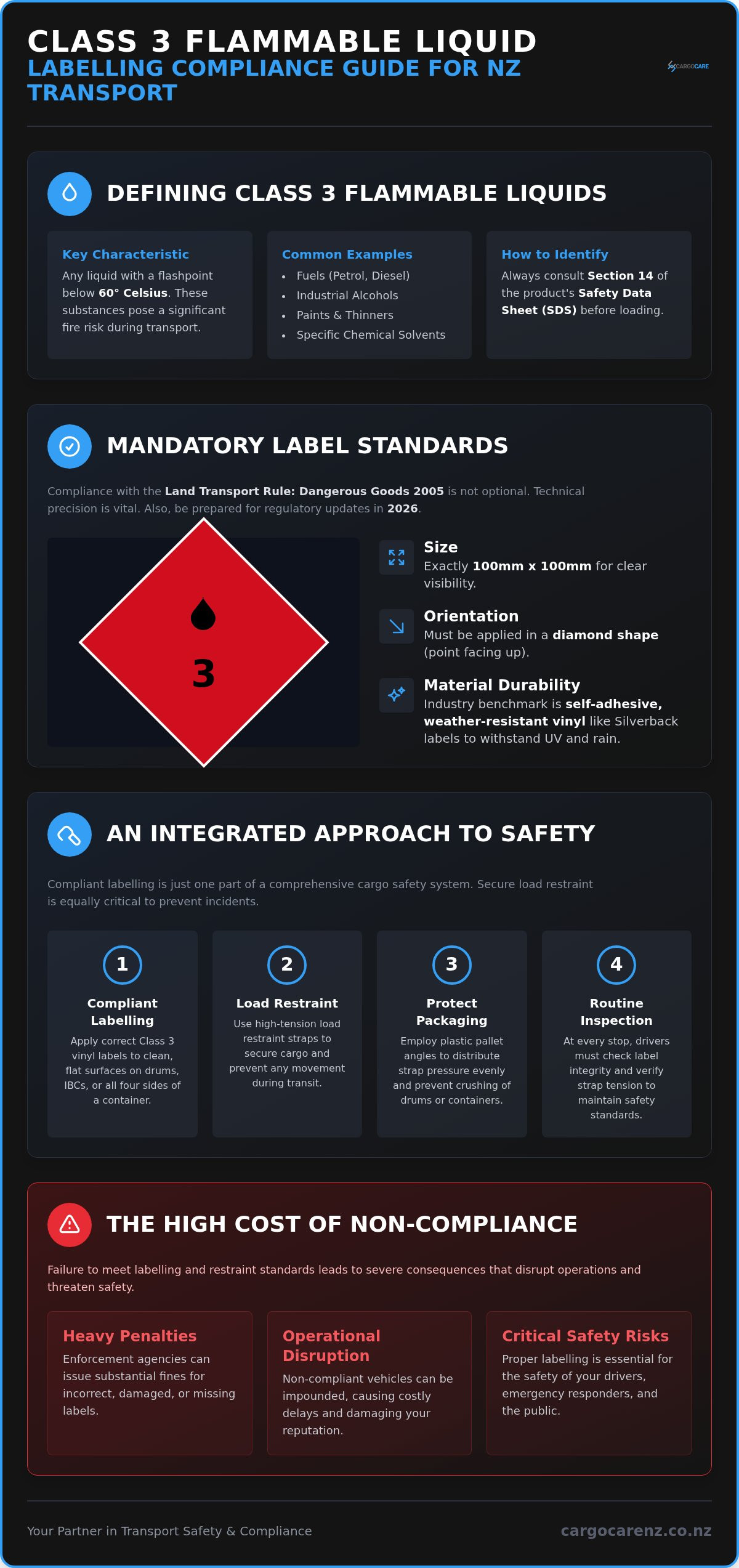
Class 3 hazardous goods include liquids with a flashpoint below 60 degrees Celsius. These substances present significant fire risks during transport and storage. Under the Land Transport Rule: Dangerous Goods 2005, professional identification is mandatory across road, rail, and sea freight. Understanding Class 3 Flammable Liquids is fundamental for ensuring compliance with New Zealand safety standards. Using the correct Class 3 hazardous goods labels NZ is a legal requirement that protects your operation from liability.
Compliance isn’t optional. Failure to adhere to these regulations leads to severe operational disruption. Enforcement agencies can issue substantial fines or impound vehicles found with incorrect, damaged, or missing labels. These measures exist to mitigate safety risks for emergency responders and the general public. As the industry prepares for the 2026 regulatory updates, maintaining high standards for dangerous goods labelling remains a non-negotiable aspect of professional transport logistics.
Identifying Class 3.0 Flammable Substances for Transport
Many common industrial products fall under this classification. In the New Zealand logistics sector, this typically includes fuels, industrial alcohols, paints, and specific chemical solvents. Every driver and dispatcher must consult the Safety Data Sheet (SDS) before loading cargo. Section 14 of the SDS identifies the transport classification. If the document lists a flashpoint below 60 degrees Celsius, the cargo requires high-visibility Class 3 hazardous goods labels NZ. This simple verification process ensures that cargo is handled with the correct safety protocols from departure to destination.
Compliance Standards for Labelling and Transporting Dangerous Goods
Technical precision is vital for regulatory compliance. Standard Class 3 hazardous goods labels NZ must measure exactly 100mm x 100mm and feature sharp colour contrast to ensure legibility from a distance. Material durability is the most frequent point of failure in the New Zealand transport sector. Self-adhesive, weather-resistant vinyl is the essential industry benchmark because it withstands high UV levels and heavy rainfall without degrading. Choosing inferior paper-based stickers leads to non-compliance as labels fade or peel during transit.
Silverback labels offer a distinct advantage for long-haul operations. These high-visibility markers are engineered for the mechanical stress and environmental exposure typical of local freight routes. For maximum adhesion, personnel must clean all application surfaces to remove grease, dust, and moisture. Adhering to the NZ Dangerous Goods Regulations ensures your vehicle remains compliant throughout its journey. Integrating professional Dangerous Goods Labels into your safety protocol reduces the risk of costly delays.
Proper Label Placement and Application on Freight
Correct positioning is as important as the label itself. For UN-approved drums and Intermediate Bulk Containers (IBCs), labels must be fixed to a flat, vertical surface that remains visible during loading. Shipping containers require a more comprehensive approach; placards must be visible from all four sides to assist emergency services. This redundancy is a core safety requirement for sea and road freight. All Class 3 labels must be applied in a diamond orientation with the point facing upwards to meet legal standards.
Integrating Labelling with Comprehensive Load Restraint Systems
Effective dangerous goods management requires more than just correct identification. While Class 3 hazardous goods labels NZ provide the necessary warning for flammable liquids, they only form half of the safety equation. Secure load restraint is equally critical. If a drum shifts or leaks due to poor securing, the label’s warning becomes a reactive tool rather than a preventative one. Adherence to the Land Transport Rule: Dangerous Goods 2005 necessitates both clear marking and stable cargo to prevent environmental contamination or fire incidents.
Securing flammable liquid drums requires high-tension load restraint straps NZ. However, excessive strap pressure can crush or deform plastic DG containers, potentially compromising the seal. Using plastic pallet angles NZ distributes this force evenly across the load. This prevents structural damage to the packaging and ensures that Class 3 hazardous goods labels NZ remain flat and legible. CargoCare NZ provides these professional components as part of a complete safety kit, supporting national logistics compliance through durable Silverback hardware.
Maintaining Safety Standards with Professional Cargo Equipment
Heavy-duty hazardous loads require robust mechanical assistance. Combining Silverback labels with industrial Maxibinders ensures that flammable liquid cargo remains immobile under extreme road conditions. Drivers must conduct routine inspections at every stop. This process involves checking label integrity and verifying strap tension. A comprehensive approach to transport safety reduces the risk of compliance failures and ensures operational continuity for professional fleets. It’s a fundamental requirement for any serious transport operation.
Securing Your Future in Hazardous Goods Transport
Mastering New Zealand’s dangerous goods regulations requires a disciplined approach to both identification and physical security. We’ve established that high-visibility Class 3 hazardous goods labels NZ are essential for legal compliance and operational safety. Combining these durable vinyl markers with industrial load restraint hardware ensures your cargo survives the rigours of the road without incident or fine. Professionalism in these details protects your drivers, your fleet, and your commercial reputation.
CargoCare NZ is the official Silverback NZ distributor, providing national shipping for ISO-standard safety equipment. We supply everything from weather-resistant labelling to heavy-duty binders to keep your operation moving. View our range of Class 3 labels and load restraint gear to upgrade your safety kit today. Implementing these standards now will streamline your compliance processes and ensure long-term success in the competitive transport sector.
Frequently Asked Questions
What are the size requirements for Class 3 hazardous goods labels in NZ?
Standard Class 3 hazardous goods labels NZ must measure exactly 100mm by 100mm to comply with national transport rules. This dimension ensures the hazard symbol and classification number remain legible for emergency services. While smaller packages may occasionally use reduced-size labels under specific exemptions, the 100mm square remains the mandatory industrial benchmark for drums, IBCs, and bulk freight containers across the country.
Can I use a printed paper label for transporting flammable liquids?
Paper labels are generally unsuitable for dangerous goods transport because they lack the necessary weather resistance. New Zealand’s high UV levels and heavy rainfall can cause paper to peel, tear, or fade, resulting in non-compliance. Regulatory standards require labels to be durable and self-adhesive. Silverback vinyl labels are the preferred choice as they remain intact throughout the entire journey, preventing costly delays and safety risks.
Do I need Class 3 labels on all sides of a shipping container?
Large freight containers and tanks require Class 3 placards on all four sides to ensure maximum visibility from any approach angle. This redundancy is a critical safety requirement for emergency responders who need to identify flammable hazards quickly during an incident. Each placard must be clean, unobstructed, and securely attached. Failure to label all four sides constitutes a breach of the Land Transport Rule: Dangerous Goods 2005.
What is the difference between Class 3.0 and other flammable hazard classes?
Class 3.0 specifically identifies flammable liquids with a flashpoint below 60 degrees Celsius, such as petrol, alcohols, and certain paints. This differs from Class 4, which covers flammable solids, or Class 2.1, which applies to flammable gases. Correct identification is vital because each class requires different handling and fire suppression techniques. Always verify the classification in section 14 of the Safety Data Sheet before applying Class 3 hazardous goods labels NZ.

Article by
Steve O'Malley