
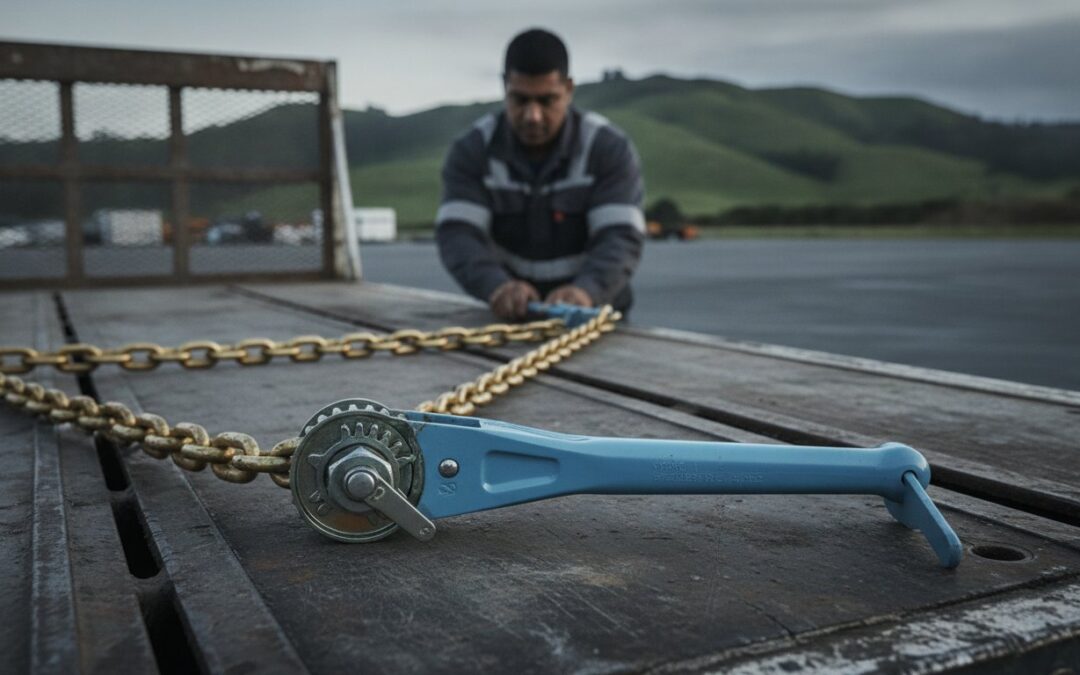
How much is a driver’s safety worth to your transport operation? Traditional lever binders are notorious for dangerous kickback injuries, yet many operators still rely on them for securing heavy cargo. Integrating the Maxibinder load binder NZ into your fleet eliminates these risks while ensuring your team stays compliant with NZTA load restraint codes. You likely already know that gear failure or a single workplace injury can halt productivity and lead to serious operational setbacks.
This guide demonstrates how the Maxibinder addresses these professional challenges by combining superior ergonomics with heavy-duty durability. By upgrading your hardware, you will reduce the risk of strain and ensure your loads remain secure in the harshest New Zealand environments. We will explore the technical specifications, compliance benefits, and why this tool is now the industry-standard choice for professional transport operators nationwide.
Key Takeaways
- Identify how the geared handle design prevents the sudden kickback associated with traditional lever binders, protecting operators from common lashing injuries.
- Review the 3800kg lashing capacity of the 8mm model to ensure your load restraint configurations meet rigorous NZTA compliance requirements.
- Evaluate the benefits of high-tensile forged steel and gold passivated finishes for ensuring gear durability in demanding kiwi transport conditions.
- Master the correct tensioning and maintenance procedures for the Maxibinder load binder NZ to ensure full compliance with national transport standards.
Understanding the Maxibinder Advantage for NZ Transport
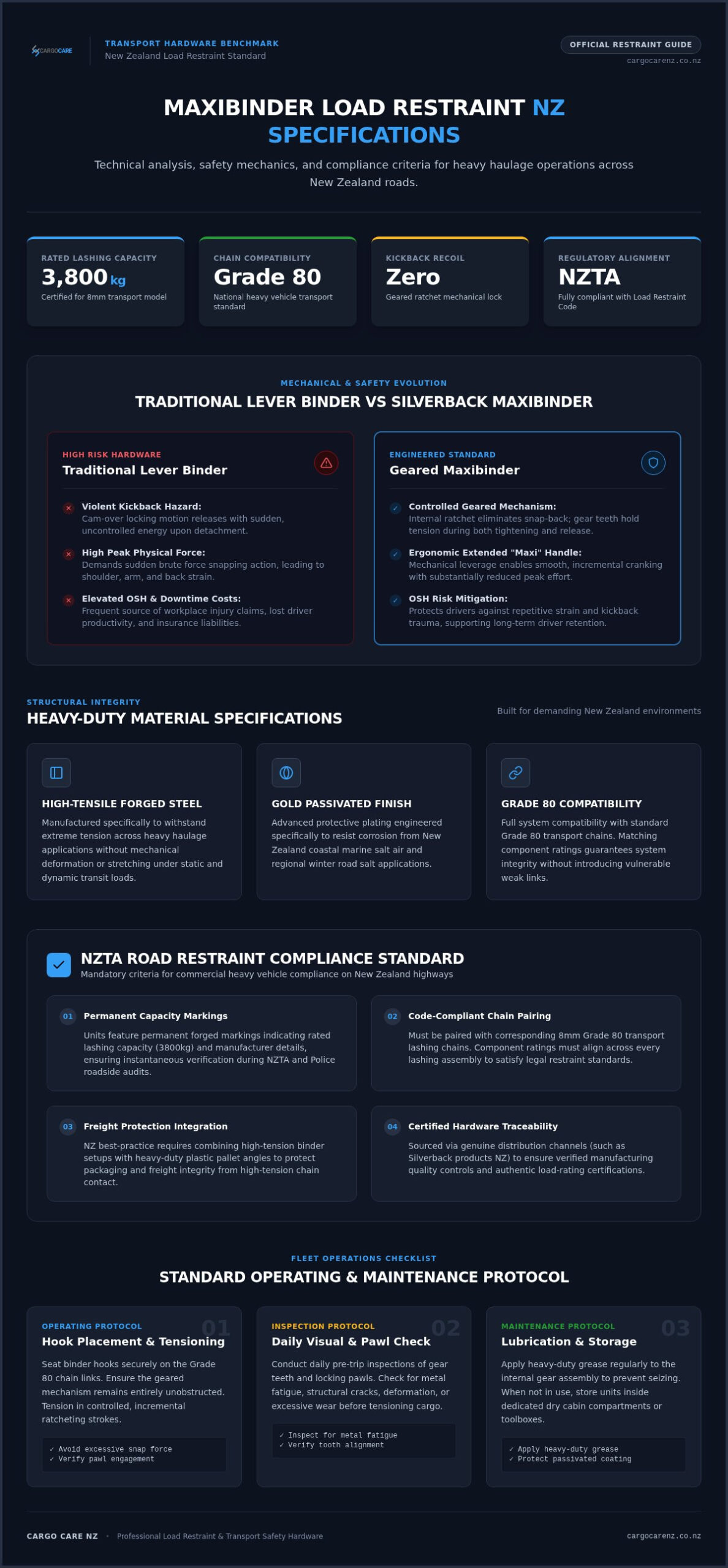
The Maxibinder load binder NZ represents a critical technical evolution in cargo restraint. It is a high-tensile, geared ratchet tool engineered for superior lashing capacity and operator protection. Unlike traditional lever binders that rely on a cam-over action, the Maxibinder uses a mechanical gear system to apply tension. This design choice directly addresses the primary safety risk in heavy transport: the dangerous kickback that occurs during the release of traditional hardware.
Transport companies across New Zealand are increasingly adopting this hardware to mitigate workplace health and safety risks. OSH-related injuries from lever binder incidents often lead to operational downtime and increased insurance liabilities. By implementing a geared system, fleets maintain full compliance with NZTA standards while reducing the physical toll on their drivers. The shift from manual force to mechanical advantage ensures that load securing remains a controlled, predictable process.
Ergonomics and Safety in Load Restraint
The internal ratchet mechanism allows for precise tensioning without the need for excessive physical force. Operators can achieve the required lashing capacity through a smooth, incremental cranking motion. This is a significant departure from standard binders which require a sudden, high-impact “snap” to lock into place. This traditional method frequently results in shoulder and back strain, particularly when working in wet or cramped conditions.
- Operator Effort: The Silverback Maxibinder reduces the peak physical force required to secure a load compared to standard lever binders.
- Control: The geared system prevents the handle from springing back under tension, providing a safer environment during both tightening and release.
The extended “Maxi” handle provides the necessary leverage to secure multiple heavy loads daily without inducing repetitive strain fatigue for long-haul drivers. This ergonomic advantage is a technical specification that directly supports fleet longevity and driver retention.
Technical Specifications and NZ Compliance Standards
The Maxibinder load binder NZ is built for industrial applications where structural integrity is mandatory. For the 8mm model, the lashing capacity is rated at 3800kg, providing a high safety margin for heavy haulage across the country. Each unit is manufactured from high-tensile forged steel to withstand extreme tension without deformation. To combat the corrosive effects of New Zealand’s coastal roads and winter salt applications, these binders feature a gold passivated finish. This protective coating ensures the gear remains functional and easy to operate over an extended service life, even in the most demanding kiwi environments.
Compatibility with existing equipment is a priority for fleet managers. These binders integrate seamlessly with Grade 80 transport chains, which are the standard for heavy vehicle restraint in the local industry. Ensuring your hardware matches the grade of your chain is essential for maintaining the rated strength of the entire lashing system. Using mismatched components can lead to catastrophic failure under load, so verifying the technical rating of every link in the chain is a standard professional requirement.
Meeting NZTA Load Restraint Requirements
Adherence to the official NZ Load Restraint Code is a legal requirement for all heavy vehicle operators. The Maxibinder assists in this compliance through clear, permanent markings that indicate lashing capacity and manufacturer details. Roadside inspections by NZTA or police officers require these markings to be legible to verify the safety of the load. When selecting equipment, it’s vital to evaluate the specific needs of your cargo, such as deciding between a Maxibinder vs ratchet binder NZ based on the required pre-tension and chain size. You can source these compliant tools through CargoCare NZ to ensure your fleet meets all national safety standards.
Implementing Maxibinders into Your Fleet Operations
Successful implementation of the Maxibinder load binder NZ begins with correct chain placement. Position the hooks securely on the Grade 80 chain, ensuring the geared mechanism remains unobstructed for the operator. Use the ratchet handle to apply tension in controlled, incremental steps. This method allows for precise adjustments that are impossible with traditional lever binders. Sourcing your equipment through an official Silverback products NZ distributor ensures that every unit in your fleet meets genuine quality and safety specifications.
Long-term reliability requires a disciplined approach to maintenance and inspection. Operators should check the gear teeth and pawl daily for any signs of metal fatigue, cracks, or excessive wear. Regular lubrication of the gear mechanism with a suitable heavy-duty grease prevents seizing and ensures a smooth tensioning action. When the binders aren’t in use, store them in a dedicated toolbox or cabin compartment to protect the gold passivated finish from road grime and moisture.
Best Practices for Load Securing and Protection
Enhancing your load restraint system involves more than just the binder itself. Combining your lashing setup with plastic pallet angles NZ prevents the high-tension chain from damaging sensitive freight or cutting into packaging. It’s also essential to train drivers on the specific operational differences of ratchet systems. Unlike lever binders, these tools require a different physical approach to release tension safely. Establishing a documented gear replacement cycle based on usage frequency maintains high fleet-wide safety standards and ensures you always pass roadside audits without delay.
Optimise Your Fleet Safety and Compliance
Adopting the Maxibinder load binder NZ is a practical step toward improving workplace safety and operational efficiency. By moving away from traditional lever binders and utilising industrial-grade forged steel hardware, you effectively eliminate the risk of driver injuries caused by handle kickback. This ergonomic shift ensures your lashing configurations remain compliant with the NZ Load Restraint Code while standing up to the demands of local transport environments. As the official distributor for Silverback products in New Zealand, CargoCare NZ provides the reliable hardware your team needs for secure cargo transport.
Standardising your load restraint equipment around these geared systems protects your people and your cargo. Enquire about Silverback Maxibinders for your fleet today to secure your equipment from a trusted local partner. We look forward to supporting your fleet’s safety requirements.
Frequently Asked Questions
What is the lashing capacity of an 8mm Maxibinder?
The 8mm Maxibinder load binder NZ has a rated lashing capacity of 3800kg. This industrial-grade rating ensures the hardware is suitable for securing heavy loads within the New Zealand transport sector. Each unit is constructed from high-tensile forged steel to maintain this capacity under significant stress. Operators should always verify that the chain used matches this lashing capacity to maintain the integrity of the restraint system.
Are Maxibinders legal for use on NZ roads?
Maxibinders are fully compliant for use on New Zealand roads when used according to the NZTA Load Restraint Code. These tools feature permanent markings indicating their lashing capacity and manufacturer details, which is a mandatory requirement for roadside safety inspections. Using compliant hardware from an official Silverback distributor helps transport companies meet their legal obligations and avoid fines during heavy vehicle audits.
How does a Maxibinder differ from a standard ratchet binder?
The primary difference lies in the ergonomic geared mechanism and the extended handle length. While standard ratchet binders provide basic tensioning, the Maxibinder is engineered to deliver higher lashing capacity with less physical effort from the operator. This design specifically targets the reduction of repetitive strain injuries. The geared system also offers more precise control during the tensioning process compared to common economy-grade alternatives.
Can I use a Maxibinder with Grade 70 or Grade 80 chain?
Maxibinders are specifically designed for use with Grade 80 transport chain, which is the industry standard for heavy-duty lashing. While they can physically hook onto Grade 70 chain, it’s vital to remember that the lashing capacity of the entire system is limited by its weakest component. For professional operations, using Grade 80 chain ensures you maximise the 3800kg rating of your Maxibinder load binder NZ for optimal safety.
Article by
Steve O'Malley