
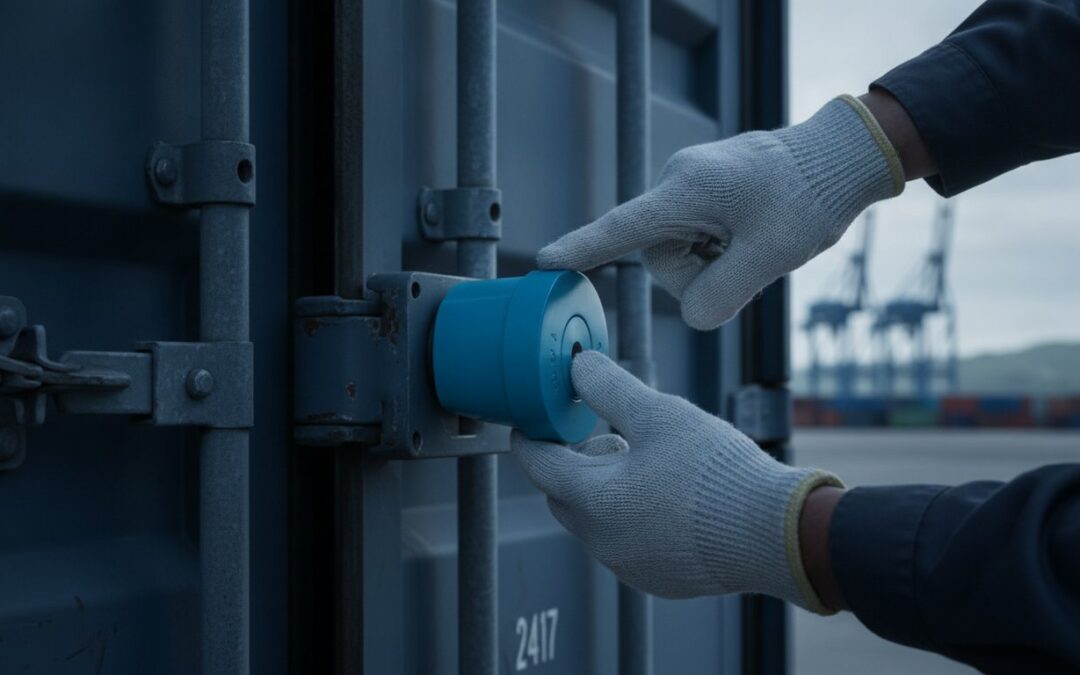
Is your current security protocol a genuine barrier or simply a suggestion to a determined thief? As freight fraud becomes more sophisticated, relying on outdated methods leaves your high-value goods vulnerable to significant financial loss. You understand that a single security breach does more than impact your bottom line; it causes lasting reputational damage with clients who rely on your dependability. Learning how to prevent cargo theft NZ is now a matter of operational survival rather than just a checklist item.
This professional guide provides the essential physical security strategies and hardware protocols required to protect your freight and ensure supply chain integrity. We’ll examine the implementation of tamper-evident technology, the importance of ISO 17712 compliance, and how to maintain efficient unloading processes that don’t compromise the safety of your cargo.
Key Takeaways
- Identify modern vulnerabilities by understanding the shift from opportunistic theft to organised criminal syndicates and fictitious pickup fraud.
- Learn how to prevent cargo theft NZ through a layered security approach using ISO 17712 compliant bolt seals and tamper-evident hardware.
- Establish robust verification protocols, including standardised seal logs and the ‘spin test’, to detect tampering before high-value goods are compromised.
- Optimise operational efficiency without sacrificing security by integrating professional tools like the Phoenix cordless bolt seal cutter into your workflow.
The Evolving Landscape of Cargo Theft in the New Zealand Transport Sector
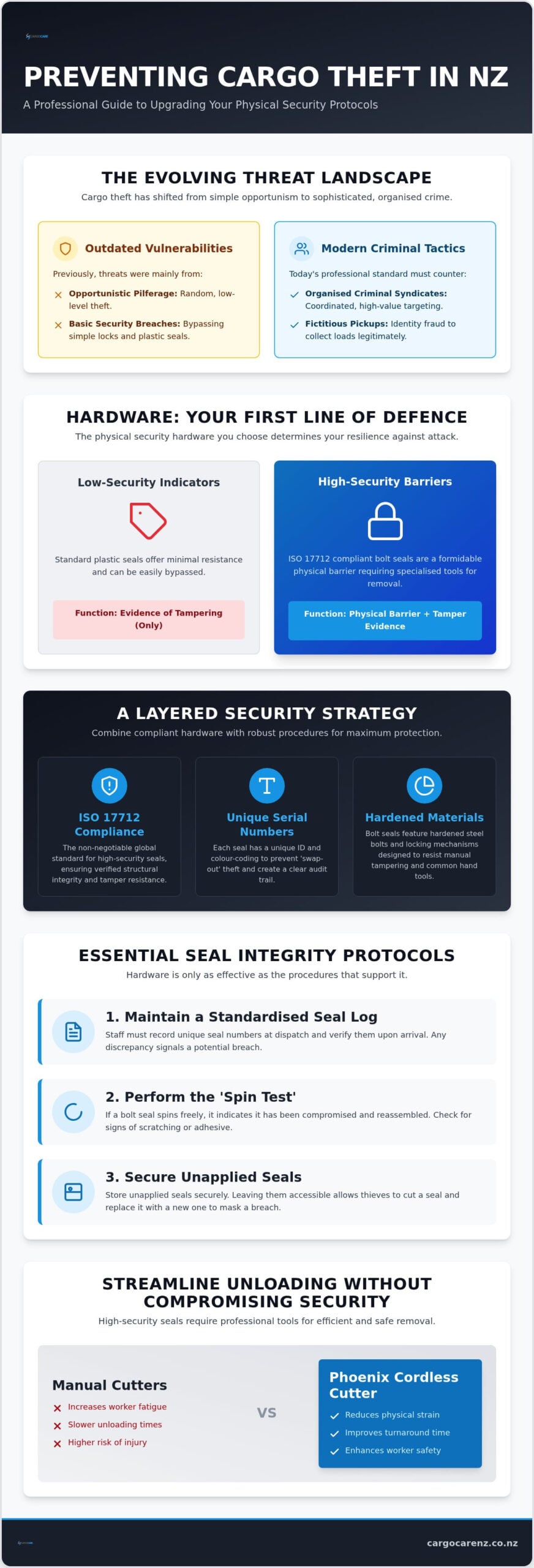
The New Zealand transport sector is witnessing a transition from opportunistic pilferage to sophisticated, organised criminal activity. Criminal syndicates now target high-value freight with precision, often using ‘fictitious pickups’ to bypass traditional gate security. This method involves clever identity fraud, where thieves pose as legitimate drivers to collect loads directly from the dispatch bay. A single breach causes more than just immediate financial loss. It disrupts operational continuity, triggers insurance premium hikes, and damages hard-earned client trust. To address these threats, the professional standard for 2026 has shifted toward a layered security model. This approach moves beyond simple monitoring. It focuses on active physical integrity at every touchpoint. Understanding how to prevent cargo theft NZ requires a rigorous assessment of these modern criminal tactics.
Identifying Vulnerabilities in Your Current Freight Movement
Effective protection starts with a thorough audit of ‘stop-and-drop’ points. These are locations where vehicles are left unattended or transfers occur, representing the highest risk for interference. Many operators still rely on standard plastic seals, which offer minimal resistance to forced entry compared to high-security metal alternatives like Tamper Evident Secure Bolt Seals. While plastic indicators show evidence of tampering, they don’t provide the physical barrier necessary to stop a theft in progress. Supply chain visibility is the strategic combination of real-time digital tracking and consistent physical verification of load integrity at every stage of the journey. Logistics professionals must move away from ‘security by habit’ and toward a protocol defined by robust hardware and documented verification.
Implementing a Layered Physical Security Strategy with High-Spec Hardware
ISO 17712 compliance is a non-negotiable requirement for international and high-value domestic shipping. This standard ensures that seals meet specific structural and tamper-evident criteria, providing a baseline of resistance against unauthorised access. When considering how to prevent cargo theft NZ, implementing high-specification hardware is the most effective deterrent. Tamper-evident security seals provide immediate visual proof of a breach, allowing drivers and receiving staff to identify interference before a load is accepted. Integrating Silverback-standard hardware into your existing load restraint protocols creates a formidable physical barrier that protects both the freight and the driver’s professional integrity.
While basic barrier seals provide a deterrent for low-risk freight, advanced bolt seals are essential for heavy vehicle transport. Bolt seals require specialised tools for removal, whereas basic plastic seals can often be bypassed with standard cutters. Using Silverback security hardware ensures your operations align with global safety benchmarks. This level of physical protection is crucial for maintaining supply chain integrity and reducing the risk of high-value loss during transit. It’s a practical investment that directly addresses the increasing sophistication of modern cargo theft.
Maximising the Utility of Tamper Evident Bolt Seals
Secure bolt seals feature hardened steel bolts and locking mechanisms designed to resist manual tampering and common hand tools. For a complete audit trail, every seal must feature unique serial numbering and distinct colour-coding to prevent ‘swap-out’ theft. These attributes allow for precise tracking from the point of origin to the final destination. For more technical specifications on these devices, consult our tamper evident security seals NZ guide. High-security hardware, such as Tamper Evident Secure Bolt Seals, provides the physical integrity necessary for modern logistics. To maintain operational speed without compromising this security, professionals use the Phoenix Cordless Bolt Seal Cutter 18V for efficient removal at the point of delivery.
Establishing Robust Protocols for Seal Integrity and Compliance
Physical hardware is only effective when supported by rigorous operational procedures. Developing a standardised ‘Seal Log’ for every load is a fundamental step in determining how to prevent cargo theft NZ. Staff must record unique seal numbers at the point of dispatch and verify them immediately upon arrival. Any discrepancy between the log and the physical seal indicates a potential breach. Training personnel to perform the ‘spin test’ is equally critical. If a bolt seal spins freely but shows signs of adhesive or scratching, it’s likely been tampered with and reassembled. Secure storage for unapplied seals is also mandatory. Leaving blank seals unsecured allows unauthorised individuals to replace a cut seal with a new one from the same series, masking a theft until the container is opened.
Streamlining Container Unloading with Professional Tools
High-security seals present a challenge at the destination: they’re designed to be difficult to remove. The Phoenix cordless bolt seal cutter 18V is the industry-standard solution for rapid, safe access to cargo. Transitioning from manual, long-handled cutters to cordless technology significantly reduces worker fatigue and improves unloading turnaround times. This dedicated tool is designed specifically for high-tensile security seals, eliminating the safety risks associated with using makeshift equipment or manual force. By integrating professional cutting hardware, transport businesses maintain the highest security standards while ensuring that unloading processes remain efficient. Establishing these protocols is a key component of how to prevent cargo theft NZ across the supply chain.
Strengthening Your Operational Integrity
Securing freight in a landscape of increasing criminal sophistication requires more than just standard precautions. It demands a shift toward active physical integrity and documented verification at every stage of the supply chain. By prioritising ISO 17712 compliant hardware and establishing strict ‘Seal Log’ protocols, you create a robust barrier against both opportunistic theft and organised fraud. Implementing these professional standards is the most effective way to address how to prevent cargo theft NZ within your transport network.
As the official NZ distributor of Silverback products, we provide the specialist transport security equipment needed to maintain compliance and protect high-value goods. Our range of high-security seals and cordless cutting tools ensures your operations remain both safe and efficient. Secure your supply chain with professional Silverback security hardware from Cargo Care NZ. Protecting your cargo and your professional reputation starts with the right hardware and the right protocols.
Frequently Asked Questions
What is the difference between a tamper-evident seal and a security seal?
A tamper-evident seal is designed primarily to provide visual proof of unauthorised entry, while a security seal, such as a high-security bolt seal, provides a physical barrier. Tamper-evident seals are often plastic and easily cut, whereas security seals require specialised tools for removal. Both are essential components of how to prevent cargo theft NZ by combining visual deterrence with physical resistance.
Are ISO 17712 bolt seals required for all New Zealand freight?
ISO 17712 compliance isn’t legally mandated for all domestic transport, but it’s a professional requirement for international shipping and high-value domestic loads. These seals must pass specific tests for physical strength and tamper resistance. Using compliant Tamper Evident Secure Bolt Seals ensures your operations meet global standards, reducing insurance risks and improving supply chain integrity across the New Zealand transport network.
How do I detect if a bolt seal has been tampered with and replaced?
Detection involves a combination of visual inspection and physical testing. Staff should perform the ‘spin test’ by attempting to rotate the bolt within the locking barrel; a tampered seal often spins too freely or shows adhesive residue. Always compare the physical serial number against the documented ‘Seal Log’ entry. If numbers don’t match exactly, the load has likely been compromised.
Why should I use a cordless bolt seal cutter instead of manual bolt cutters?
The Phoenix Cordless Bolt Seal Cutter 18V provides a safer, faster alternative to manual long-handled cutters. Manual tools increase worker fatigue and the risk of injury when cutting through high-tensile steel bolts. Cordless technology improves unloading efficiency and allows for precise removal without damaging the container. This professional tool is a vital part of how to prevent cargo theft NZ while maintaining operational speed.

Article by
Steve O'Malley