
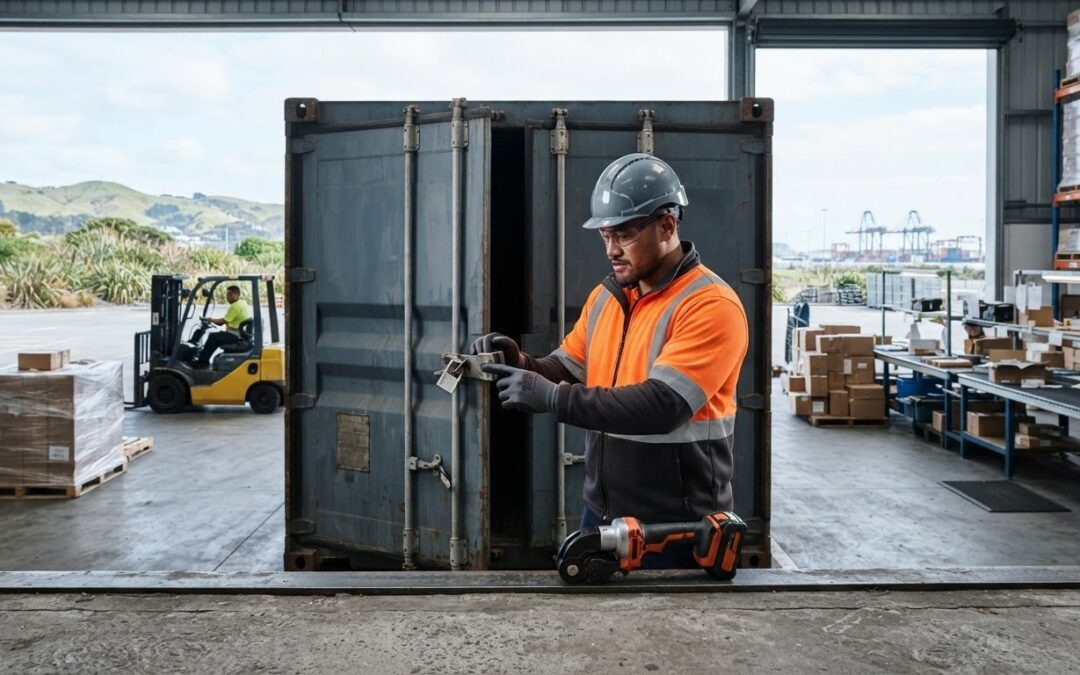
A cutter that can sever metal isn’t automatically the right tool for opening a container. The warehouse container de-vanning cutting tools NZ teams select should match the task: removing a bolt seal at the doors is different from cutting packaging or cargo restraints inside. Using one tool for the wrong job can interrupt unloading or risk damage to freight.
Choose a tool by identifying the seal, how often it needs to be removed and how the cut fits the warehouse workflow, rather than relying on a familiar handle or a cordless label. This guide compares manual and cordless options and explains where the Phoenix Cordless Bolt Seal Cutter 18V fits: removing compatible bolt seals before container access. It also covers why seal-cutting equipment shouldn’t be assumed suitable for cargo materials.
Key Takeaways
- Identify whether the cut is for a container security seal or a separate warehouse task.
- Compare warehouse container de-vanning cutting tools NZ options by seal compatibility, power source, handling and expected work volume.
- Use manufacturer documentation to establish which seals a tool can cut and what instructions apply.
- Use the Phoenix Cordless Bolt Seal Cutter 18V for the seal-removal step, then keep cargo and packaging tasks separate in the workflow.
Warehouse container de-vanning cutting tools NZ: identify the cutting task first
De-vanning is the unloading of cargo from a shipping container. Removing the security seal happens before access and unloading, so treat it as a separate task. Choosing a tool for the wrong job can create unnecessary risk around freight.
A bolt seal cutter is for removing bolt seals that the manufacturer identifies as compatible. It isn’t a general-purpose cutter for freight, packaging or cargo restraints.
What does a cutting tool do before a container is de-vanned?
Before opening, staff inspect the seal and compare its type with the tool’s stated use. A bolt cutter is a category of tool, but the name alone doesn’t establish whether it suits a particular seal. Follow the manufacturer’s compatibility and operating guidance. Once the seal is removed, proceed with container access under the site’s established workflow.
- Inspect and identify the seal before selecting a cutter.
- Check the tool’s manufacturer guidance for compatibility with that seal.
- Remove the seal as instructed, then proceed with container access and unloading.
Keep the work areas and tools distinct. Opening a sealed container is not the same as cutting wrap, strapping or other packaging, and neither task is the same as cutting a cargo restraint. Different materials and tasks can call for different tools and handling methods. Don’t assume a seal cutter is suitable for materials encountered inside the container.
When assessing warehouse container de-vanning cutting tools NZ, start with the seal-removal requirement, then assess packaging and freight-handling needs separately. Matching each tool to its intended task helps teams avoid unsuitable cuts around cargo and keeps the opening step clear in the unloading sequence.
How to choose warehouse container de-vanning cutting tools in New Zealand
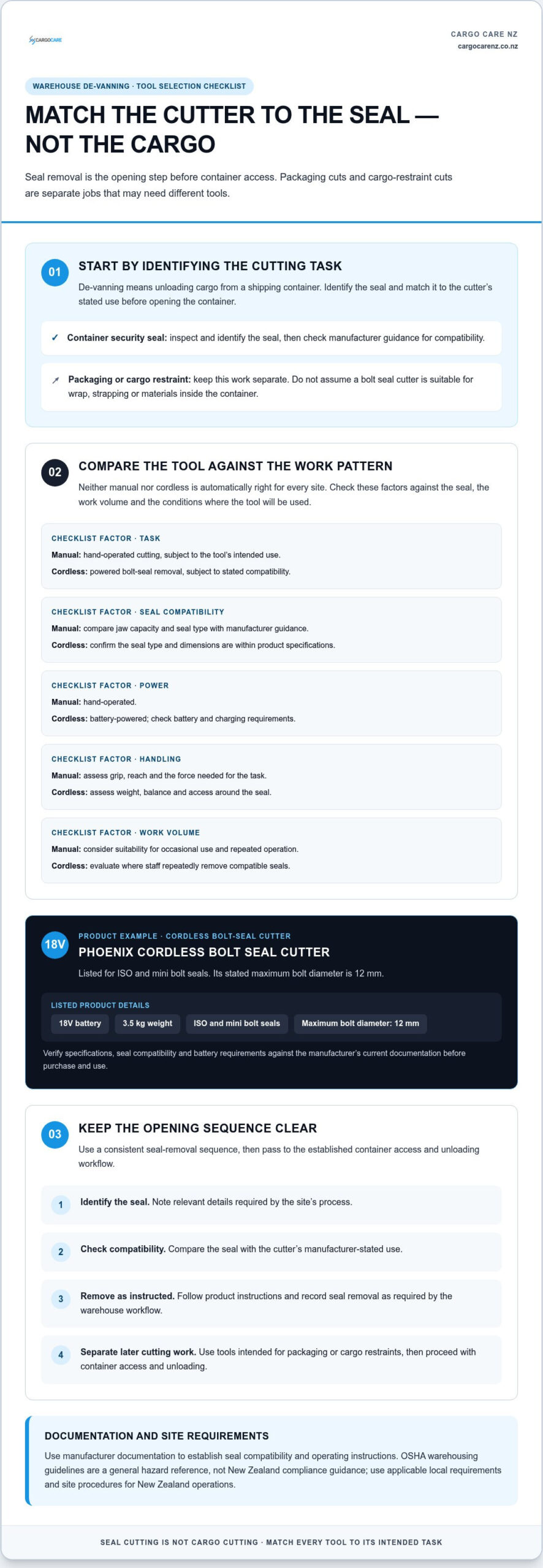
Compare tools against the seal and the work pattern, not just the purchase format. The Phoenix Cordless Bolt Seal Cutter 18V is listed for ISO and mini bolt seals, with a stated maximum bolt diameter of 12mm. Check the manufacturer’s current documentation for compatibility with the seals in your operation and for operating instructions.
| Decision factor | Manual bolt cutter | Cordless bolt seal cutter |
|---|---|---|
| Task | Manual cutting, subject to the tool’s intended use. | Powered bolt-seal removal, subject to stated compatibility. |
| Seal compatibility | Compare jaw capacity and seal type with manufacturer guidance. | Confirm the seal type and dimensions are within product specifications. |
| Power source | Hand-operated. | Battery-powered; check battery and charging requirements. |
| Handling | Assess grip, reach and force needed for the task. | Assess weight, balance and access around the seal. |
| Work volume | Consider how the tool suits occasional use and repeated operation. | Evaluate where staff repeatedly remove compatible seals. |
Manual or cordless bolt seal cutter: which suits the workflow?
A manual cutter uses hand force; a cordless model uses a powered cutting mechanism. Neither format is automatically right for every site. Consider how often seals are removed, where the tool will be used and how it can be handled in that setting. The Phoenix product information also lists a 3.5kg weight and an 18V battery. Verify these details and any battery requirements against current manufacturer documentation before purchase.
Assess handling alongside the broader warehouse hazards. OSHA warehousing safety guidelines offer a general hazard reference, not New Zealand compliance guidance. For New Zealand operations, use applicable local requirements and site procedures.
Selection rule: Match the cutter to the seal type first, then weigh removal frequency and worksite conditions. For a bolt-seal option, include the Phoenix Cordless Bolt Seal Cutter 18V in your comparison.
Using the Phoenix Cordless Bolt Seal Cutter 18V in a de-vanning workflow
Seal removal is the opening step, not a cargo-cutting operation. After staff identify and remove the seal, container access can proceed under the warehouse’s established unloading process. Keep packaging removal and cargo-restraint cutting separate, using tools intended for those materials rather than assuming a bolt seal cutter is suitable.
Where a cordless bolt seal cutter fits into container opening
A cordless cutter can suit workflows where teams regularly remove compatible bolt seals. The Phoenix Cordless Bolt Seal Cutter 18V is designed for ISO and mini bolt seals. Check the manufacturer’s current guidance against the seal type in use and follow the product instructions. CargoCare NZ also supplies tamper-evident security seals and secure bolt seals, so distinguish general security seals from bolt seals when planning the opening workflow.
Use a consistent sequence:
- Identify the seal and note any relevant details required by the site’s process.
- Check the seal against the cutter’s stated compatibility before use.
- Operate the cutter according to its product instructions, then record seal removal as required by the warehouse workflow.
- Keep any later packaging or restraint cutting separate, using tools intended for those tasks.
This separation helps teams choose warehouse container de-vanning cutting tools NZ operations can use for the right job, without treating one cutter as a solution for every material encountered during unloading. For ISO 17712 seal procedures, follow the applicable seal and site documentation. The cutter’s suitability still depends on its manufacturer-stated compatibility.
To review the relevant equipment and seal categories, view CargoCare NZ’s product range.
Set a clear standard for your container-opening workflow
Use your next purchasing review to define a consistent seal-removal process for each warehouse team. Record the seal types encountered, the tool selected for each and where responsibility passes from opening the container to unloading cargo. This gives staff a practical reference and helps keep seal cutting separate from packaging or restraint work.
For operations assessing a cordless option, the Phoenix Cordless Bolt Seal Cutter 18V is part of Cargo Care NZ’s product range, alongside tamper-evident security seals and secure bolt seals. Match the cutter to the seal using manufacturer guidance, then set out the process clearly for the people using it. A considered choice of warehouse container de-vanning cutting tools NZ teams can apply consistently helps organise the opening workflow.
View Cargo Care NZ’s product range to compare the bolt seal cutter and related security products for your operation.
Frequently Asked Questions
Can a bolt seal cutter cut any container seal?
No. Seal construction and cutter specifications differ, so don’t assume a tool will suit every seal. Check the manufacturer’s stated compatibility for the seal type and dimensions before use. This matters when choosing warehouse container de-vanning cutting tools NZ teams rely on: compatibility with a bolt seal doesn’t establish suitability for cable seals, straps, packaging or other materials.
Should warehouse staff cut cargo straps with a bolt seal cutter?
No, not unless the manufacturer explicitly states that the cutter is suitable for that material and task. A strap under tension presents a different cutting situation from a bolt seal. Select equipment for the specific restraint and follow site procedures. Using a tool outside its intended purpose can lead to misuse or unintended damage to cargo.
What should a warehouse record when removing a container security seal?
Follow the site’s freight-security procedure. Where its process calls for it, record the seal identifier, container reference, removal time and staff member responsible. These details can support internal traceability if a seal number needs to be reconciled later. The fields aren’t a universal legal checklist; recordkeeping obligations depend on the operation and applicable requirements.

Article by
Steve O'Malley