
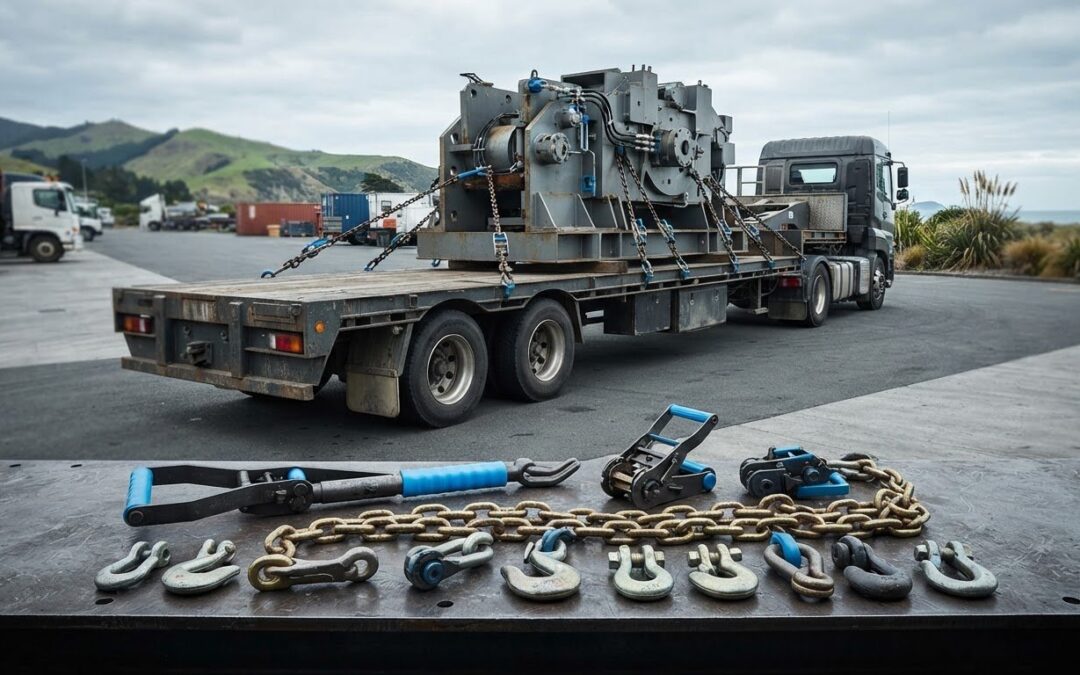
The best over-centre binder alternative may not be another binder at all. Choosing an over-centre binder alternative NZ operators can use starts with the load and the complete restraint setup, not the product name. A clear comparison matters when chain size, end fittings and operating conditions already shape the job.
This guide compares practical binder options, including the Maxibinder, and explains how their operation differs. It also sets out what to check before choosing: rated capacity, chain and fitting compatibility, and whether the complete system suits the load. Use these checks to narrow down the equipment that fits the task.
Key Takeaways
- Compare binder options by how they operate and suit the restraint task, not by product name alone.
- When comparing an over-centre binder alternative in NZ, check rated capacity alongside chain and fitting compatibility.
- Match verified equipment ratings to the load restraint plan. Appearance alone doesn’t indicate capacity.
- Assess the Maxibinder against the load and existing equipment requirements, using specifications for the specific model.
Over-centre binder alternatives in NZ: what are you comparing?
Replacing a familiar binder isn’t a like-for-like decision based on the handle or product name. The load, chain, attachment points and way the restraint is applied all form part of the task. An over-centre binder, also called a lever or snap binder, is one option for tensioning a chain. An alternative might be another binder type or a different restraint method selected for that job. Operating methods and specifications vary, so assess the particular product rather than relying on its category name.
When assessing an over-centre binder alternative NZ buyers can use, start with the complete setup. Identify the load and restraint plan, then check the binder’s rated capacity, compatible chain and fittings, and operating requirements. A product’s appearance or perceived ease of use doesn’t establish its capacity or suitability.
When does it make sense to consider another binder type?
A change in load dimensions or weight, attachment points, restraint workflow or existing chain setup can prompt a review. For example, a new load may call for different chain lengths or connection points, while a changed workflow may make another operating method worth comparing. These are reasons to assess options, not proof that one binder is safer, faster or stronger.
Separate operator preference from verified performance. First identify the restraint task, then compare product ratings and component compatibility. A binder that feels convenient but doesn’t suit the chain or load isn’t a suitable substitute. Equally, a different style isn’t automatically an upgrade.
How to compare an over-centre binder alternative for your load
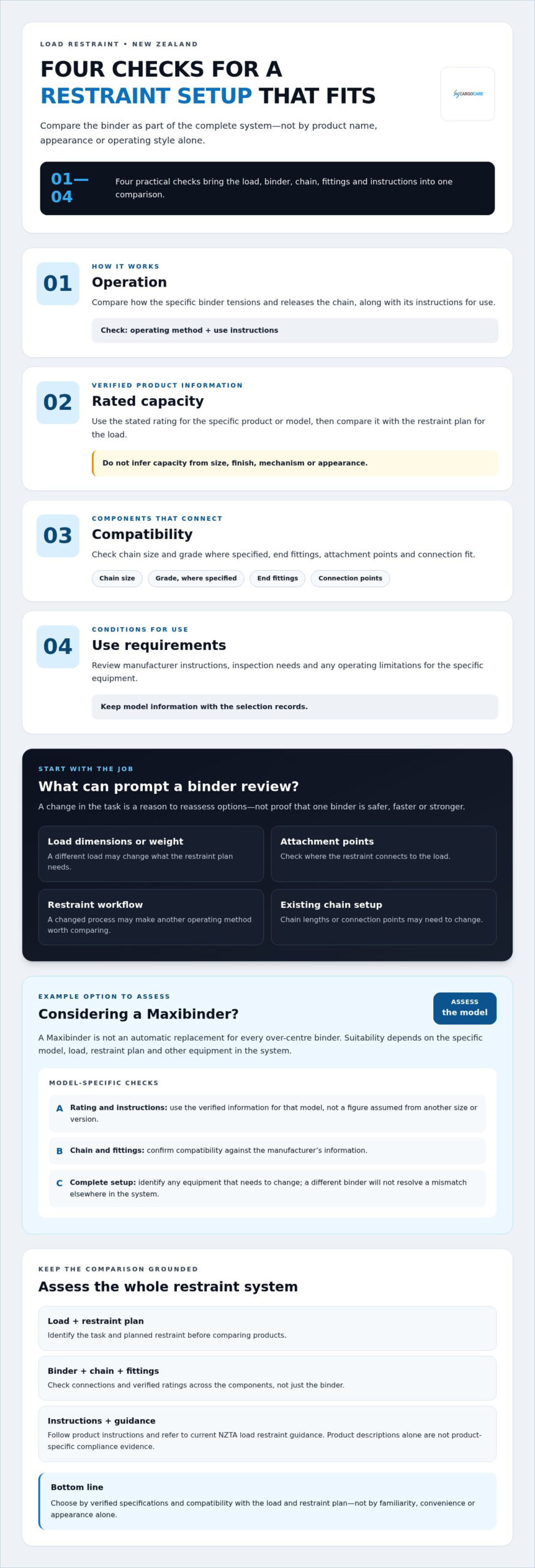
Compare each option as part of a complete restraint system. Record its operating method, rated capacity, compatible chain or fittings, and manufacturer’s use requirements. Then compare those details against the load and restraint plan. This makes differences visible without assuming that a familiar design or heavier appearance means greater capacity.
| Check | What to compare |
|---|---|
| Operation | How the specific binder tensions and releases the chain, and any instructions for use. |
| Rated capacity | The product’s stated rating and how it fits the restraint plan for the load. |
| Compatibility | Chain size, grade where specified, end fittings and connection points. |
| Use requirements | Manufacturer instructions, inspection needs and any operating limitations. |
Verify ratings for the specific product and match them to the restraint plan. Don’t infer capacity from a binder’s size, finish or mechanism. The binder, chain and fittings work together, so a suitable binder alone doesn’t establish that the full setup is appropriate. As you compare options, note any component that needs to change rather than assuming the existing equipment will fit.
Which specifications and compatibility checks matter?
Before selecting an over-centre binder alternative NZ operators can use, check the model’s product rating, chain size, end fittings and manufacturer instructions. Confirm that the components connect correctly and their verified ratings suit the planned restraint. For a focused comparison of two binder approaches, read our Maxibinder versus ratchet binder selection guide.
For New Zealand requirements, refer to current NZTA load restraint guidance rather than relying on a product description alone. The Ministry of Transport’s New Zealand road safety objectives provide broader safety context, not product-specific compliance evidence. You can also explore CargoCare NZ load restraint equipment when comparing suitable options.
Could a Maxibinder be the right over-centre binder alternative?
Cargo Care NZ supplies Maxibinders as part of its load restraint range. A Maxibinder is an option to assess when reviewing a binder setup, but whether it suits the task depends on the specific model, load, restraint plan and other equipment in the system. Compare it with the existing setup rather than treating it as an automatic replacement for every over-centre binder.
Start with the model’s stated rating and instructions. Check that its compatible chain and fittings suit the existing setup, or identify what needs to change. A different binder won’t resolve a mismatch elsewhere in the restraint system. Keep the model’s product information with your selection records so you can match the equipment choice to the task.
What should buyers confirm before choosing a Maxibinder?
Use the verified rating for the specific model, not a figure assumed from another size or version. Check the chain and end fittings against the manufacturer’s compatibility information, then make sure the complete setup aligns with the restraint plan. For wider system context, see our New Zealand load restraint straps guide and Silverback products guide for New Zealand.
Follow the product instructions and applicable New Zealand load restraint guidance when selecting and using equipment. Cargo Care NZ supplies the Maxibinder range. Explore Maxibinder options and compare the product details with your equipment requirements.
Choose the restraint setup that fits the task
The right over-centre binder alternative NZ operators choose depends on more than binder style. Compare the load, product rating, compatible chain and fittings, and operating requirements as one complete restraint setup. Use verified model specifications and applicable New Zealand guidance to inform the decision.
Cargo Care NZ supplies Maxibinders within its load restraint range and is the New Zealand distributor of Silverback products. Assess the relevant Maxibinder model against your equipment and restraint plan instead of assuming it suits every load or setup.
View Cargo Care NZ’s Maxibinders and load restraint products and compare the options with the requirements of your task. A considered equipment choice gives you a clearer basis for load restraint.
Frequently Asked Questions
Can a Maxibinder replace an over-centre binder?
A Maxibinder may be an alternative when the specific model’s rating, compatible fittings and instructions suit the load and restraint plan. It isn’t automatically a like-for-like replacement. Compare documented specifications with the complete setup, including chain and attachment points, and follow current New Zealand load restraint requirements before use.
What should I check when choosing an over-centre binder alternative in NZ?
When choosing an over-centre binder alternative in NZ, check the product’s rated capacity, compatible chain and fittings, the load and restraint plan, and the manufacturer’s instructions. Consider the complete system, not just the binder. Check current New Zealand guidance for applicable requirements, and don’t assume one rating or specification suits every load.
Are Maxibinders and over-centre binders the same?
Not necessarily. “Maxibinder” is a product name, while “over-centre binder” describes an equipment type. Terminology can vary between suppliers, so don’t assume the names mean identical equipment or operating methods. Refer to the documentation for the specific model, then compare its stated rating, compatible components and instructions with the restraint task.
Which binder alternative is best for my load?
There’s no single best binder alternative for every load. The suitable option depends on the load, restraint plan, compatible equipment, required rating and operating instructions. Compare documented product specifications and current New Zealand guidance, then assess Cargo Care NZ’s Maxibinder against those requirements. Choose an option only when the complete setup suits the task.

Article by
Steve O'Malley