
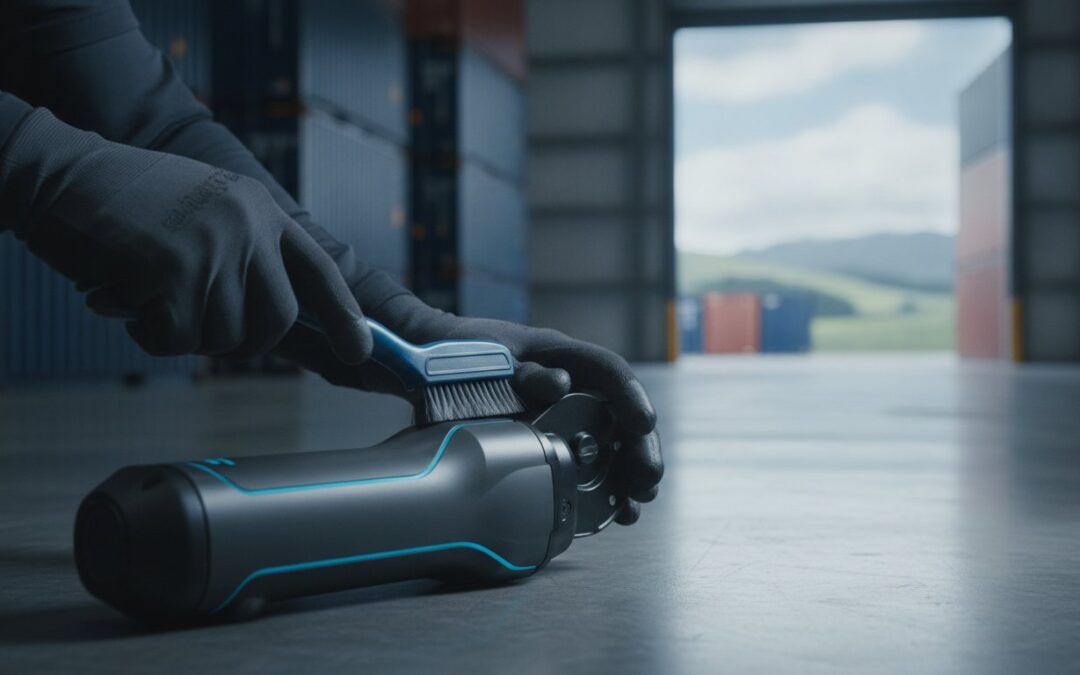
A single minute of stalled operations at the loading dock can trigger a chain reaction of delays that costs your business far more than the price of a replacement tool. Following a structured cordless bolt seal cutter maintenance guide is the only way to prevent these avoidable failures and ensure long-term reliability. You rely on your equipment to perform under pressure, and there’s nothing more frustrating than a cutter failing right when a high-priority container needs to move.
This article provides the professional protocols required to protect your 19KN hydraulic system and keep your Phoenix 18V model operating at peak efficiency. By following these industry-aligned steps, you’ll ensure your tool delivers a consistent 5-second cutting speed and remains compliant with warranty standards. We will examine essential cleaning routines, OLED display alerts, and the specific usage rules that prevent expensive downtime in your logistics chain.
Key Takeaways
- Establish a daily inspection routine to identify jaw misalignment and clear metallic debris before it impacts hydraulic performance.
- Use the OLED display to monitor cut counts and battery health, ensuring you avoid deep discharge cycles on your 1.5Ah Lithium-ion cells.
- Implement this cordless bolt seal cutter maintenance guide to maintain your 5-second cutting speed and preserve warranty coverage by never exceeding the 10mm diameter limit.
- Recognise the signs of jaw wear and learn the professional protocol for fitting genuine replacement parts to ensure operational safety and tool longevity.
Daily Inspection and Cleaning Protocols for Bolt Seal Cutters
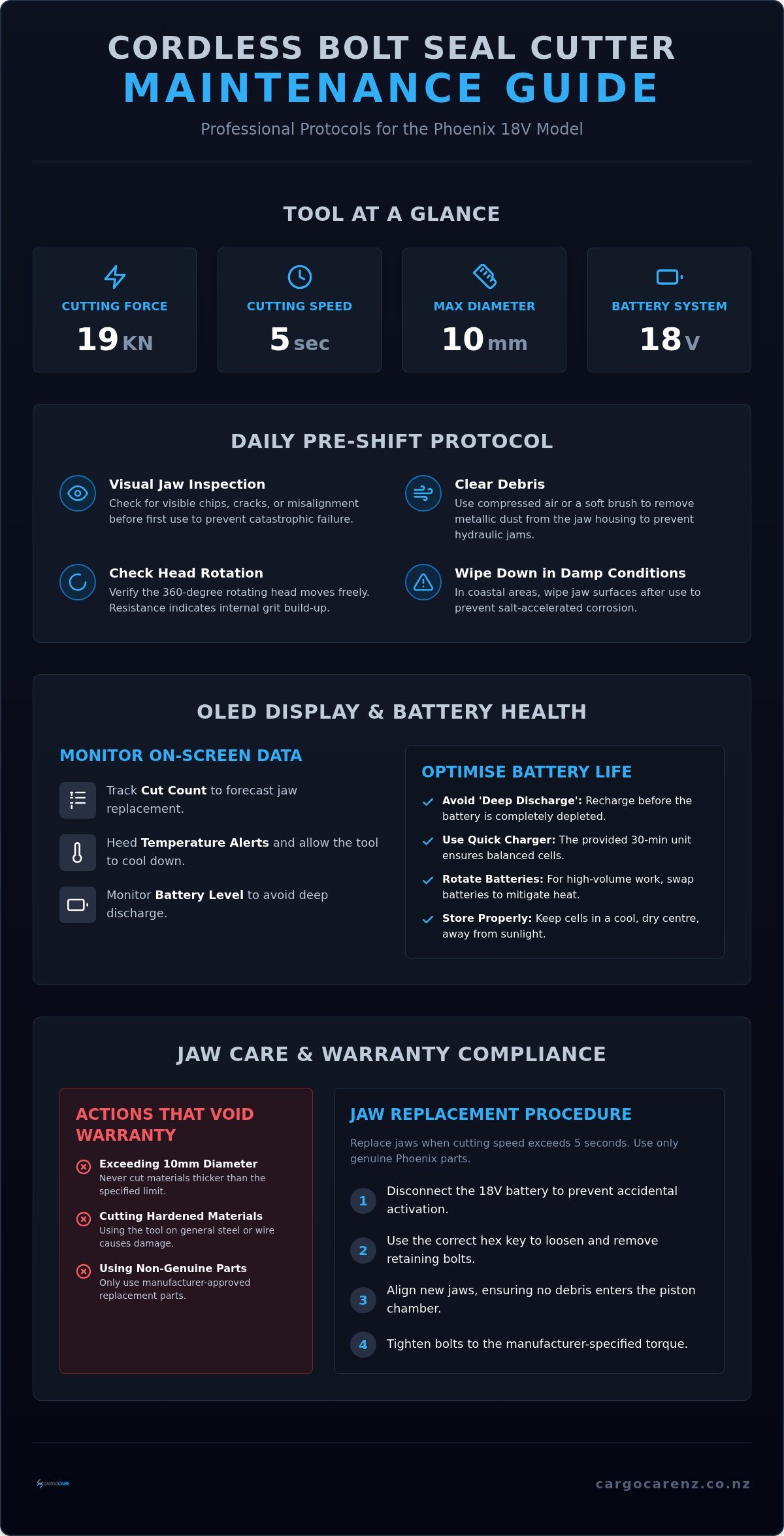
Establishing a strict pre-shift routine is the foundation of an effective cordless bolt seal cutter maintenance guide. A visual inspection before the first shift ensures that micro-fractures or misalignments don’t escalate into catastrophic tool failure during a critical operation. Operators must examine the cutting jaws for visible chips or cracks that compromise the tool’s structural integrity. Catching these issues early prevents operational downtime and maintains site safety.
Accumulation of metallic dust and fine debris within the jaw housing is a primary cause of hydraulic jams. Use compressed air or a soft-bristled brush to clear these particles daily. This simple action protects the internal seals and maintains the tool’s high performance. Additionally, verify that the 360-degree rotating head moves freely. Any grinding or resistance suggests internal grit build-up that requires immediate attention to prevent permanent scoring of the rotation mechanism.
Maintaining Jaw Integrity and Cutting Force
Environmental factors significantly impact tool longevity. In coastal shipping yards, salt air accelerates corrosion. Wipe down jaw surfaces after every use in damp conditions to prevent rust. Applying a light lubricant to pivot points once a month ensures the 19KN force is distributed evenly across the bolt cutter assembly. This prevents the motor from overworking and preserves the 18V system’s efficiency.
Watch for “jaw spread,” where a permanent gap appears between the blades when closed. This usually indicates the tool has been used on materials harder than standard 10mm bolt seals. This misuse voids the warranty and places unnecessary strain on the hydraulic system. Keeping the jaws perfectly aligned ensures you maintain that critical 5-second cutting speed throughout the life of the tool.
OLED Display Interpretation and Battery Management
The OLED display on the Phoenix 18V serves as the primary diagnostic interface for the operator. Monitoring the “Cuts Completed” counter is a core component of a professional cordless bolt seal cutter maintenance guide. This data allows site managers to forecast when jaw sets might require replacement, preventing unexpected failures during a shift. Beyond usage tracking, the display provides real-time feedback on tool health. Respond immediately to any temperature alerts by pausing operations. During high-volume unloading, internal components can reach thermal limits; allowing the tool to cool preserves the hydraulic seals and electronic circuitry.
Battery level indicators are equally critical. To maintain the longevity of 1.5Ah Lithium-ion cells, avoid “deep discharge” cycles. Recharging the battery before it’s completely depleted prevents chemical degradation within the cells. This proactive approach ensures the tool maintains its 19KN cutting force throughout the entire shift without a drop in performance.
Optimising 18V Lithium-ion Battery Performance
Consistent performance relies on using the provided 30-minute quick charger. This unit is designed to communicate with the internal Battery Management System (BMS) to ensure cells remain balanced and calibrated. For intensive operations exceeding 50 cuts per hour, organise a battery rotation schedule. This practice mitigates heat build-up and ensures the motor always has access to full voltage.
Storage conditions also dictate battery health. Keep your power cells in a cool, dry centre of the warehouse, away from direct sunlight or extreme temperature fluctuations. If you need to upgrade your kit or secure spares, you can find genuine Phoenix 18V accessories to maintain your operational pace. Proper storage ensures the Lithium-ion chemistry remains stable and ready for immediate deployment.
Replacing Jaws and Ensuring Warranty Compliance
Operational efficiency depends on the sharpness of the cutting edge. When your cutting speed exceeds 5 seconds for a standard seal, it’s the primary indicator that the jaws are dull. Forcing blunt jaws to perform increases the internal pressure within the 19KN system, which can eventually lead to hydraulic seal failure. Strictly adhere to the 10mm diameter limit to prevent this. Using the tool on general steel objects or wire is a direct violation of the cordless bolt seal cutter maintenance guide and will void your warranty coverage.
Maintaining a comprehensive log of all service activities is essential for warranty compliance. Record every jaw replacement, cleaning session, and battery cycle. This documentation serves as professional proof of care, ensuring you follow the cordless bolt seal cutter maintenance guide to remain eligible for support should a mechanical issue arise. It’s a simple administrative step that protects your long-term investment in the Phoenix 18V system.
Step-by-Step Jaw Replacement Procedure
Start by disconnecting the 18V battery. This prevents accidental activation while your hands are near the cutting head. Use the correct hex key to loosen the retaining bolts. It’s critical to ensure no debris falls into the hydraulic piston chamber during this stage, as even small particles can score the internal cylinders. Align the new genuine Phoenix jaws precisely within the housing. Finally, tighten the bolts to the manufacturer-specified torque. This ensures the full 19KN force is transferred efficiently, maintaining the tool’s signature speed and reliability on the dock.
Securing Operational Continuity for Your Logistics Chain
Maintaining your Phoenix 18V system is about more than just cleaning; it’s about protecting your workflow. By integrating this cordless bolt seal cutter maintenance guide into your daily operations, you ensure that your team always has a reliable tool ready for the next container. Regular jaw inspections and proactive battery management prevent the costly delays that occur when hardware fails during peak hours. Consistent compliance with these protocols keeps your equipment running at its rated 19KN force and ensures your warranty remains valid.
As an authorised Silverback distributor, CargoCare NZ provides the technical support and genuine parts required to keep your equipment in peak condition. We specialise in ISO 17712 compliant security hardware and offer national delivery across New Zealand. Don’t let avoidable tool wear slow down your loading dock. Browse Genuine Phoenix Replacement Jaws and Accessories at CargoCare NZ today to ensure your fleet stays moving. Proper maintenance is the best insurance against downtime.
Frequently Asked Questions
How often should I replace the jaws on my Phoenix cordless bolt cutter?
You should replace the jaws whenever the cutting speed for a standard seal exceeds 5 seconds. This slowdown indicates the edges are dull and are placing unnecessary strain on the 19KN hydraulic system. Use the OLED display to track usage and refer to your cordless bolt seal cutter maintenance guide to ensure you have genuine replacement jaws ready before performance drops.
What does it mean if my cordless bolt seal cutter is sparking during use?
Minor sparking within the motor housing can be normal during operation, but sparking at the cutting head is a serious concern. This usually indicates that the jaws are striking the seal at an incorrect angle or that the material is too hard. Stop work immediately to inspect for jaw chips or misalignment, as continued use can cause permanent damage to the hydraulic seals.
Can I use the Phoenix 18V cutter to remove high-tensile wire seals?
No, this tool is engineered specifically for shipping container bolt seals up to 10mm in diameter. Attempting to cut high-tensile wire, general steel, or other non-specified materials will damage the cutting edge and cause internal mechanical stress. It is critical to follow the manufacturer instructions, as using the tool for applications outside of its design parameters will immediately void your factory warranty.
How many cuts can I expect from a fully charged 1.5Ah battery?
The total number of cuts per charge depends on the thickness and hardness of the seals being processed. However, the 18V system is designed for high-efficiency throughput on the loading dock. To maintain operational continuity, we recommend utilising the 30-minute quick charger provided with the kit. Keeping a secondary battery in rotation ensures that you never experience downtime while waiting for a power cell to reach capacity.

Article by
Steve O'Malley