
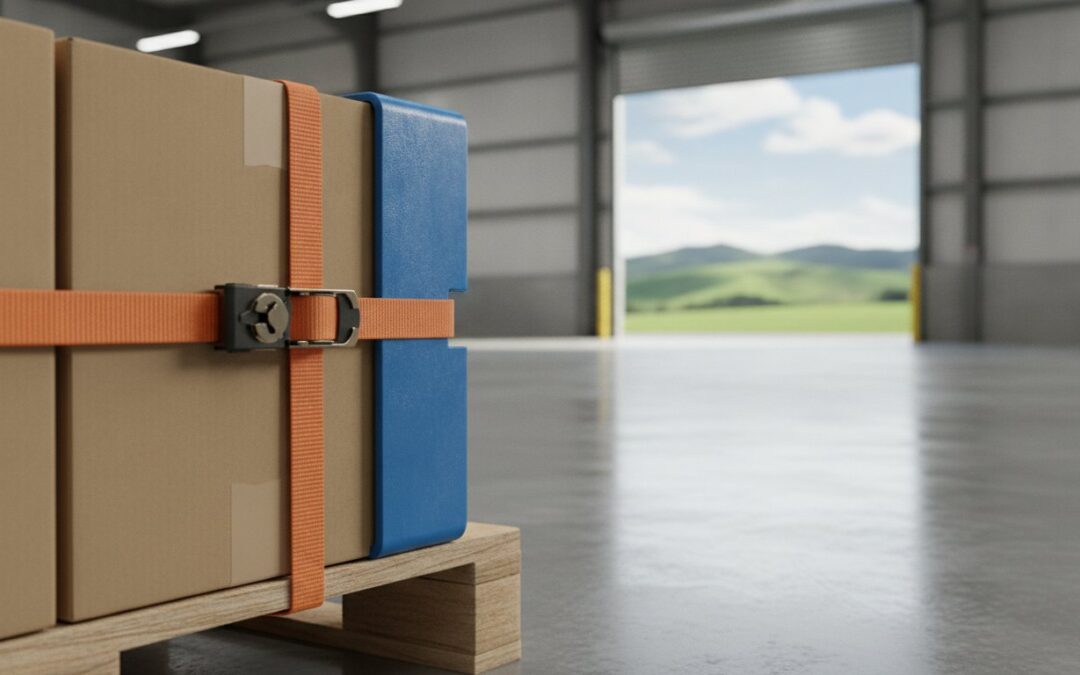
What if the most critical component of your load restraint system isn’t the strap itself, but the tool that prevents it from crushing your cargo? For logistics professionals across New Zealand, the high-visibility blue plastic pallet angle is no longer just an optional accessory; it’s a vital piece of equipment for maintaining operational integrity. You’ve likely seen the consequences of using inferior protection: cracked corners, crushed packaging, and the constant threat of fines for non-compliant loads. It’s a frustrating reality that costs the local transport industry significant sums in avoidable freight claims every year.
At CargoCare NZ, we agree that your reputation depends on the safe, professional delivery of every pallet. In this guide, you’ll discover why the 1042mm injection-moulded angle is the industry benchmark for heavy-duty cargo protection and transport compliance. We’ll look at the technical benefits of UV-stabilised polypropylene designed for the New Zealand sun, how these angles help you meet the latest Load Restraint Guide requirements, and why investing in reusable, professional-grade gear is the most cost-effective decision for your business.
Key Takeaways
- Understand the structural advantages of 1042mm injection-moulded polypropylene for maintaining maximum rigidity during heavy-duty transport.
- Learn why UV-stabilised materials are essential for preventing load protection gear from becoming brittle or cracking under the Australian sun.
- Discover how the blue plastic pallet angle distributes strap pressure evenly to eliminate freight damage and ensure professional cargo presentation.
- Identify how high-visibility equipment assists in transport compliance and provides immediate visual confirmation for roadside inspections.
- Evaluate the long-term cost benefits of investing in reusable, professional-grade protection to reduce the frequency of gear replacement across your fleet.
Technical Specifications of the Blue 1042mm Pallet Angle
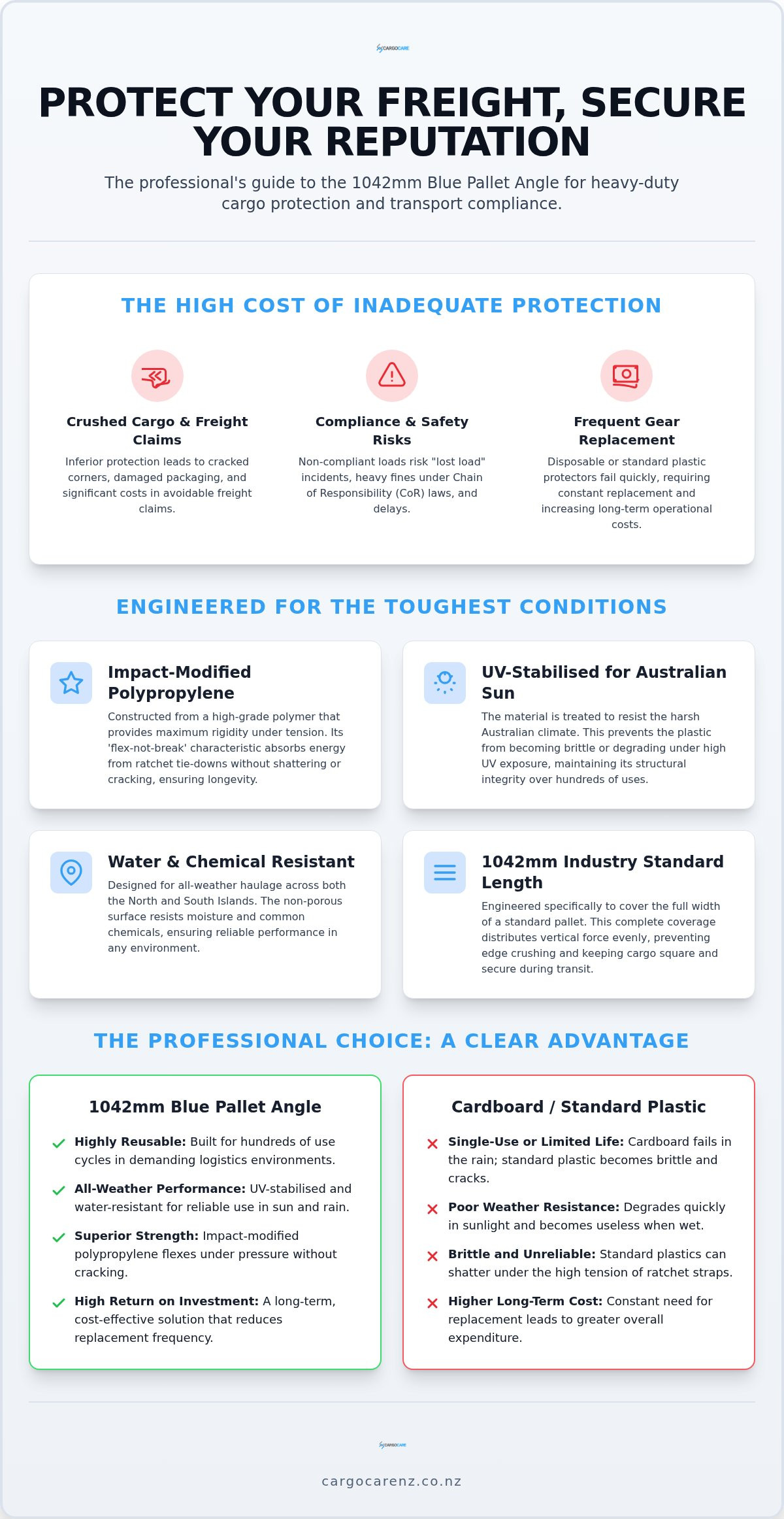
The blue plastic pallet angle is engineered for high-performance load restraint. Unlike generic alternatives, these are constructed from high-grade, injection-moulded impact-modified polypropylene. This material choice provides maximum rigidity under high tension while remaining incredibly lightweight. For haulage professionals operating in the harsh New Zealand climate, the UV-stabilised composition is a critical feature. It ensures the plastic doesn’t become brittle or degrade despite high UV exposure, maintaining its structural integrity over hundreds of use cycles. These units are also water-resistant and chemical-resistant, making them suitable for all-weather haulage across both the North and South Islands.
Why 1042mm is the Industry Standard
The 1042mm length isn’t an arbitrary figure. It’s specifically engineered to cover the full width of a standard pallet. This full-width coverage is essential for preventing edge crushing, where strap tension is concentrated on the corners of the cargo. By using a single, continuous piece, you distribute the vertical force of the webbing across the entire load. While 500mm half-size angles have their place for irregular or smaller consignments, the 1042mm variant remains the professional benchmark for standard palletised freight. Using edge protectors for strapping that span the entire width ensures your cargo remains square and undamaged during transit.
Impact-Modified Polypropylene vs. Standard Plastics
The secret to the longevity of the blue plastic pallet angle lies in the impact-modified additive. Standard plastics often shatter or crack when subjected to the extreme pressure of a ratchet tie-down. In contrast, impact-modified polypropylene exhibits a flex-not-break characteristic. It absorbs energy and conforms slightly to the load without failing. This durability translates to a significant cost saving over time. While cardboard protectors are essentially single-use items that fail in the rain, these plastic angles are built for longevity. They can be reused indefinitely in demanding logistics environments, providing a much higher return on investment than disposable alternatives.
Operational Benefits: Load Distribution and Cargo Protection
Effective load restraint relies on more than just raw tension; it requires the intelligent distribution of force. A standard 50mm webbing strap exerts significant downward pressure that can easily compromise the structural integrity of packaging. The blue plastic pallet angle acts as a physical buffer, redirecting this force across a larger surface area. This is particularly vital for “soft” freight common in New Zealand’s export sectors, such as fruit crates, beekeeping hives, or cardboard-shipped electronics where direct strap contact would cause immediate crush damage. By maintaining the shape of the palletised unit, these angles ensure the load remains stable during sudden transit shifts on winding regional roads.
For businesses dealing with delicate goods, the choice of packing and protection is critical. Specialist contract packers like Simplepack Ltd understand that high-quality packing services must be paired with robust load restraint to guarantee the safe delivery of sensitive health and food products.
Integration with Load Restraint Hardware
Professional drivers often pair these angles with heavy-duty Maxibinders to achieve maximum tension without risking cargo failure. When using 50mm ratchet tie-downs, the recessed channel of the angle keeps the webbing centred and seated. This prevents the strap from “walking” off the edge of the load during road vibrations. For fleets looking to standardise their equipment, choosing a reliable plastic pallet angle from CargoCare NZ ensures consistency across every trailer in the fleet. It’s a simple addition that provides a predictable outcome for every haul.
Compliance with Load Restraint Standards
Meeting national transport safety requirements involves demonstrating that a load is secured against movement in all directions. While local guidelines are the primary authority, many logistics firms look to global benchmarks like Federal cargo securement rules to define their internal best practices. Using the correct edge protection reduces the risk of “lost load” incidents. This isn’t just about safety; it’s about avoiding the heavy fines associated with Chain of Responsibility (CoR) breaches. If an inspector sees a high-visibility blue angle, they immediately recognise a driver who takes cargo compliance seriously.
Procurement and Professional Customisation Options
Standardising on a blue plastic pallet angle provides operational benefits that extend beyond simple cargo protection. The high-visibility blue colour serves as a professional marker. It allows transport inspectors and site managers to verify load protection measures from a distance, facilitating faster compliance checks. For national fleets, bulk procurement enables the standardisation of gear across all depots. This ensures every driver has access to the same heavy-duty equipment regardless of their location. Consistency in hardware is a hallmark of a disciplined logistics operation.
These angles are designed for seamless integration with other Silverback products NZ. When used as part of a unified cargo care system, they help project a high-quality image to your clients. A fleet equipped with uniform, matching blue angles signals a level of professionalism that generic or mismatched protectors cannot replicate. It demonstrates to the customer that their freight is being handled with premium tools.
Custom Branding and Colour Matching
Customisation offers a significant marketing and operational advantage for large-scale hauliers. Each blue plastic pallet angle includes a dedicated 180mm x 35mm hot-stamped logo area for company identification. While blue is the industry benchmark, there is the option to choose from over 20 standard colours. Precise Pantone PMS matching is also available to ensure absolute brand consistency across your entire fleet. Branded hardware effectively turns every load into a mobile representation of your company’s commitment to safety.
Asset Protection and Tracking
Gear loss at delivery centres and third-party warehouses is a persistent industry challenge. Branded pallet angles serve as a visual deterrent against accidental misappropriation or theft. Equipment is far less likely to be “borrowed” when it’s clearly marked with a corporate logo. In the warehouse environment, high-visibility equipment also plays a role in safety. Brightly coloured angles make pallet edges more apparent to forklift operators. This improves spatial awareness during inventory organisation and reduces the likelihood of accidental corner strikes in tight loading bays.
Beyond the physical protection of goods, effective logistics management often involves strategic warehousing; for example, companies expanding into Asian markets often look for a 香港迷你倉推介 to ensure their inventory remains secure and organised.
Standardising Your Fleet for Professional Cargo Protection
Adopting professional-grade hardware is a strategic move for any logistics operation focused on operational continuity. The blue plastic pallet angle offers a level of durability and performance that generic alternatives simply can’t match. By utilising high-impact polypropylene construction, these angles remain functional through countless transport cycles, even under the intense UV conditions of the Australian sun. They provide the necessary load distribution to prevent freight damage and ensure every pallet meets strict compliance standards.
Cargo Care NZ is the official Silverback distributor, providing equipment that’s already trusted by major national transport fleets to maintain safety and professional presentation. Investing in reusable, high-visibility gear reduces long-term costs and signals a commitment to quality that clients notice. Take the next step in refining your load restraint system and protecting your bottom line. Enquire about Blue 1042mm Plastic Pallet Angles today to secure your next consignment with confidence.
Frequently Asked Questions
Why is the blue pallet angle considered “heavy duty” compared to other colours?
The blue colour serves as the industry identifier for the premium, heavy-duty variant constructed from impact-modified polypropylene. This specific material provides superior rigidity and impact resistance compared to standard plastic protectors found in other colour tiers. While various colours are available for fleet identification, the high-visibility blue plastic pallet angle remains the benchmark for top-tier logistics firms because of its flex-not-break characteristics during high-tension strap applications.
Can these 1042mm plastic angles be used with steel strapping or just webbing?
These angles are primarily engineered for use with 50mm webbing straps and ratchet tie-downs. While they are compatible with polyester strapping, steel strapping is generally not recommended as the sharp edges and high tension of steel can cut into the polypropylene material over time. For maximum equipment lifespan and cargo safety, it’s best to use high-quality webbing systems that seat securely within the angle’s recessed channel.
Are the plastic pallet angles UV-stabilised for long-term outdoor use?
Yes, every unit is manufactured with UV-stabilised additives specifically designed to withstand the harsh Australian sun. This prevents the plastic from becoming brittle, chalking, or cracking when stored on exterior trailer racks or used during long-haul interstate transits. This stabilisation ensures the equipment maintains its structural integrity and impact resistance over hundreds of operational cycles, even when exposed to extreme UV levels for extended periods.
What is the minimum order quantity for custom-branded pallet angles?
The minimum order quantity for custom-branded or colour-matched pallet angles is 250 units. This threshold allows for the professional hot-stamping of your company logo within the 180mm x 35mm identification area or the production of specific Pantone PMS colours for brand consistency. For smaller requirements or immediate fleet replacements, standard high-visibility blue units are typically available in smaller quantities to suit individual owner-operators or small depots.
Article by
Steve O'Malley